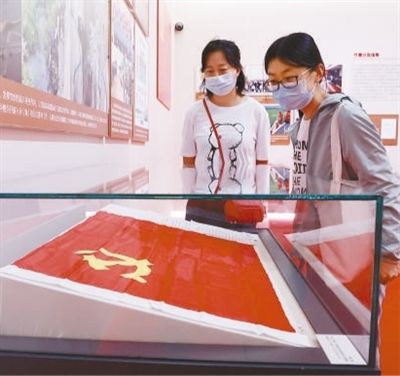
Explore the high-quality growth path of beauty brands in Xiaohongshu from the China-US Beauty Industry Summit.

Source: beauty headlines

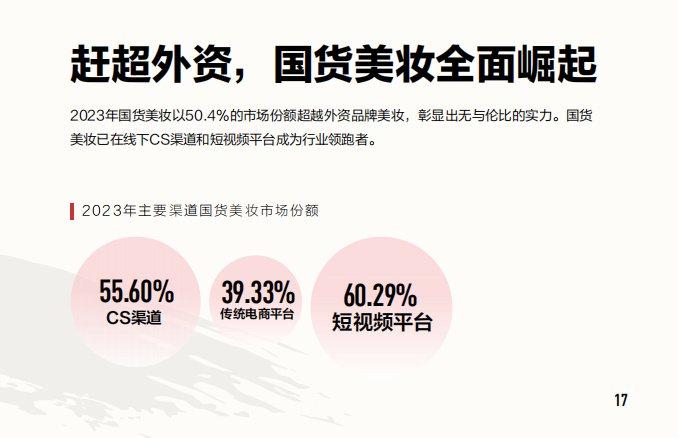
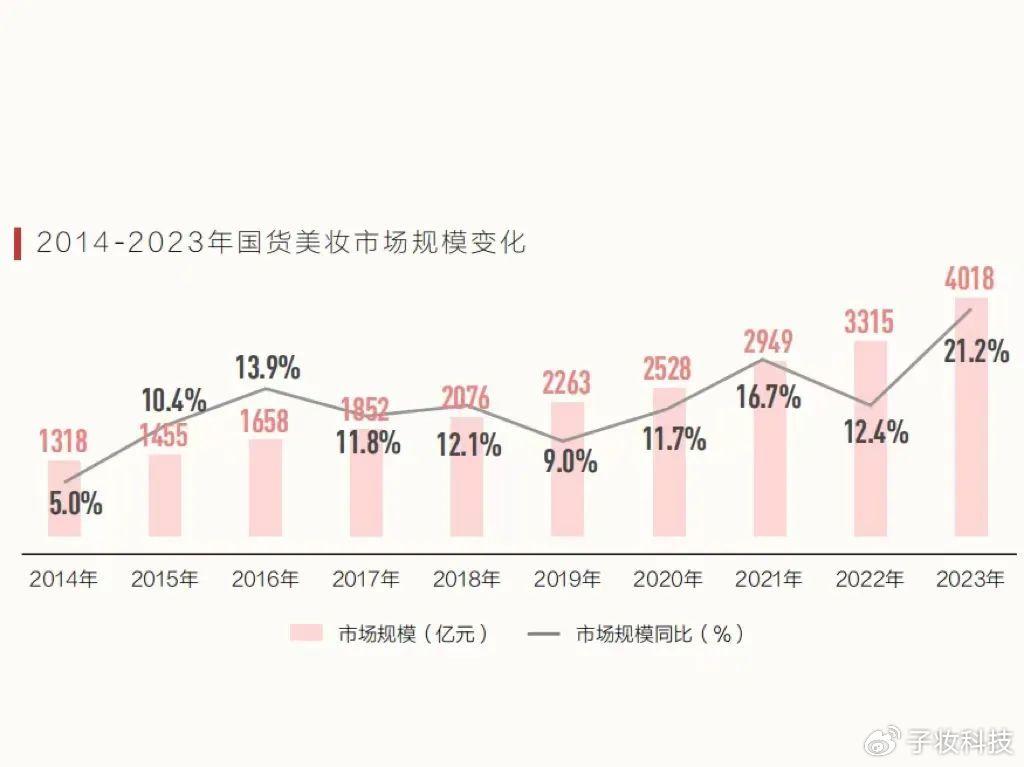
Supported by Chinese people, 2023 can be described as a "highlight moment" for domestic brands. In particular, domestic beauty cosmetics, with a market share of 50.4% in 23 years, exceeded the market share of foreign brands.

How did China Beauty Brand Achieve "Overtaking in Curves"? In addition to the more competitiveness brought by hard power factors such as product strength upgrade, the atmosphere of national cultural self-confidence and the rise of social platforms have also promoted the double growth of sales volume and sound volume of China beauty brands.

For example, in Xiaohongshu, the brand can accurately reach the target population, get through the transaction conversion link inside and outside the station, and drive the global growth with the sound volume inside the station.

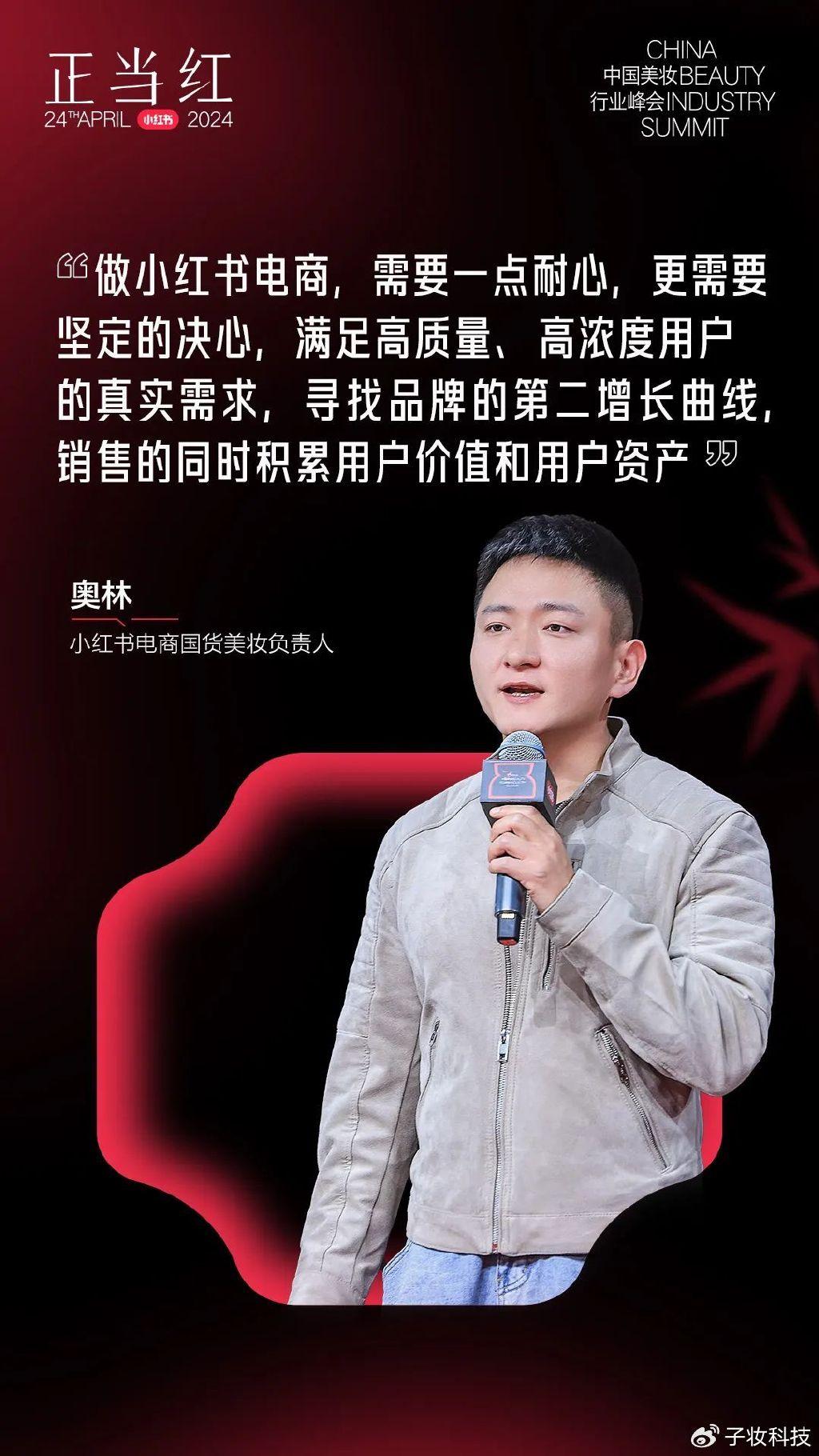
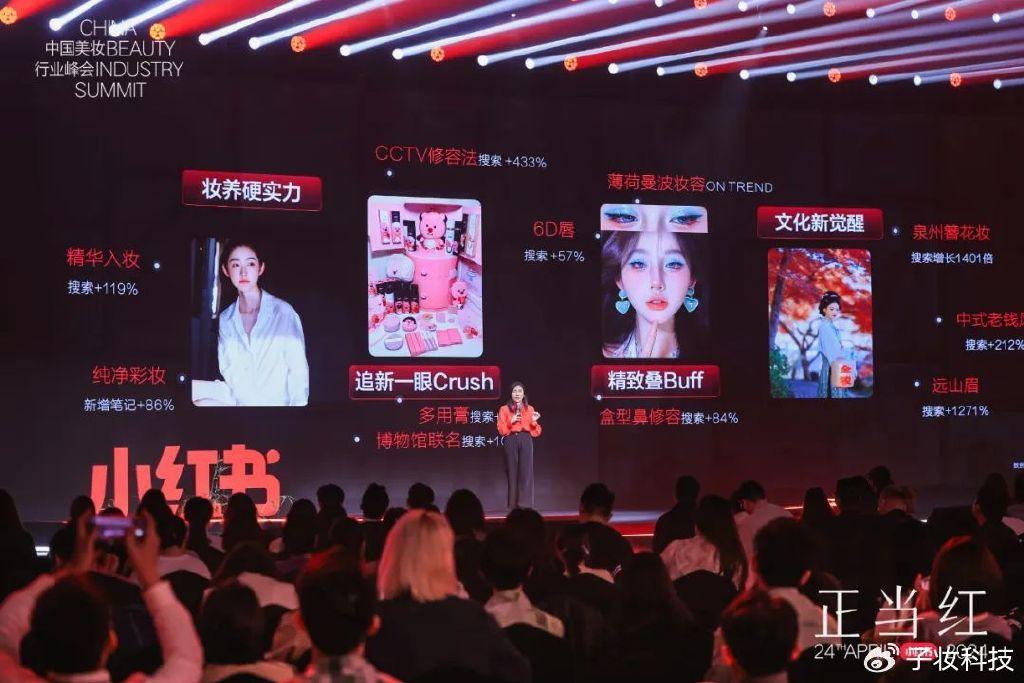
On April 24th, Little Red Book was held.Just Being Red ——2024 Little Red Book China Beauty Industry SummitWith the presence of representatives of domestic beauty brands and industry experts, we will discuss the better solutions for the upward growth of China beauty brands in order to promote the sustained and high-quality development of China beauty brands.

Looking forward to the trend of beauty industry in China

Provide marketing vane for domestic beauty brands

As one of the "highlights" of this summit,The commercialization of Xiaohongshu and Qingyan, an authoritative media in the United States, released the 2024 Xiaohongshu White Paper on Beauty Industry in China.(hereinafter referred to as the White Paper), which explores the development trend of China’s beauty industry, the future potential of domestic brands and the consumption behavior of characteristic people.

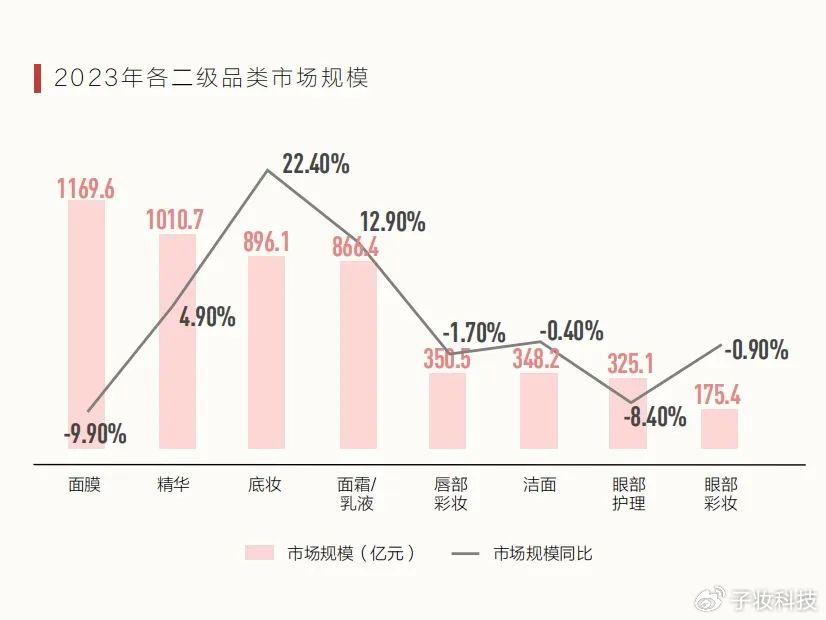
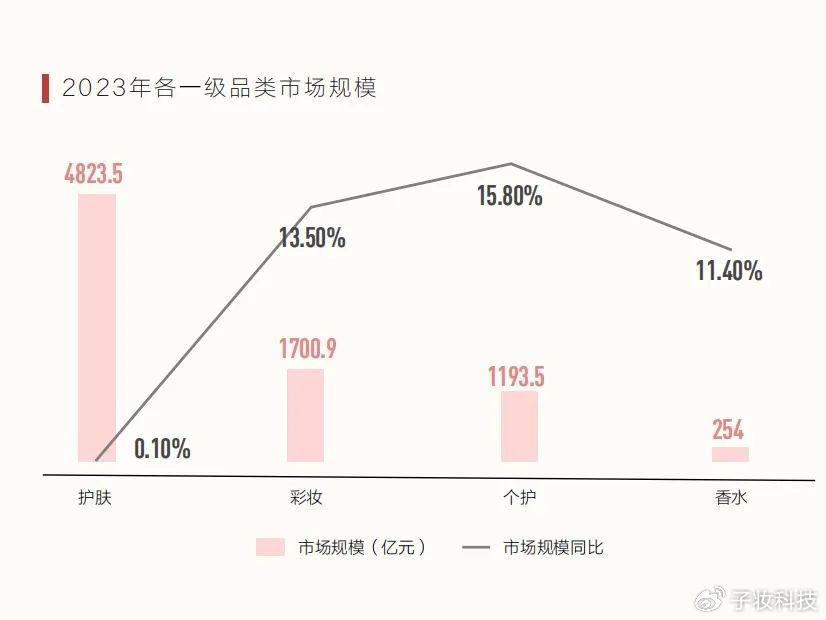
According to the white paper, in the last decade, the domestic beauty market has been soaring, with a compound annual growth rate of 13.18%, which proves its unique charm and strong strength. Among them, skin care products dominate the domestic beauty industry, with a market scale of 267.99 billion yuan and an annual growth rate of 14%. Cosmetic category grew rapidly, ranking second with a scale of 76.54 billion yuan and a year-on-year surge of 52.1%.Behind these trends, consumers’ favor and love for domestic beauty products and their growing power to the United States are reflected.

It is worth noting that in the process of consumers’ increasing favor for China beauty cosmetics, Xiaohongshu helps domestic beauty brands to seize users’ minds efficiently and open up new possibilities for China beauty brands. In the little red book, there are many discussions about the trend of skin care makeup, such as early C and late A, skin care makeup, Chinese old money style, etc. In this process, the little red book also helps the national tide and national style to occupy the public’s field of vision and help enhance the public’s cultural confidence.

In addition, the white paper also made a preview of the 11 major trends in the beauty industry and an insight into the 20 lifestyle groups in 2024 Little Red Book-"Meilijia Plus" people:

In terms of beauty trends, there are scientific skin care, new attraction of nourishing skin, exquisite Chill and oriental power UP in skin care, exquisite stacking Buff, hard strength of makeup, a new look at Cruch and a new awakening of culture in makeup, and facial skin care, high-end maintenance and home beauty salons in personal care.

From the trend of "Oriental Power UP" in skin care, we can see that in 2023, among the TOP100 hot search brands in Xiaohong Bookstore, there were 18 domestic brands more than in 22 years, and the number of views on the topic of # Domestic Light was close to 700 million, and the national visual products were also popular. It can be said that the improvement of cultural self-confidence has greatly stimulated the public’s consumption of domestic products.

We can also see the influence of cultural self-confidence on popular makeup in the trend of "new cultural awakening" of makeup. In Xiaohong Bookstore, hot search words related to Chinese makeup gradually increased, among which # Chinese old money wind search increased by 90,671% year-on-year, and # Yuanshanmei search increased by 12,71% year-on-year. It can be said that "Chinese flow is the real top flow" has become the consensus of the public, and the traditional culture of national style is becoming a new young trend.

From the above two trend examples, it is not difficult to find that cultural self-confidence in the future must be the key to the beauty care industry.

Regarding the crowd, Little Red Book returned to the essential "people" and "drivers" and summed up four driving forces for beauty.

For example, in terms of "me and me", beauty is the source of emotional value for inward exploration and self-pleasing, so beauty is blessed with "internal drive". Beauty headlines were found on the platform of Little Red Book, and more and more consumers began to pay attention to such meticulous self-feelings as "body feeling" and "skin feeling", and they would realize the co-cultivation of body and mind in the ceremony with healing atmosphere.

In terms of "I am close to others", beauty is a manifestation of personal charm in private relationships/intimate circles, so beauty is blessed with "personal charm"; In terms of "the relationship between me and society", beauty is appropriate in social interaction and suitable for proper self-presentation, so beauty is blessed with "physical strength"; In terms of "me and the pan-social network", beauty is also regarded as an energy, which enables individuals to be recognized, seen and recognized by a wider range of groups, so beauty is blessed with "influence".

This also provides a weather vane for China beauty brands to anchor the trend and grasp the crowd, and helps them seize opportunities and promote growth in the highly competitive market.

Open up new marketing ideas

Empowering brands to grow vigorously in all directions.

In the community of Xiaohongshu, users are distributed in multiple circles, and beauty brands have gained more room to play, making it easier to go from 0 to 1. This has also prompted more and more beauty brands to re-examine the value of Xiaohongshu and regard Xiaohongshu as a new growth position in marketing and operation.

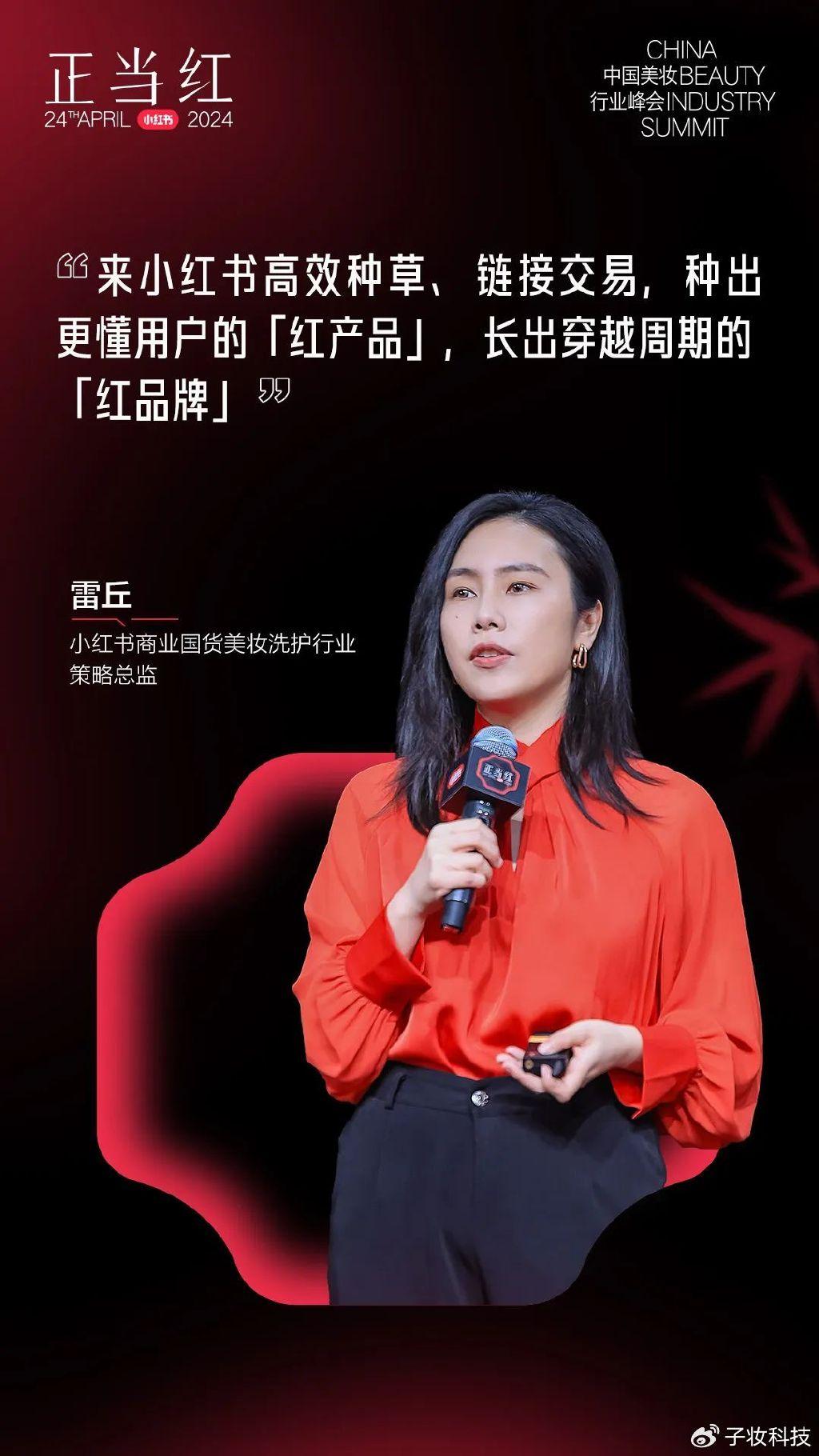
At the summit, Raichu, strategic director of Xiaohongshu commercial domestic beauty care industry.Share itThe marketing value of Xiaohongshu lies in "efficient planting grass", "brand building" and "link trading".

First of all, in the matter of "planting grass efficiently", when beauty products are in different life stages, there will be different marketing demands. Therefore, Xiaohongshu puts forward differentiated solutions based on the introduction period, growth period, maturity period and rejuvenation period of products, and helps brands grow good products by planting grass efficiently in the whole life cycle.

In addition to "planting good products", Xiaohongshu is also empowering brands and achieving "red brands".

In Xiaohongshu, "Everything can grow grass", so how can mature brands seize the growth opportunity in Xiaohongshu? Compared with cutting-edge brands, although mature brands have popularity, user base and even large single products, they often face many complicated problems in their operation. Xiaohongshu believes that to find the certainty of brand growth, we need to return to products, be people-oriented, understand, understand and meet the new needs of users, occupy more consumption scenes, and break more people, so as to effectively drive the brand potential to explode.

In the decoding of the marketing value of Little Red Book in the third part of the White Paper, the natural hall with national recognition is taken as an example to show the journey of brand value rejuvenation. First of all, together with Little Red Book IP "Treasure Components in China", it conveys the brand’s strong scientific and technological strength, refreshes consumers’ cognition of the brand, and establishes the brand image of natural science and technology beauty cosmetics.

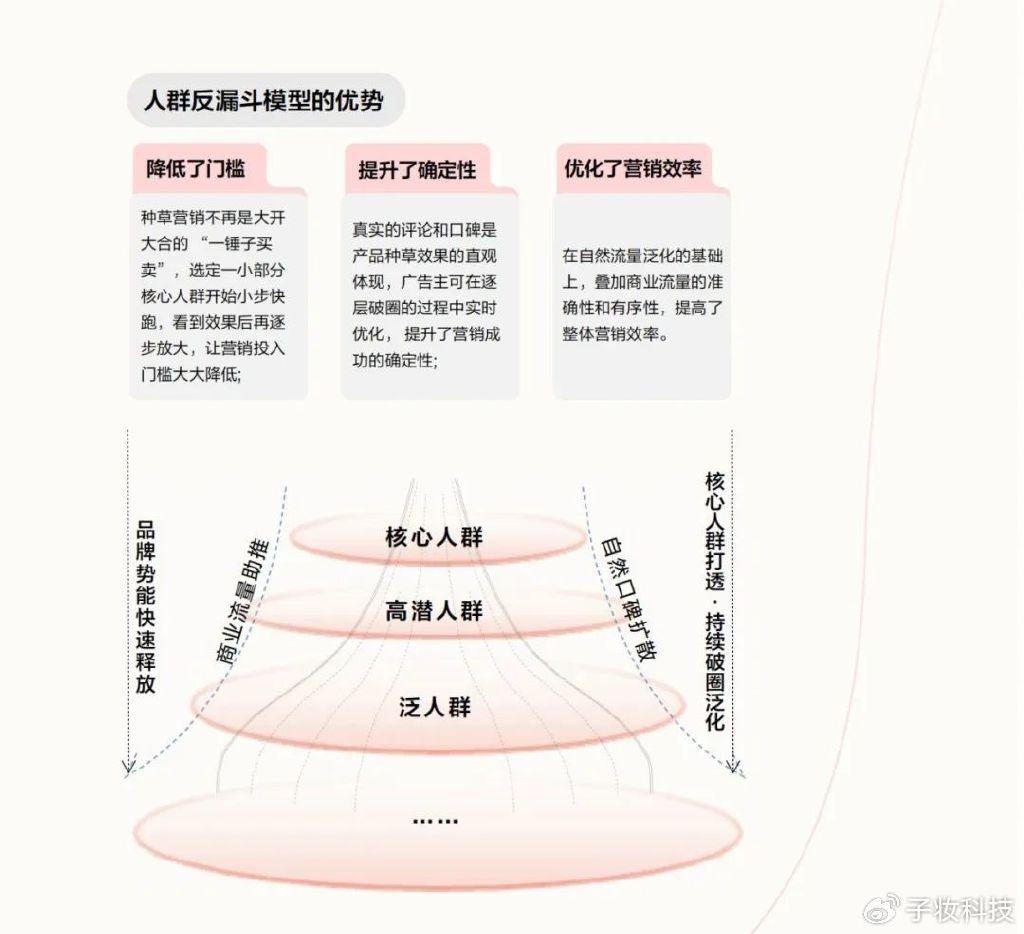
In the breakthrough of big single product and small purple bottle, Nature Hall fully accepted the heat potential of Himmer ingredients, accurately found old customers in Xiaohongshu with brand words and participles, and then sold 200,000 pieces through the crowd anti-funnel model from "brand crowd-elite category crowd-anti-aging effect crowd-component party crowd" to the pan-crowd during the period of 618.

In the promotion of the backbone polar holy water, Nature Hall and Xiaohongshu explored the high-related people of the brand and the attention effect of the old customers by analyzing the portraits of one group of the old customers of the brand. At the same time, they linked the characteristic IP in the station, precipitated a large number of real UGC evaluation contents, and achieved the planting of the brand fermented skin care concept.

Undoubtedly, Little Red Book is becoming a new business growth place for brands and businesses. Xiaohongshu helps businesses to make differentiated advantages in product upgrading, content access, user co-creation, buyer cooperation, brand live broadcast, etc., and builds a global business channel integrating "marketing+marketing" to empower the brand’s global transformation and word-of-mouth growth.

Run through the closed-loop link of global transformation

Incite high-quality growth

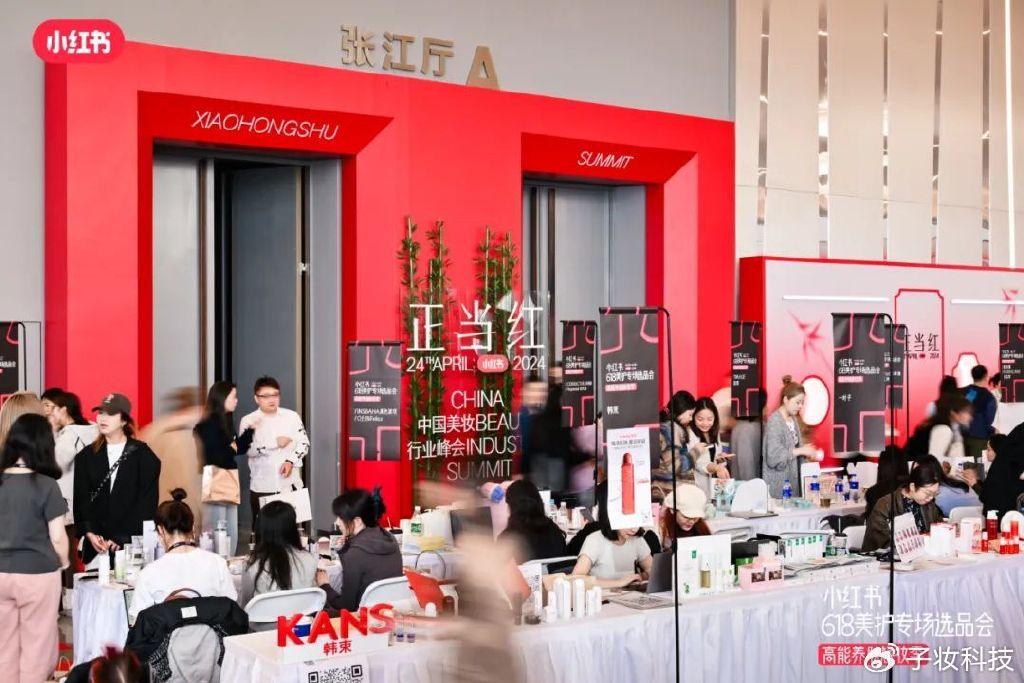
In order to welcome the "618" promotion, the summit also held a special beauty care selection meeting in Zhangjiang Science Hall, Shanghai, inviting 250 domestic and foreign beauty brands and 200 buyers of Xiaohongshu, demonstrating the powerful influence of Xiaohongshu in the beauty market.This product selection meeting also established a friendly and interactive direct communication field for brands and buyers, opening up the infinite possibilities of beauty care business in Xiaohongshu.

Buyers are the key players in the closed loop of Xiaohongshu e-commerce, connecting goods and users, planting grass and trading. For consumers, they can have a keen insight into the needs of users and plant related products for users in need; For brands, they give positive feedback to brand merchants about users’ real experiences, and share them in a personalized way, such as aesthetic taste and life concept, giving products and brands new business opportunities.

Therefore, as far as brands are concerned, how to achieve more tacit resonance with buyers and at the same time enlarge the value of adapting buyers is one of the key points in operating Xiaohongshu.

In the closed-loop link of Xiaohongshu, it is mainly based on the information flow of the platform, the search field, and the transformation of the live broadcast field of the brand and the buyer, so as to build an integrated business channel of "marketing+marketing" for the brand and help it realize the closed-loop business in the station. At the same time, based on the long tail effect of Xiaohongshu planting grass, a lot of traffic in the station overflowed, which finally prompted the brand to realize global transformation and the business jumped.

Take Afu, an elite oil family, as an example, from accurately stepping on the track to becoming the king, to the lack of products being fiercely pursued by rising stars, it has experienced several ups and downs. At the beginning of 2023, Afu embraced Xiaohongshu in an all-round way, re-attacked the category track, reshaped the brand awareness and reversed the market reputation by taking multiple measures. The three-pronged approach not only realized the rejuvenation of the brand mind, but also found the second growth curve of the business.

In this closed-loop link, there are three key stages:

High-point pulse is made in the starting stage: ① selecting products and planting grass; (2) Exploiting the momentum —— With the help of the IP of "Star Dream Plan" in Xiaohong Bookstore, Angel took the lead in exploring the closed-loop mode of star live broadcast of Xiaohongshu, and the successful sales of the first broadcast exceeded 1 million, successfully achieving the triple breakthrough of sales volume and word of mouth.

Stabilize the business chassis in the growth stage: efficiently use live star materials to put product notes, and the store will broadcast continuously for 4 hours every day. Long-term efforts are made for large single products, and at the same time, summer explosives are created to break through the seasonal restrictions of categories. In the end, notes+brand live broadcast contributed 60%+ store GMV.

Achieve sales jump in the outbreak stage: by building a complete buyer matrix, 20+ buyers will broadcast live every month, and at the same time, the brand will be broadcast live, 17 hours a day, and it will be rapidly advanced to a beauty brand of 5 million GMV per month.

Finally, in March of this year, Afu became a domestic beauty brand with a monthly sales of nearly 10 million in Xiaohongshu through high-profile live broadcast (head star/buyer/manager live broadcast) and continuous intensive brand live broadcast.

At the summit, Lingling, the buyer of Xiaohongshu, told the story of her encounter with Xiaohongshu Live and Yangshengtang. At first, I just love to brush and search, to share my life, and finally to share good things that can help everyone, so the road of buying a buyer began. In the future, Lingling said that it will continue to adhere to the standards of sincerity, efficiency and optimization, and build a bridge between brands and fans.

One beauty trend appears here, and one beauty brand grows here. Xiaohongshu has become an important position for users to buy beauty products and "do their homework" for consumption, and it has also become a breaking point for domestic beauty brands to continue to improve. Through Xiaohongshu, the spread of the brand is no longer a one-way communication, but a deep precipitation after running through the link, which includes both business growth and word-of-mouth growth.

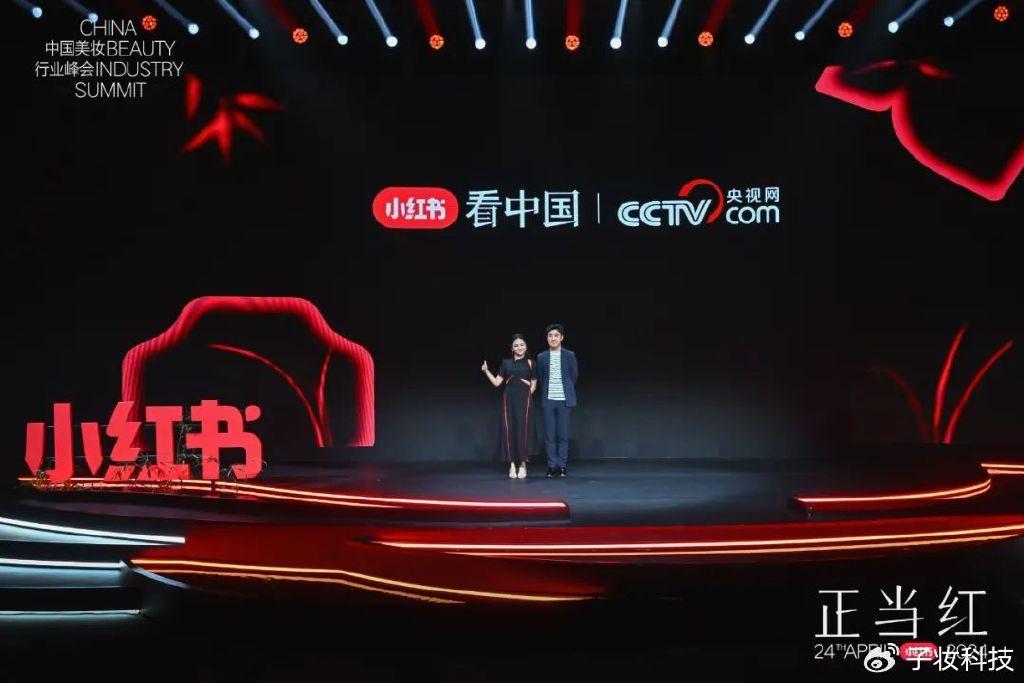
It is worth mentioning that at this summit, Minako, general manager of Xiaohongshu Commercial Marketing Center, published the IP map of Xiaohongshu’s domestic beauty cosmetics in 2024. Among them, the most anticipated thing is that Xiaohongshu joined hands with authoritative media to launch the IP of Watching China. In the following season of "Looking at China", the two sides will work together to help domestic beauty brands show their scientific and technological strength, tell the cultural story of domestic beauty, and further help domestic beauty brands to take advantage of the wind.

With the blossom of the closed-loop path of Little Red Book and the attack of domestic beauty brands, we believe that China beauty brands will definitely look to the further future!

Reporting/feedback

Ma Qi Lin Zou Mengqiu | |RCEP promotes the study of domestic business environment.

Ma Qi Lin

Professor, Zhejiang Gongshang University Law School

Zou Mengqiu

Master student of Zhejiang Gongshang University Law School

principal items

First, the meaning and development model of business environment

Second, the priority of scientific and technological innovation in the Yangtze River Delta g60 science and technology corridor construction

Third, the development opportunity brought by the signing of rcep for the construction of g60 Science and Technology Corridor

Fourth, the main challenges faced by g60 Science and Technology Corridor in docking rcep

V. Countermeasures and suggestions for g60 Science and Technology Corridor Construction in Yangtze River Delta under the influence of rcep

As a comprehensive, modern, high-quality and mutually beneficial regional free trade agreement, the signing of rcep marks the official launch of a free trade zone covering one third of the world economy, with the largest number of members and the most potential for development, which brings opportunities and challenges to the development of China’s state-owned business environment. The construction of g60 Science and Technology Corridor in the Yangtze River Delta has made the economic development in the Yangtze River Delta region form a unique business environment model dominated by scientific and technological innovation. From the perspective of the planning and construction of g60 Science and Technology Corridor in the Yangtze River Delta, this paper analyzes the opportunities and challenges of rcep in the development of China’s state-owned business environment, and puts forward corresponding countermeasures and suggestions for the challenges.

First, the meaning and development model of business environment

A good business environment in emerging markets not only helps enterprises to carry out market-oriented economic activities, promote the effective flow of processing elements of emerging products, and promote the economic development of emerging industrial product processing enterprises, but also helps to promote the healthy and vigorous development of the socialist market economy with Chinese characteristics. Some scholars believe that the business environment consists of various important factors that may directly promote China’s rapid economic growth, such as "climate, geography, economic development policies, history and socio-economic development". At the same time, some scholars sum up the improvement of China’s business environment as the relevant laws and policies used by the state or an administrative region to promote and regulate commercial activities, and put the complexity of legal supervision process, the completeness of laws and regulations system and the transparency of local government information disclosure into the concept of business environment. At present, the most convincing business environment assessment system is the Business Environment Report issued by the World Bank. According to the comprehensive environmental assessment standard of the World Bank’s Business Environment Report, the business environment refers to "a lot of time and labor costs required by an enterprise in starting a company, applying for a construction supervision license, obtaining public electricity, registering personal property, obtaining commercial credit, paying taxes, cross-border service trade, performing contracts, handling enterprise bankruptcy and so on". In the practice of optimizing the business environment, Singapore, Hong Kong, Shenzhen, Tianjin and other regions in China have developed a unique business environment model, which has certain reference significance for optimizing the business environment of g60 Science and Technology Corridor in the Yangtze River Delta.

Singapore: Priority Mode of Rule of Law

Singapore’s public administration management policies and legal systems are relatively complete, with a sound litigation system and a better intellectual property protection system in the world, which provides a strong guarantee for the development of intellectual property rights in Singapore. A sound legal system, a fair and just judicial trial system, a law enforcement system for the people, and citizens’ good awareness of abiding by the law have formed an excellent legal environment in Singapore, which plays an important role in encouraging immigrants and introducing high-level talents. A sound and complete judicial trial system also provides a strong guarantee for the protection of citizens’ legitimate rights and interests.

Hong Kong, China: Internationalization Priority Mode

As one of the "Four Little Dragons" of Asian economic development, and a world-famous offshore financial center and free port, Hong Kong has always maintained an open and transparent business environment to promote economic activities. Hong Kong is connected with many important markets in the region. It has an absolute geographical advantage, occupies the best business stronghold and has a far-sighted international vision. As a prosperous business center in the Asia-Pacific region, Hong Kong has provided a highly secure and robust regulatory system for banking, securities and futures, insurance and retirement plans with reference to international best operating models and standards. Hong Kong’s advanced commercial infrastructure, international commercial transportation, international logistics and communication, public services for the people, municipal construction, urban management and road planning have all promoted Hong Kong to become a high-level international financial center.

Shenzhen, China: Efficiency Priority Mode

Shenzhen regards the construction of smart cities as an important starting point for deepening reform, optimizing business environment and enhancing people’s well-being, and has launched a series of reform measures to improve the efficiency of government services and market operation. The information sharing and reuse of personal electronic application license and other electronic application materials have been strengthened, and the function of "second report" (non-inductive quick application) of electronic declaration has been introduced, that is, on the basis of mutual trust, mutual use and mutual recognition of data, the application materials are directly retrieved by the application system to automatically fill in the relevant information of the application form, thus realizing the whole process of government affairs handling without meeting, zero running and full automation.

Tianjin, China: Convenience Priority Mode

Tianjin takes promoting steady economic development, improving financial service system, gathering high-tech industries, and standardizing legal operation as its development strategic goals, and taking investment convenience and trade convenience as its starting point, it actively promotes the "one-line operation" of registration matters such as enterprise start-up, change and cancellation, expands the application of electronic business licenses, and simplifies the procedures for canceling enterprises to optimize enterprise start-up services. By enhancing the convenience of online government services, improving the ability level of government services, and promoting the development of the platform of "one government, one network", the government’s government service level has been improved. By enhancing the convenience of cross-border trade, improving the convenience of enterprise financing and improving the efficiency of obtaining water and gas, we will create a dynamic market environment.

G60 Science and Technology Corridor in Yangtze River Delta: Priority Mode of Scientific and Technological Innovation

The g60 Science and Technology Corridor along the Yangtze River Delta has become one of the regions with the most vitality in China’s economic development and the highest degree of urban economy and modernization in the world. It is an economic and trade highland that promotes the change of China’s economic system and is the main driving force for implementing the development ideas in the new era and leading the construction of innovative demonstration zones. G60 Science and Technology Corridor in the Yangtze River Delta should fully absorb Singapore’s rule of law priority model, Hong Kong’s internationalization priority model, Tianjin’s convenience priority model and Shenzhen’s efficiency priority model, and give full play to its own advantages to create a business environment model featuring scientific and technological innovation on the basis of enhancing the legal protection of the business environment and improving the internationalization, convenience and efficiency of the business environment. G60 Science and Technology Corridor in Yangtze River Delta is committed to transforming traditional advantageous industries and developing high-tech industries, making full use of the advantages of industrial innovation, improving the level of scientific and technological innovation, cultivating the real economy and advanced manufacturing highlands, and providing a unique business environment for building the scientific and technological innovation center of Yangtze River Delta urban agglomeration.

Second, the priority of scientific and technological innovation in the Yangtze River Delta g60 science and technology corridor construction

As one of the regions with the fastest sustained economic development, the highest level of openness and innovation and the best independent research and development capability in China, the Yangtze River Delta region has an important position and function in the stable development pattern of the national economy. Solidly promoting the integration process of Shanghai, Zhejiang, Jiangsu and Anhui plays an important role in promoting the high-quality economic development of the entire Yangtze River Economic Belt. Since the 13th Five-Year Plan, the construction of g60 Science and Technology Corridor has gone through the "triple jump" of version 1.0, version 2.0 and version 3.0, extending from version 1.0 of "Shanghai Songjiang Science and Technology Corridor" founded in May 2016 to version 2.0 of "Shanghai Jiahang g60 Science and Technology Corridor" and then to version 3.0 of the Yangtze River Delta g60 Science and Technology Corridor which runs through "three provinces, one city and nine cities in the Yangtze River Delta", gradually deepening the integration of the Yangtze River Delta region. Version 3.0 of g60 Science and Technology Corridor in the Yangtze River Delta has unique advantages and conditions in promoting the flow of innovation factors, Industry-University-Research cooperation, and the integration of production and city development, which is of great significance to the optimization of business environment in the Yangtze River Delta region.

Promoting the flow of innovation elements with g60 Expressway as a link

G60 Science and Technology Corridor takes g60 Expressway as the link, connecting nine cities in series, namely Shanghai, Jiaxing, Hangzhou, Jinhua, Suzhou, Huzhou, Xuancheng, Wuhu and Hefei. Based on the transportation network, it breaks down the administrative barriers among cities, so that innovative elements can flow freely among cities. Different from the previous construction of industrial parks by Shanghai enterprises in other places, g60 Science and Technology Corridor is a window for enterprises from all over the world to set up product R&D centers, product incubators and talent docking in Songjiang, while "R&D achievements and production links are transferred to Jiangsu, Zhejiang and Anhui". Due to the difference of economic development level, there is a certain gap between the innovation ability and industrial development ability of the nine cities. As the core area of the Yangtze River Delta region, Shanghai is rich in high-end science and technology resources and platform advantages, and has an international high-quality living environment, which has the advantages of attracting high-end R&D talents in medical treatment, schooling, international exchange and air transportation. Innovation is also inseparable from the support of scientific research institutions. For some prefecture-level and county-level cities in g60 Science and Technology Corridor, the level of scientific research is relatively backward, while Songjiang District is rich in talents, technology, funds, devices, institutions, projects and other elements. The establishment of g60 Science and Technology Corridor makes the advantages of science and technology resources in Songjiang University Town not only in Songjiang area, but also continuously exported to the industrial production of cities along the g60 Science and Technology Corridor, transforming academic knowledge into practical technology.

Promoting Collaborative Innovation with "Industry-University-Research Cooperation" as the Carrier

G60 Science and Technology Corridor in the Yangtze River Delta vigorously promotes multi-agent collaborative innovation of specialized science and technology service platforms, research institutes and leading enterprises, which provides an important driving force for innovation-driven and transformational development in the Yangtze River Delta region. Scientific and technological innovation needs to give full play to the subjective initiative of innovation and research subjects. g60 Science and Technology Corridor gathers high-tech industries, which requires high scientific research capabilities of enterprises. The independent research and development capabilities of enterprises along g60 Science and Technology Corridor are uneven, and the "Industry-University-Research Cooperation" model of universities, enterprises, research institutions and science and technology platforms can form a joint force of scientific and technological innovation, which effectively makes up for the shortcomings of independent research and development within enterprises. G60 Science and Technology Innovation Corridor has built a "Industry-University-Research" collaborative innovation system. Colleges and universities give full play to their academic characteristics and dominant disciplines, strengthen basic research on scientific and technological innovation, carry out research and development on key technologies of industrial commonality, cultivate innovative talents, and jointly demonstrate their scientific research capabilities with research institutions and science and technology innovation platforms. Enterprises are responsible for applied research and technology development, and transform basic innovations into practical technologies to promote the industrialization of scientific and technological achievements.

The leading corridor for the integration and development of production and city

The good business environment formed by the integration of production and city is conducive to promoting technological innovation and urban construction in this region. In the process of promoting the integration of production and city development, g60 Science and Technology Corridor adheres to the concept of "science and technology, humanity and ecology" and adheres to networking, service, synergy and intelligence. Through the network to promote the spatial organization of the integrated development of production cities, relying on the networked development of big data, we will gather innovative elements and promote innovative achievements. By promoting the synergy of information resources in cities and making full use of Internet information technology, we can effectively promote the integration and sharing of information resources in cities and realize accurate and coordinated urban governance. Through the intelligentization of government information, it provides multi-level, all-field and high-quality public services for the integration of production and city, promotes the disclosure of government information, and strengthens the coordination and cooperation between departments. By improving service, we will strive to build a scientific and technological innovation system, promote industrial transformation and upgrading, adjust industrial structure, and accelerate the integration and development of manufacturing and service industries. The cities along g60 Science and Technology Corridor adhere to the matching of urban planning and industrial development, take the government as the core, guide the development of high-tech industries through the improvement of urban functions, attract high-end talents to gather, and create an emerging industrial ecology.

Third, the development opportunity brought by the signing of rcep for the construction of g60 Science and Technology Corridor

Contribute to industrial technological innovation.

As one of the most economically developed regions in China, the rent and labor costs of enterprises in the Yangtze River Delta region are rising continuously, and industrial upgrading and transfer have become one of the important directions for the development of enterprises in this region. G60 Science and Technology Corridor in Yangtze River Delta aims to build an advanced corridor from China manufacturing to China creation, and a pilot corridor of double-wheel innovation in science and technology and system. Creating innovative industrial clusters efficiently and rationalizing industrial upgrading and industrial transfer are the development directions of g60 Science and Technology Corridor. The signing of rcep will make the Asia-Pacific region become the largest unified market in the world. The rich resources and markets in the Asia-Pacific region can largely reconstruct the layout direction of China’s industrial transfer, providing more transfer directions for the industrial transfer of g60 Science and Technology Corridor. At the same time, due to the opening of the market, it is bound to bring closer technical exchanges and provide a broader platform and technical conditions for the development of technology-intensive industries. Large-scale market is an important driving force for technological innovation of enterprises. The more investment and advanced technology are used for product innovation, the more large-scale market is needed to level R&D costs and build independent brands.

Contribute to the substantial improvement of the investment environment

Rcep has made provisions on tariff reduction, technical barriers, trade aid, investment and financing, services and trade, intellectual property rights, e-commerce and technical exchange, adhered to the principle of most-favoured-nation treatment, protected the free transfer of investors’ assets, enhanced investment convenience, improved trade freedom, compensated property losses caused by trade disputes, and improved the business environment of member States. With the increasing financial and policy support of local governments along g60 Science and Technology Corridor, the business environment in the Yangtze River Delta has been improved as a whole. The signing of rcep will become an important driving force for g60 Science and Technology Innovation Corridor to further develop its technological innovation advantages, and promote the transformation and upgrading of manufacturing, financial industry, Internet economy and other industries along the corridor. At the same time, the improvement of investment freedom and convenience also makes capital flow more convenient and free. Rcep has strengthened the financial supervision rules, which is of great significance for improving the transparency of capital flows and reducing the uncertainty of trade risks.

Contribute to the reconstruction of regional value chain.

Under the realistic background of "anti-climbing repression" in the global value chain, rcep regional value chain cooperation has not only found an "alternative scheme" for China manufacturing, but also helped to play a demonstration effect. The signing of rcep will greatly change the direction of China’s industrial layout, enhance China’s international status, and break the technical restrictions and trade containment of developed countries in Europe and America. From the supply side, the huge low-cost production environment brought by the signing of rcep can effectively undertake China’s low-end manufacturing industry and provide a broad industrial transfer environment for the reconstruction of China’s regional value chain. From the demand side, the trade of semi-finished products and end products is more and more inclined to rcep internal transactions.

Help people to move freely and conveniently.

Rcep regards the standardization of cross-border movement of natural persons as a separate chapter, and promotes the cross-border movement of personnel in member countries by standardizing and simplifying visa and business visit procedures, greatly reducing the cost of personnel movement. In a word, firstly, it has expanded the consumption market of each member, which is conducive to the expansion of g60 Science and Technology Corridor market and the development of the industry. The second is to provide a cheaper labor market. G60 Science and Technology Corridor is densely populated. Although it is committed to building technology-intensive industries, it also has a huge demand for basic labor. The signing of rcep will integrate the labor in all members and transfer the labor from surplus labor areas to shortage areas. The third is to provide technical talents. The innovation of science and technology is inseparable from high-level talents. The construction of g60 Science and Technology Corridor needs a large number of high-level talents. The signing of rcep has accelerated the flow of high-tech talents and promoted the development of high-tech industries in China.

Fourth, the main challenges faced by g60 Science and Technology Corridor in docking rcep

The signing of rcep has further opened up the new pattern and space of g60 Science and Technology Corridor in the Yangtze River Delta, which is of great significance to the construction of industrial chain, supply chain and value chain in the region, and has a positive effect on the optimization of business environment in cities along the region, but it also brings some new challenges, mainly including the following points.

The challenge of industrial structure adjustment and technological innovation

The rising value chain should have corresponding cutting-edge innovative technologies. At present, rcep is in the initial stage of development after signing, and the industrial cooperation of all members has not been deepened. The specific direction of China’s industrial adjustment has not yet been determined, and the technical containment has not been alleviated. Although rcep has made provisions on technical barriers, at present, for the sake of their own interests, the management and control of talents and technologies are still strict, and the elimination of technical barriers will not happen overnight. This also means that China still needs to rely on independent innovation to achieve technological breakthroughs in the short term, and the innovative technology development of g60 Science and Technology Corridor still needs to rely on independent research and development of cities along the corridor. At the same time, due to the lack of rapid technological innovation in a short period of time, it is difficult for China’s high-end industries to develop rapidly. The liberalization and facilitation of investment brought about by the signing of rcep will lead to a large number of low-end manufacturing capital flowing to other ASEAN developing countries, which may also directly lead to the "hollowing out" trend of China’s industrial structure.

Internal structural risk

The unbalanced internal development of rcep members enables them to complement each other in economic structure and industrial layout, but this complementarity also brings certain challenges to the business environment in China. China can reconstruct the regional value chain based on rcep, which will make China’s industrial structure climb to the high end of the value chain. However, the process of value chain climbing will inevitably affect the industrial interests of established developed countries, and these countries or regions will also hinder China’s value chain climbing, thus affecting China’s industrial structural transfer and high-quality economic development. As one of the most economically developed regions, the development of g60 Science and Technology Corridor is bound to be affected, which is not conducive to the development of happy technology industry in g60 Science and Technology Corridor. At the same time, as a low-end industrial chain, Southeast Asian countries are also committed to restructuring the regional value chain, and its rising regional value chain will also affect China’s industrial interests and hit China’s low-end manufacturing industry.

External competitive risk

Asia-Pacific economies have built most of the global free trade agreements, and also covered the central region of rcep. Because there are some differences in system and ideology among rcep members, even if countries can still reach an agreement on interest integration at present, the stability of the agreement is still uncertain. Even if the United States has not joined rcep, its influence on some signatories of rcep should not be underestimated. Once China’s high-quality economic development affects the interests of the United States in the Asia-Pacific region, it will use this influence to undermine rcep’s trade agreements. More importantly, Japan, Australia, New Zealand, Singapore, Brunei, Vietnam and Malaysia, which are members of rcep, are also members of cptpp. The disproportionate and complicated international trade agreements often have the risk of "spaghetti bowl" at the same time, that is, complex free trade rules and initiative standards may cause the trade burden of the corresponding members, and may also restrict the in-depth cooperation among the members.

V. Countermeasures and suggestions for g60 Science and Technology Corridor Construction in Yangtze River Delta under the influence of rcep

The signing of rcep not only brings opportunities to g60 Science and Technology Corridor in Yangtze River Delta, but also brings certain challenges. In order to better cope with the challenges and seize the opportunities, we should make a concrete analysis of specific issues.

Broaden the path of innovation and accelerate the reconstruction of regional value chain

Broadening the innovation path, improving the independent innovation ability of enterprises and accelerating the reconstruction of regional value chain are the keys to seize opportunities and meet challenges. First of all, g60 Science and Technology Corridor should open the market of high-tech products more actively, eliminate trade monopoly, actively introduce high-tech products from other developed countries in the agreement, and provide convenient conditions for the flow of innovation factors. Secondly, give full play to the synergy of g60 Science and Technology Corridor in Industry-University-Research, introduce enterprise R&D centers to promote the industrialization of scientific and technological innovation achievements, and gather high-tech enterprises and enterprise R&D centers to promote the industrialization of scientific and technological achievements. In addition, g60 Science and Technology Corridor should aim at the world’s advanced technology, firmly grasp industrial innovation, focus on building new energy vehicles, new finance, artificial intelligence creation, life sciences and other technical industries, and guide the direction of regional and even world industrial chain and value chain reconstruction.

Practice the concept of community of human destiny and deal with internal structural risks through win-win cooperation.

What the community of human destiny shows is a world of "lasting peace, universal security, common prosperity, development tolerance and common beauty". In the development of high-end industries, China, Japan and South Korea can aim at "common prosperity" and "openness and tolerance" and refine their cooperation in industrial division, that is, they can divide their industries in different segments of the same industry, and China can provide regional markets, and countries such as Japan and South Korea can provide technical support. Building a community of human interests peacefully takes the pursuit of national interests as the primary goal, taking into account the reasonable interests and concerns of other countries, and promoting common prosperity and harmonious development through mutual cooperation and mutual benefit and win-win in the process of exploring the path of common development between China and other countries. G60 Science and Technology Corridor should pay attention to the coordinated development of industrial transfer while transferring high-end industries, and at the same time open the corresponding regional markets.

Smooth the domestic circulation and build local brands to cope with external competitive risks

While adhering to the basic position and principle of high-quality and high-level opening up, China should pay more attention to tapping the potential of domestic demand, adhere to the domestic and international dual-cycle system, and take the domestic economic cycle as the main body. Under the background of the rise of trade doctrine and the shrinking of global market, it is particularly important to tap domestic demand and establish a huge and dynamic internal consumer market. The signing of rcep plays a significant role in improving the domestic business environment. At the same time, under the favorable policy situation, it has obvious advantages to actively build a unified and stable domestic market, and it also plays an important role in reducing the circulation cost and transaction cost of the domestic market. G60 Science and Technology Corridor should form a unique regional development advantage, make full use of the vast domestic market to achieve economies of scale, reduce production costs, build local brands with international competitiveness, and weaken the threat of external competitiveness.
Shangguan number author: Shanghai Law Society
Dialogue Qi Chen, founder of WeShop: If AIGC is a hammer, then we need to find the application nail.

  Digital watermarking technology will usher in national standards. A few days ago, the National Network Security Standardization Technical Committee publicly solicited opinions on the national standard "Information Security Technology Digital Watermarking Technology Implementation Guide" (hereinafter referred to as the standard). The standard defines the technical framework of digital watermarking, and the watermark needs to be embedded in the watermark carrier (such as images, videos, documents, etc.); Clarify the function of digital watermarking technology; Clarify the realization process of digital watermarking; Suggestions on the selection of watermarking algorithm, the use of typical watermarking scenes and the evaluation method of watermarking function are also given.

  Recently, Qi Chen, founder of WeShop and chairman of Mushroom Street, mentioned in an exclusive interview with national business daily that AIGC technology has been applied to the commercial auction market, and there are problems in industry standards and norms of AI commercial auction at present. After the establishment of subsequent industry standards and norms, the company will continue to study and follow up.

  In 2023, as the founder of WeShop, Qi Chen joined the AI Application Working Group of the Ministry of Industry and Information Technology. After many ups and downs in the Internet technology market, he knows that the high-growth technology industry often goes through the stage of immaturity to chaos, and then to maturity.

  In 2023, AIGC technology set off a new wave of innovation and entrepreneurship in the domestic Internet technology industry. Qi Chen felt that AIGC technology was like a hammer, and only by finding a nail that he was good at could he nail down one side of the space. From graphic e-commerce to live e-commerce, Mushroom Street gives people more awareness of the platform of To C. This time, unlike in the past, he aimed at the B-end market and launched WeShop’s AI commercial shooting platform.

  How big is the commercial space for AI commercial shooting? National business daily (hereinafter referred to as NBD) reporter chatted with Qi Chen.

  AI commercial auction lacks standards and specifications.

  NBD: As an e-commerce user, I found on some e-commerce websites in China that some merchants have used AI commercial auction to display and sell goods. If you don’t pay attention, you may not be aware of the use of AI technology, but I saw that the feedback from users in the comment area is AI commercial auction. What do you think of the current application of this technology?

  Qi Chen: The point you mentioned actually fed back several questions: First, the current AI commercial auction technology is still in the development period, and there is still room for continuous improvement; Secondly, it also involves issues of industry norms and legislation. WeShop is very cautious in this respect. For example, last year, we were actively applying for the filing of the national AI algorithm. At the beginning of this year, WeShop passed, and we were also the first batch of enterprises to pass.

  Recently, we saw the news that digital watermarking technology will usher in the national standard, requiring AI to add digital watermarking to generated content. In fact, before the draft for comment came out, we were also making relevant preparations for AI image watermarking.

  We have experienced several rounds of ups and downs in the industry before, and we have some experience, so we think it is good for everyone to make early judgment and preparation.

  NBD: Why is the direction of re-starting a business AI?

  Qi Chen: In earlier years, Mushroom Street tried the technology of virtual try-on, and AI technology was also applied at that time, but the AI at that time was generally biased towards the recognition function. This round of AIGC focuses more on generative AI. At the end of 2022, when AIGC exploded, we suddenly realized that at this critical point, it seemed to meet some of the needs of virtual fitting that we had hoped to achieve before, so we started the project in early 2023, and about three months later, we went online to shoot WeShop.

  NBD: The idea at that time was to make a new iteration on the previous AI recognition technology?

  Qi Chen: As far as my entrepreneurial path and main line are concerned, there is still a very clear trunk in general. It is how to show more real goods on the virtual screen, so that the information gap between consumers and businesses can be reduced. The waterfall stream and live e-commerce created by Mushroom Street in the early years are all for this purpose. After this round of AIGC technology broke out, we also tried new projects with this idea.

  NBD: Efficiency and quality are actually difficult to balance. Although technology can be pushed forward, can the information gap behind it be eliminated?

  Qi Chen: There may be some brands that deliberately create the information gap, but like us, as a retail channel, we hope to reduce the information gap to some extent. From the consumer’s point of view, people may think that consumers naturally want to eliminate the information gap. But in fact, sometimes this is not the case. If there is no information difference between merchants and consumers at all, for example, no packaging at all, consumers may not like it either.

  Therefore, our main line is to reduce the information gap as much as possible and constantly use new technologies to reduce the information gap. Usually, when a technology is fully used by the whole industry, its information gap will increase again, so we begin to look for new technologies, which is a process of constant competition and mutual influence.

  Find the small incision application scenario

  NBD:WeShop was developed by the artificial intelligence team of Mushroom Street. Compared with the previous e-commerce platform of to C, WeShop is a B-side AIGC application, which user groups does it mainly serve?

  Qi Chen: WeShop’s business is biased towards the B end, which is a new attempt for us. In addition to the e-commerce platform and retail platform that we tried before, we also hope that as an importer and developer of technology applications, we can apply technology to target customers more widely.

  At present, according to our user data, it is mainly divided into several categories: one is domestic e-commerce customers, the other is cross-border e-commerce customers, and the other is brand design customers and advertising customers. Geographically, more than half of our customers are overseas.

  An interesting phenomenon is that Brazil is the country with the largest number of overseas customers. Where are their demand points? For example, to sell small commodities and agricultural products, they need to change their backgrounds and models, change their domestic backgrounds to those of Brazil, and change their models of China to those of Latin America.

  NBD: In the eyes of many bosses, AI is a sharp weapon to "reduce costs and increase efficiency". From the practical application point of view, what is the willingness of enterprises to use technology to reduce costs and increase efficiency when it comes to specific application scenarios?

  Qi Chen: From the perspective of our customers, there is a huge difference between the cognition of the boss and that of the front-line operators. In addition, there are also great cognitive differences among bosses: some people don’t know enough about AI, some people think that AI can solve all problems, and some people think that AI can’t solve anything.

  Then, the front-line employees’ cognition of AI is also divided: some people will actively embrace AI and improve work efficiency; There are also some people who will resist and worry that AI will affect their work.

  NBD: After the explosive development last year, how do you see the development of AIGC application this year?

  Qi Chen: The year 2024 is still crucial. This year should be the stage when AIGC applications are really used by everyone. Therefore, people like us who are engaged in AI application development must do something.

  First of all, understand the customer’s application scenarios very well, break down the customer’s entire workflow and work scenarios, and apply different AI functions in different scenarios. Secondly, it is clear in which scenario we can satisfy our customers. At present, ChatGPT is basically completed in the form of dialogue, which seems to be very powerful, but from the work point of view, this interface is actually not professional enough and its controllability is very poor.

  WeShop has accumulated hundreds of thousands of customers without advertising and marketing. The reason is that our scene is cut very finely and the granularity is very small. At present, the core of the AI ​ ​ commercial auction launched by WeShop is still staring at the AI ​ ​ application related to the field of e-commerce marketing. From this point of view, 2024 should be a very interesting year. This year, everyone will focus on each segment. In 2023, many enterprises launched large models, some of which cost a lot of money. At first, they were "the hammer of Raytheon", but the actual application scenario to be landed may still be as small as a nail. There may be many times when you don’t need the "Thor’s Hammer" at all. Just find a very precise small incision "small nail" and knock it in with a small hammer.

  Therefore, I think in 2024, in addition to "hammers", there will be "pliers" and "wrenches" on the market. The real universal model, just like the industrial machine tool, is to help you make "hammers" and production tools.

  NBD: For the current AI commercial auction technology in the industry, some users feel that it has not achieved the expected results. What do you think of the development path of AI commercial auction technology?

  Qi Chen: The growth of science and technology is a gradual upward process; Every time the technology advances, more customers buy. Now there are customers who continue to pay and use, which shows that the current level of AI business shooting has met the needs of some customers. However, in the face of the needs of other users, there may be room for improvement in technology, and sometimes we need the blessing of our artificial intelligence team.

  I think the technology may have to develop for two years. At that time, everyone is expected to know more about what AI can do, what will be replaced by AI and what cannot be replaced.

The Beijing police informed the typical epidemic-related cases: illegal lifting of the health treasure pop-up window, deliberate evasion of normal inspection at the checkpoint, etc.

Cctv newsOn August 15th, Beijing held the 386th press conference on the prevention and control of novel coronavirus epidemic. Pan Xuhong, deputy director of the Municipal Public Security Bureau and spokesperson, introduced at the conference that recently, the city has quickly disposed of a number of confirmed cases of sporadic overseas and Beijing-related input, warning us that foreign defense input is still the top priority of epidemic prevention and control, and there is no room for any carelessness. In the work, the general public knows the general situation, takes care of the overall situation, and consciously cooperates with the implementation of the epidemic prevention and control policy, making contributions to achieving the "four early" and effectively controlling risks. However, there are also some people who are lucky, covet temporary convenience, violate relevant policies and regulations, and interfere with the overall situation of epidemic prevention and control. Several typical cases are now reported.

1. Concealing personal itinerary information and returning to Beijing after illegally lifting the Health Treasure pop-up window.

On August 15th, the disease control department reported the infection of Liu Moumou, the asymptomatic infected person in Case No.3. The police cooperated with the disease control department and found that Liu Moumou was suspected of concealing the travel information he had traveled to middle and high risk areas when he complained about lifting the health treasure pop-up window in order to return to Beijing as soon as possible. At present, Liu’s behavior has led to 260 people being judged as risk personnel, which has caused major risks in the spread of the epidemic. Fengtai police have filed an investigation against Liu according to law. The police reminded that at present, the epidemic situation in some key tourist provinces and cities in China is grim. Please ask people who are traveling abroad to return to Beijing to strictly abide by the local and municipal epidemic prevention and control policies and regulations, arrange their trips reasonably as required, report to the community in advance, and return to Beijing safely and orderly. After returning to Beijing, measures such as nucleic acid detection and home health monitoring will be strictly implemented to minimize the risk of epidemic spread.

2. Deliberately evading the normal inspection at the checkpoint and attempting to enter and return to Beijing illegally.

Recently, when the police went to Beijing for investigation and control, some people, knowing that they did not meet the requirements of the policy of entering and returning to Beijing, evaded the normal inspection of the checkpoint by fraudulently using other people’s health code information, bypassing rural roads, hiding truck compartments, and climbing over isolation barriers.

On August 13th, during a routine inspection at the Yaoshang checkpoint in Fangshan District, it was found that Guo Moumou (male, 29 years old) fraudulently used other people’s health code information in an attempt to get into Beijing.

On the same day, when Zhao Moumou (male, 35 years old) and Li Moumou (female, 33 years old) passed through the Gangbei checkpoint in Tongzhou District, knowing that Li Moumou did not meet the conditions for entering Beijing, they contacted Yang Moumou (male, 43 years old) to help bypass the checkpoint and escape the epidemic prevention inspection.

Du Moumou (male, 47 years old) knew that Ruan Moumou (male, 46 years old) did not meet the policy of entering Beijing. When he passed the Xiaodiantun checkpoint in Tongzhou District, he helped Ruan Moumou hide in the truck compartment in an attempt to avoid inspection and enter Beijing. All the above-mentioned personnel were administratively detained by the Beijing police according to law.

In addition, the police, together with the departments of cultural tourism and market supervision, continue to carry out large-scale social epidemic risk investigation and law enforcement inspection, and investigate and deal with those who fail to implement the "four-party responsibility" and have great epidemic risk according to law. Since June, 23 related cases have been handled and 26 people have been given administrative punishment.

Pan Xuhong said that at present, the overseas epidemic continues to spread, and the domestic epidemic is distributed in many places. In addition, it is in the summer, and people are highly mobile. The string of epidemic prevention and control cannot be relaxed for a moment. It is everyone’s responsibility to prevent and control the epidemic situation. I hope that the general public will continue to strictly abide by the epidemic prevention management policy of returning to Beijing, carry out nucleic acid testing according to regulations, conscientiously implement epidemic prevention measures such as scanning code and temperature measurement, and jointly protect the hard-won epidemic prevention and control achievements.

Strengthening Party Building at the Grass-roots Level and Cohesing Development Synergy (Striving for New Journey, Building Achievements, New Era and Great Change)

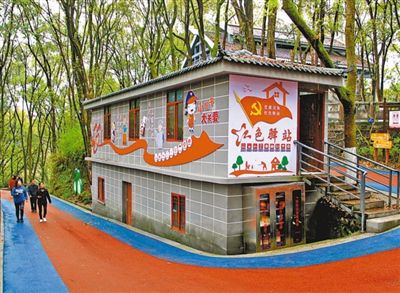
  The Urban Management Law Enforcement Bureau of Enshi City, Hubei Province and the Party organizations of community neighborhood committees under its jurisdiction built a red post station in Fenghuang Mountain National Forest Park to serve the masses. Photo by Tan Hua (People’s Vision)

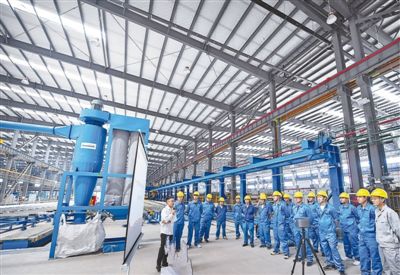
  Party member volunteers walked into the workshop of Dongliang New Materials Co., Ltd. in Huzhou City, Zhejiang Province, and preached the red revolution story to the employees during the break. Xinhua News Agency reporter Xu Yushe

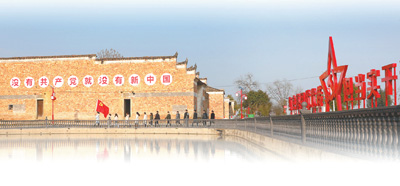
  Tongshan Village, Xinjiebu Town, shanggao county, Yichun City, Jiangxi Province, where young party member cadres re-take the Long March Road. Photo by Chen Qihai (People’s Vision)

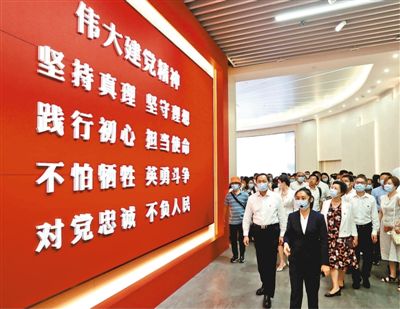
  People watch the exhibition "Great Party Building Spirit" in the First Memorial Hall of the Communist Party of China. Xinhua News Agency reporter Liu Ying photo

  The audience watched the party’s construction achievements exhibition of the central and state organs at the National Museum of China. Photo by Chen Xiaogen (People’s Vision)

  In Lishu Village, Caojia Town, Renshou County, Meishan City, Sichuan Province, party member is helping fruit farmers pollinate pear flowers, ensuring increased production and income, and helping rural revitalization. Photo by Pan Shuai (image China)

  General Secretary of the Supreme Leader stressed: "The overall leadership of the Party and all the work of the Party should be realized by the Party’s strong organizational system." The Party’s grass-roots organizations are the fighting bastion of the Party in social grass-roots organizations, and the foundation of all the Party’s work and fighting capacity.

  Since the 18th National Congress of the Communist Party of China, the CPC Central Committee with the Supreme Leader as the core has attached great importance to grass-roots party building, focused on improving organizational strength, highlighted political functions, consolidated the basic units of the party’s organizational system, woven important ties to serve the masses, smoothly implemented the "last mile" of the decision-making and deployment of the CPC Central Committee, and promoted all-round progress and perfection of grass-roots party organizations.

  Grass-roots units are the foundation of the Party’s governance and the source of its strength. The construction level of grass-roots party organizations has been steadily improved, and the party’s ruling foundation has been continuously consolidated and consolidated, providing a strong organizational guarantee for realizing the Chinese dream of the great rejuvenation of the Chinese nation.

Old people and children don’t have smart phones, and they don’t bring social security cards to see a doctor. What should I do?

  With more and more insured people using medical insurance electronic certificate to buy medicines, many citizens have recently asked, what should the elderly and children do if they don’t have smart phones or can’t operate them, or if the children are in a hurry to see a doctor without their social security cards? On the 8th, the reporter learned from Wuhan Medical Insurance Bureau that the National Medical Insurance APP has opened the function of "Family Account" for medical insurance electronic certificate, which can help family members activate medical insurance electronic certificate on their mobile phones. After the operation is completed, the elderly and children at home only need to take out their mobile phones and call out the medical insurance electronic certificate of family members, so they can help them to see a doctor and get medicine on the code, and they can also inquire about the details of their family’s medical expenses.

  Buy medicine for medical treatment and realize payment by brushing code.

  Medical insurance electronic certificate, commonly known as "electronic medical insurance card", is issued by the national medical insurance information platform, with one person and one yard, which is fully applicable to all medical insurance businesses. At the beginning of this year, Wuhan officially realized the full coverage of electronic certificate, a designated medical institution in the city.

  After the insured person successfully activates the medical insurance electronic certificate, he can complete the medical insurance settlement by swiping the QR code without carrying a physical card when seeking medical treatment and purchasing medicines in the designated medical institutions of our city. Activating the medical insurance electronic certificate can avoid the problems caused by lost ID card, reissued physical card and forgotten password. At the same time, scanning code replaces the tedious process of manual entry twice in the previous charging, and can also greatly shorten the waiting time.

  According to statistics, up to now, nearly 5 million insured people in Wuhan have activated the medical insurance electronic certificate.

  "family account"

  Can bind medical insurance for family members, electronic certificate

  According to reports, at present, the "Family Account" of electronic certificate Medical Insurance has been officially opened. Download the "National Medical Insurance Service Platform" APP, bind the "Family Member Sub-account" on the medical insurance electronic certificate, and collect the medical insurance electronic certificate for the elderly and children who don’t have smart phones. This is the "family account" of the medical insurance electronic certificate.

  According to reports, a maximum of five people can be added to the "family account" of electronic certificate Medical Insurance, and the relationship is two-way. The same insured person can add family members or be added by family members. The "family account" only requires family members to participate in medical insurance, and does not require insurance in the same city.

  "Family account" is different from "family mutual aid"

  At present, our city is deeply promoting the establishment of a mutual aid guarantee mechanism for employees’ basic medical insurance outpatient service according to national requirements, and at the same time reforming the personal account reform of medical insurance. After the implementation of this reform, the scope of personal accounts for medical insurance will be broadened and family members will be allowed to help each other.

  Special reminder is, "‘ Family account ’ And ‘ Family mutual aid ’ Not the same thing. " The medical insurance electronic certificate contains information such as the name, gender, ID number, photo and social security number of each insured person, and implements "one person with one code". Just like the ID card, it is limited to my real name and must be "special code for special use".

  "Family account" is to help family members to activate electronic certificate to apply for medical insurance. When they see a doctor, they can take out their mobile phones to show their family members’ medical insurance electronic certificate, so that they can realize the application of exhibition code, instead of buying medicines, settling medical expenses and inquiring about medical expenses, and it does not involve the issue of giving funds from personal medical insurance accounts to their families.

  Reporter Hu Qiongzhi

  Correspondent Zhang Chunyan Sun Jianbin

Looking back on Bauhaus in the past century: Modernism is still flourishing in Berlin and Germany.

Bauhaus, a design school integrating architecture, design, handicrafts, painting and sculpture, was established in Germany in 1919. It was a gathering place for many pioneers with revolutionary ideas at that time. Bauhaus’s thoughts and aesthetic tastes have influenced a generation.

In 2019, as Germany celebrates the centenary of Bauhaus, the German government will open new museums in Weimar and Dessau, where the Bauhaus school was once located. Strolling around Germany, Bauhaus is still thriving.

In April 1919, Weimar, a small town in the hinterland of Germany, welcomed an experimental school of architecture and art education. The founder and first president Walter Gropius named the school after the German word Bauhaus, and Bauhaus College, the birthplace of modernist architecture, was born.

At the beginning of the year, Bauhaus released the official commemorative logo of the 100th anniversary. Two new Bauhaus museums will be opened this year in Dessau and Weimar, the former school sites of Bauhaus. The other is the Bauhaus Archives, which is being rebuilt in Berlin. In line with the centenary activities of cities throughout the year, the German Tourism Bureau calls itself the "birthplace of modernism", which is very attractive to cultural tourism lovers.

Bauhaus centenary logo

Various posters for Bauhaus’s centenary activities.

Bauhaus is an ideal school of architecture and art. The most famous thing about Bauhaus is its functional design concept, which is completely different from its image in the first few years, but it also makes Bauhaus a brand-not just a school. The brand advocates industrialization and mass production, which is part of the modernist movement.

Of course, Bauhaus is also the epitome of an era.

Weimar Bauhaus

Under the heavy sky, the low-rise residential areas in Lufthansa, Berlin can’t be called beautiful. They were built in the late 1950s to revive areas that were razed to the ground during the Second World War. They are square. Here, the garden is exposed and the skeletons of trees can be clearly seen. But when we look up, we see maintenance and pride. Intelligent furniture can be seen from the big window. Our eyes wandered on the smooth white building designed by Finnish architect Alvar Aalto, and then went down to the ground, where we saw some single-story atrium houses designed by Danish designer Arne Jacobsen. The large column-supported building designed by Oscar Niemeyer is full of sunshine and space.

Walter Gropius, the first president of Bauhaus.

There is a concave "flat" residential area named after Walter Gropius. Gropius is an architect of Bauhaus in the world, and Bauhaus is one of the most influential schools of art and design in the 20th century.

In the Bauhaus Declaration in 1919, he declared: "Let’s look forward to, conceive and create new buildings in the future together, and use them to combine everything-architecture, sculpture and painting-into a single form. One day, he will ascend from Ran Ran to heaven from the hands of millions of workers, which symbolizes the new belief in the future as crystal clear as a crystal."

Bauhaus Declaration, Gropius (text), 1919.

Without Bauhaus, Lufthansa-style social housing and modernism as we know it would not have happened.

This year, many German regions and towns are celebrating the centenary of Bauhaus. The commemorative activities include exhibitions, lectures, performances, workshops and even "blind dating" of artistic dialogue. Although Berlin will become the center, there are Bauhaus buildings all over Germany, and the legacy of the movement extends to Chicago, Tel Aviv, S? o Paulo and Melbourne.

From 1919 to 1933, although Bauhaus only lasted for 14 years. But in these 14 years, Bauhaus initiated a truly modern way of thinking about art and crafts, public sphere, urbanism and the combination of form and function.

Bettina Güldner, an art historian and curator who studies Bauhaus, points out that Gropius’s ideas have influenced shopping malls, churches, office buildings, Berlin Air Transport Memorial Hall and even hotels in Berlin. Berlin has six modernist manors listed as World Heritage by UNESCO. The ADGB trade union school in Bernau, 10 kilometers northeast of the city, is listed on the UNESCO list because of its dual importance to Bauhaus and "classical modernism". They are simple, neat and elegant, and have pride and open belief in the use of modern materials.

"They don’t need embellishment or overcrowding," says Gulner. Buildings can be newer and better, instead of copying anything that already exists. The birth of beauty lies in finding a solution to the problem: that is,’ what is useful?’ .。 "

Poster of Weimar Bauhaus exhibition in 1923.

Weimar is located 280 kilometers southwest of Berlin. The founders of Weimar Republic met there (also in 1919). In Germany after World War I, the city was politically neutral. They hope to get the spiritual guidance of Weimar intellectuals, including Goethe, Schiller, Nietzsche and Liszt.

In 1919, Bauhaus was at least as revolutionary as republicanism. But this is not an imaginative leap. The old city is solemn and serious, with 12 main buildings in Baroque style, which are listed as "classical Weimar" by UNESCO. Not far away is Haus am Horn, a groundbreaking "white cube". The first Bauhaus exhibition was held in this building in 1923. This modern "test building" is low and flat, with flat walls and monotonous colors. Now it has been listed as a world heritage.

Haojiaowu

Weimar’s Bauhaus trip needs to return from Gropius to Belgian architect Henry van de Velde. He is the core figure and leader of early Belgian design movement and an important pioneer of modernism. With his innovative design, he added the Arts and Crafts School (which has now become a university) and the private residence Hauhohe Pappeln to Weimar.

You can visit the website of Bauhaus, but students of Weimar University also offer guided hiking several times a week (starting from 4 euros). On April 6th, the new Weimar Bauhaus Museum opened next to the exaggerated Nazi-era building Gauforum.

In the century after Weimar founded Bauhaus, the success of Bauhaus furniture lies in that it has become so ubiquitous and invisibly integrated into our life background. Ludwig mies van der rohe’s Barcelona chairs decorate every corporate hall, as do the spherical lights designed by Max Bill. Bauhaus continues to influence every aspect of our lives in ways that we don’t even notice, from bookshelves, kitchen utensils, road signs, tableware and so on.

Bauhaus school building in Dessau

With the advent of the 1920s, Weimar became more and more conservative. In 1925, Gropius moved Bauhaus to Dessau, 130 kilometers northeast. As the location of Junker aircraft factory, the city has a long tradition of industrial design. The Bauhaus movement also reached its peak here. The headquarters of the movement can be reached within walking distance from the main station in Dessau. The whole building is made of glass, steel and concrete, which is the Bauhaus school building. Entrusted by the city, this building was designed by Gropius and built in 1925-1926 to accommodate all departments of a school, teaching courses ranging from furniture design to architectural design to typesetting, covering all aspects.

Gropius and the masters of Bauhaus are on the roof of Dessau school building.

Kandinsky’s course

Today, the exhibition space of this building is small, but it is very brilliant, with carefully edited silent films telling the story of Bauhaus. At the same time, the exhibition runs through the main innovative designs of Bauhaus. The names of Paul Klee and Wassily Kandinsky are familiar to everyone, but Hannes Meyer and Laszlo Moholy-Nagy are highly respected in the design field. (Note: In 1928, Gropes resigned as principal of Bauhaus, and was succeeded by Hannerz Meyer, head of the Department of Architecture, and Laszlo Mohori-Naji was a teacher of Bauhaus. ) Pioneering lamp and furniture designs were displayed in the adjacent exhibition hall, and the cardboard model of the building also presented an abstract form. Some photos of theaters and music parties show that the Bauhaus era was full of avant-garde and commitment to craftsmanship.

Hannerz Meyer, the second president of Bauhaus.

A group of ordinary white concrete buildings nearby are made of glass and gray steel. These seven "Masters’ Houses", once the address and studio of Bauhaus teachers, are now exhibition spaces and studios for artists. Outside the city are five deck-access houses designed by Hannerz Meyer, which are important early examples of community housing and public space. Of course, there is also the Bauhaus-style restaurant Kornhaus, which serves non-minimalist bar food.

"Masters’ Houses"

"Masters’ Houses"

Bauhaus store is undoubtedly a happy place, where you can easily spend 100 euros on derivatives such as cups and luxury pencils. Dessau will open a new museum later this year: the Bauhaus Museum in Dessau will open in September, with enough space to display more than 49,000 pieces of its collection. Today, Bauhaus will continue to open, and the hotel area has been re-paved, and fanatical fans can rest in a cellular double-decker room. Anni Albers, a famous German textile artist, once lived here.

During the Dessau period, Bauhaus’s teaching method adopted the viewpoint of paying more attention to the industry, giving up the workshops of wood, stained glass, binding and pottery, and supporting the state of "work and study" instead. Students will be engaged in productive products and sales. For example, geometric chess designs like Josef Hartwig are so popular. Students have also become craftsmen who fulfill orders. As time goes on, schools become more and more proficient in business.

In 1929, Ludwig·The Barcelona chair designed by Mies Van Derro and Lily Reich.

Chess designed by Joseph Hartvig.

The last frame of this silent film in the Bauhaus school building was named "The Last Party". In September 1932, Bauhaus, led by Meyer, expanded from artistic radicalism to political radicalism, which made Bauhaus face more and more political pressure. Finally, Meyer himself had to resign in 1930 and be succeeded by Mies van de Rohe (1886-1969). Meese, who took over, faced the pressure from Nazi forces and finally moved the whole Utopia project to Berlin. But in the end, Bauhaus only lasted seven months in Berlin.

When the school moved to Berlin, Bauhaus shifted his focus to architecture and interior design. Bauhaus has had a great influence on our view of home. Together with his partner Lilly Reich Zu Ki, Mies Van Derro put forward the idea of an open home space, in which the areas in the home are separated by hanging fabric curtains and movable partitions. In 1930s, with the promotion of exhibitions and publications, the open idea was imitated by countless architects in the rest of this century, and it is still the way of life today.

Ludwig Mies van der Rohe

Paradoxically, 14 years after its founding, the closure of Bauhaus ensured its lasting success. After the closure, the myth of Bauhaus only increased, because its tutors and students were scattered all over the world, spreading their ideas. Everyone claimed that they were the original legal heirs. In the past 100 years, its influence has been more obvious all over the world than ever before, and the Bauhaus brand has also won the ultimate victory.

New Bauhaus Museum in Dessau, Oscar Schlemm’s Dancing in the Glass.

In Berlin, the main collection of Bauhaus is the Bauhaus-Archiv designed by Gropius in Tiergarten. At present, this archive is being closed for renovation, which will last for four years. The official reply is: "In order to celebrate the centenary of the establishment of Bauhaus in 2019, the Bauhaus Archives/Museum is undergoing renovation." In this regard, many foreign tourists expressed dissatisfaction with this. The "temporary exhibition" turned out to be a small shop near the zoo station.

This year’s Germany is undoubtedly suitable for Bauhaus-themed travel. There are related architectural landmarks in Thuringia, erfurt, Guerra and Jena. Cities such as Bremen, Frankfurt, Hamburg and Mü nster also have houses, factories, dams, foundries and garages built by modernists influenced by Bauhaus.

In contrast, Bauhaus is not just a movement of the past; It is a force today, providing nuanced insights into German life and art. In art books, modernism is usually considered rootless, but what we now think of as "new" mostly comes from Dessau and Weimar.

"I think Bauhaus is a very German phenomenon," Bettina said. "Our industrialization time is very late. Bauhaus responded to the need to re-educate craftsmen and catch up with Britain and France. The first world war destroyed the nationalism of the empire. 1919 is a new dawn. "

In 1926, a woman wearing an Oscar Schlemmer drama mask sat in Marcel Brewer’s B3 chair.

"Bauhaus: Centennial Exhibition" will be held at the Museum of Modern Art in Berlin from September 6, 2019 to January 27, 2020.

"The Migrating Bauhaus: Berlin Is Still Not Dead" will be held at the World Cultural Palace in Berlin from March 15th to June 10th, 2019.

"Henry Van Derfeld: Pioneer of Modernism Crossroads" will be held from March 15th, 2019 to January 15th, 2020 at the Gra Museum in Germany.

"Oscar Schirmer: Bauhaus and the Road to Modernity" will be held from April 28, 2019 to July 29, 2019 at the Gotha Museum in Germany.

Attached:

Bauhaus: A Classic of German Modernism

flughafen berlin tempelhof

The Nazis condemned the cool contemporary architecture as "depravity", but the architect Ernst Sagebiel, a party member, did not hesitate to integrate modernist features with monument details when designing this iconic airport terminal. Since 1936, due to the war, it has never been completed, but its natural stone appearance is still shining, and its interior is full of lyricism. The airport was used during air transport in Berlin and closed in 2008. Some parts are used as refugee camps.

Fagus factory on the Rhine

In 1911, Walter Gropius and Adolf Meyer jointly designed the Fagus factory. Fagus Factory, located in Alfeld-on-Lena, Lower Saxony, is one of the earliest modern architectural works and the first major project in Gropius. This world heritage has inspired thousands of British factories, towers and public schools.

Dresden, German Health Museum

In February 1945, nearly 4,000 tons of bombs were dropped on Dresden in just three days. This is a rare modern survivor. The German Health Museum was designed by the architect Wilhelm Kreis from 1927 to 1930. Its most important style is new objectivity, which tries to emphasize its functionality, weaken its characteristics and oppose over-expressionism.

Leipzig, Guerra Museum

Leipzig is famous for its Renaissance and Baroque core. At the same time, Leipzig also has important modernist buildings, including suburban houses and churches in the 1920s, striking museum buildings and enlightened urban planning. No visitor will miss the complex of Guerra Museum. They combine new objectivity with artistic decoration.

Turbine Workshop of General Electric Company, Berlin

The turbine workshop of General Electric Company was built in 1908 and designed by architect Baehrens and engineer Karl Bernhard. It is considered as the first successful application of modernist style elements in industrial buildings. Glass and steel are used to replace stones and chisels, and their functions or forms are clearly seen by the public. Contemporary people call it "machine cathedral".

(This article is synthesized and compiled from "100 years of Bauhaus: Berlin and Beyond" and "Bauhaus: 100 years old but still in our homes today" in The Guardian.)

How much do you know about "social fear"?

Dandelion home

An interesting and healing place.

If you can’t let go when you go out to play karaoke with everyone,

I can only hide in the fall and brush my mobile phone silently;

When you face "Mr. Tony" and enthusiastically recommend a card,

Whether you can’t refuse to do your hair,

Can only be reluctant to accept;

When you are asked to introduce yourself,

Is it like being in the throat when faced with "public punishment"?

I can only stutter.

If so, congratulations,

You are probably a "social phobia" patient.

So how much do you know about the hotly debated "social fear"?

What is "social fear"?

Social phobia is a subtype of phobia. Phobia, originally called panic neurosis, is a kind of neurosis. It is mainly manifested by excessive and unreasonable fear of some external objective things or situations. Patients know that this fear reaction is excessive or unreasonable, but it still appears repeatedly and is difficult to control.

Panic attacks are often accompanied by obvious anxiety and autonomic nervous symptoms. Patients try their best to avoid objective things or situations that lead to fear, or endure with fear, thus affecting their normal activities.

Why do you get "social fear"?

The source of "social fear" is divided into two main reasons: biological factors and social psychological factors. Biological factors are related to his own innate factors. Such as genes, stuttering and so on.

Socio-psychological factors indicate that social phobia is influenced by significant family and social factors. For example: family defects, environmental factors, social cognitive factors and so on.

What are the specific manifestations of "social fear"?

Specific manifestations: First, the emotional experience is not good, and there will be anxiety, fear and even hostility in social or imaginary social occasions. The second is physical symptoms, which may be accompanied by symptoms such as blushing, sweating, partial body rigidity, stuttering, and unsmooth speech. Third, the social security area is gradually shrinking, and there is a preset self-security area in the heart, which avoids the unsafe and uncomfortable social interaction that I think and retreats to the inner security area.

How to alleviate "social fear"?

1. Don’t put yourself in the right place at will. Pay too much attention to the eyes of others, feel that others are paying attention to themselves, and their every move is being paid attention to by others.

2. Control your breathing and try to relax yourself in a comfortable position when taking a deep breath. Relax your shoulders, inhale through your nose for 4 seconds, pause for 2 seconds, and exhale through your mouth for 6 seconds, and so on until you calm down.

3. Face the situation that scares you. Try to make a list of your fears. What are you afraid of? Where does this fear come from? What is the root cause? When will it appear? When will it be less serious? When will it be more serious and so on can help you to look at the source of your fear objectively.

There are too many misunderstandings about the social fear crowd. However, it is not that we are unwilling to talk, but that we are afraid of the embarrassment of becoming a "topic terminator"; It’s not that we don’t want to get together, but that we are afraid of being more lonely and deserted in the excitement; It’s not that we don’t want to be a gregarious person, but that we are afraid of paying our hearts wrong and hurting others unintentionally.

Most people who are afraid of society enjoy loneliness. But maybe, it just seems to enjoy loneliness. After all, sometimes we want to be people who can laugh and laugh freely in groups.
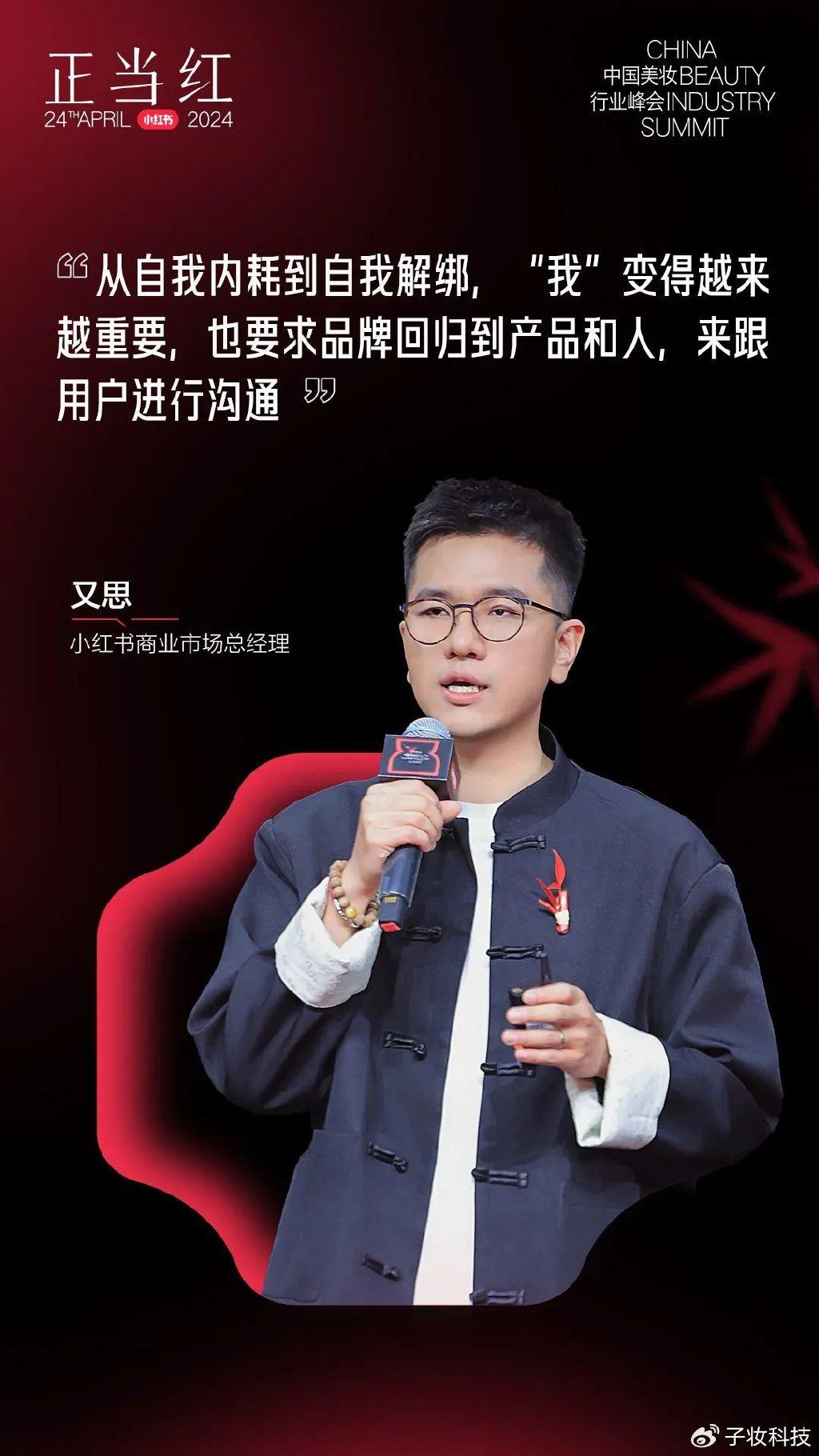
Read the original text

Feel the spring of tourism recovery at 8 degrees south latitude —— A direct charter flight from China to Bali

  Xinhua News Agency, Jakarta, February 18th  Close-up: Feel the spring of tourism recovery at 8 degrees south latitude — — China’s domestic charter flight to Bali is direct.

  Xinhua News Agency reporter Xu Qin Yu Qianliang

  The wonderful journey is coming to an end, and 210 China tourists who take a charter flight from lion air, Indonesia will leave Bali, Indonesia and return to Shenzhen at 23: 25 on the 18th. This is the fourth round-trip charter flight for China tourists from Shenzhen to Bali this year.

On February 12, at Wulalai International Airport in Bali, China tourists walked out of the international flight arrival port under the guidance of the team leader. Xinhua News Agency reporter Xu Qinshe

  When landing at Bali Airport seven days ago, airport staff wearing Indonesian costumes put on bright welcome garlands for every China tourist, and local tour guides enthusiastically introduced the scenery of Bali to the tourists in Mandarin.

  The tour guide Pi Ke is the fourth generation Indonesian Chinese. "Welcome to Bali!" Pico introduced Bali and shared his experiences during the epidemic. He said: "When the tourism industry in Bali was at its lowest ebb, there were only a handful of tourists, many shops and restaurants were closed, hotels were difficult to operate, I also changed jobs and even went to other Asian countries to look for job opportunities. As soon as I saw the signs of recovery some time ago, I returned to my beloved old job. "

  "I miss you as much as Chinese restaurants in Bali!" When it’s time for lunch, Pico interacts with the tourists and says, "China tourists who come to Bali have strong spending power, and I communicate smoothly with China tourists. Now China tourists pay more and more attention to the travel experience. In addition to shopping, they will also seriously understand the local culture and share the food and beauty of Bali with more people through social media. "

On February 13th, in Bali, China tourists visited a seaside cafe. Xinhua News Agency reporter Xu Qinshe
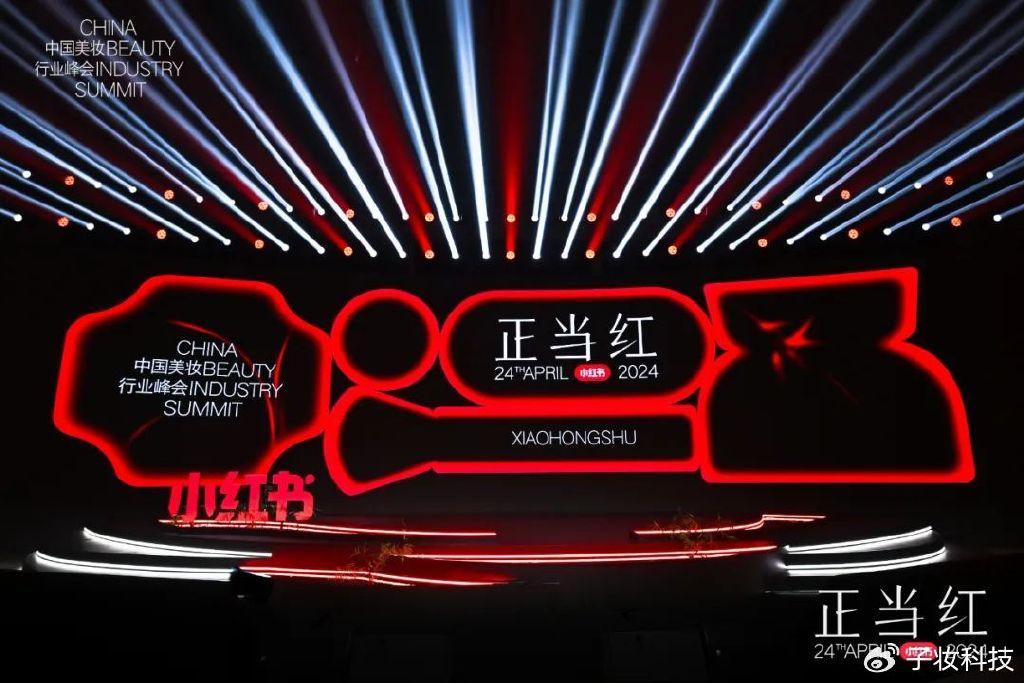
  Before the outbreak of COVID-19, China was one of the main sources of Indonesian tourists. According to the data of Indonesia’s Central Bureau of Statistics, the number of China tourists visiting Indonesia in 2019 reached 2.07 million.

  On January 22nd, Bali welcomed the first charter flight of China tourists this year. Flights from Hangzhou and other domestic cities to Bali have also been opened one after another, and China tourists’ travel to Bali is recovering in an orderly manner.

On February 13th, in Bali, China tourists visited a turtle farm. Xinhua News Agency reporter Xu Qinshe

On February 14th, tourists from China visited the famous scenic spot "Devil’s Tears" in Lombang Island, Bali. Xinhua News Agency reporter Xu Qinshe

  Qin Chuan, the tour leader, has not left the country for three years. He is as excited as the tourists. "Bali is world-famous, with rich and diverse tourism resources. Its unique natural scenery and cultural landscape attract China tourists, and it is not far from China, and there is no time difference." Qin Chuan said.

  The chartered tour group led by Qin Chuan and four other colleagues has a one-week trip in Bali. Among the more than 200 tourists, there are both "honeymoon tours" and "family tours" in Bali, and there are also people who come alone or with friends. The sightseeing projects include many famous scenic spots in Bali, and the experience projects include massage, diving and mountaineering in Bali.

  Ms. Song from Changchun travels with her daughter. She said: "I haven’t been abroad for a long time. I only watched the beautiful scenery of Bali on TV before. After coming, I found that all kinds of tourism services here are very thoughtful."

  Some of the hotels where tourists stay are located near the most lively kuta beach in Bali. Fekley, a hotel attendant, is busy answering questions about hotel facilities for China tourists. "It’s still so kind to see so many face of china again."

  Walking from the hotel to the beach, restaurants and shops with Chinese signs can be seen everywhere. Small vendors selling snacks, drinks, sunglasses and other groceries are trying to sell them to tourists on the beach, and the shouts are sometimes mixed with some nonstandard Chinese.

  Balinese Putu sells groceries on the beach. He told reporters: "I found that there have been more and more tourists from China in the past month or so. I learned a few words of Chinese some time ago, and now it just comes in handy. "

On February 12, at Wulalai International Airport in Bali, Indonesia, the staff wore a welcome wreath for China tourists. Xinhua News Agency reporter Xu Qinshe

  When tourists were visiting the famous scenic spot "Devil’s Tears" on Lombang Island, it suddenly rained heavily. Tourism professionals, the Clokon area where Lunbang Island is located, arrived in the rain and presented flowers to China tourists to welcome them.

  After seven days of sightseeing, Qin Chuan and his colleagues have begun to look forward to the next trip to Bali. Qin Chuan said: "We all really feel the spring of Bali’s tourism recovery."

Department of Youth Sports, State General Administration of Sports

Under the guidance of the Ministry of Education and the State Sports General Administration, the first China Youth Football League sponsored by the China Football Association allowed various mechanisms and forms of football series events through open events, which increased the participation of many parties and the selection of football reserve talents in a competitive environment. At the same time, it abandoned "championship" and returned to "competition for all", and made major innovative reforms in the design, implementation and promotion of competitions, which ushered in substantive breakthroughs and embodied distinctive features, and became a new symbol and a new model for promoting the deep integration of physical education and education in the new era.

First of all, the integration of sports and education is highlighted, and there are no barriers to the competition. There are 45 competition areas and 9 competition groups for men and women in the country, and teams from schools, sports schools, youth training echelons of clubs and social youth training institutions can participate, which has brought China’s youth football events to a new height.

Secondly, introduce high-tech and new media into youth competitions to attract participating teams, media and fans, and improve the appreciation and participation. The competition office of China Youth League introduced wearable devices, video analysis and data collection in this competition. The official App "Green China" updated the competition information in real time, and China Education TV broadcasted the competitions in Weibo and WeChat official account, producing network and TV signals. The cumulative number of viewers and Weibo readings on related topics on all major platforms reached tens of millions.

The third is to improve the quality of the event through reasonable schedule and strict organization. The scene is wonderful and the competition is fierce, which reflects the technical and tactical development level of youth football and provides a stage for showing the development of youth football in China in recent years. China Football Association also introduced international referees in the competition and conducted exchange training for young referees, which ensured the smooth progress of the competition and trained the referee team.

China Youth Football League, as the top youth football tournament with the widest coverage, the highest competitive level and the largest number of participants in China, has formed a wide range of social influence and enhanced the competitiveness of football projects through its first year of trial. As a new starting point for the development of youth football in China, the working procedure, organizational structure and event setting of this new event are also facing new challenges.

First of all, how to form a favorable situation of cross-departmental cooperation, multi-field resource sharing and all-round platform construction. Under the guidance of the Ministry of Education and the State Sports General Administration, it is necessary to make full use of the differences of resources in different places through overall guidance, reasonable guidance and hierarchical guidance, and formulate rights and interests plans that are more in line with local characteristics and optimize the balance of resources. The China Youth Football League Competition Organization Work Plan (2022-2024) (hereinafter referred to as the "Work Plan") is jointly formulated and implemented by the Ministry of Education, the State Sports General Administration and the Chinese Football Association. The competition management organization is the China Youth Football League Competition Office, with the chairman of the Chinese Football Association as the director and the deputy director as the main leaders of the Sports, Health and Arts Department of the Ministry of Education and the Youth Division of the State Sports General Administration. At the provincial level, the Education Department and the Sports Bureau, as operational guidance, are under the responsibility of the Football Association. It is necessary to establish a coordination mechanism for multi-sectoral cooperation and clarify the primary and secondary responsibilities of organizations. At the same time, the economic development levels of provinces and cities in China are quite different, and the coordination ability of education departments, sports departments and football associations in different provinces and cities for specific work is quite different. It is urgent for economically developed and underdeveloped areas to coordinate the implementation of the Work Plan and the conditions for holding the games, so as to form a "national chess game" layout of youth games and avoid the situation of no distinction between primary and secondary, unclear rights and responsibilities and different standards.

Second, how to emphasize the mass, popularity and fairness of the event. The competition scheme covers the age of U8-U19, covering teenagers in colleges, middle schools and primary schools, with a huge crowd range, which breaks the previous pattern of holding youth football matches by professional club echelons, sports school teams and campus football, and provides opportunities for the most extensive youth groups to compete on the same stage, learn from each other and compete healthily. Therefore, the organization of the tournament should not only mobilize the enthusiasm and participation of the majority of young people to the greatest extent, but also pay attention to the definition and audit of the composition of the participating teams, the identity of the participating personnel and the qualifications of the participating organizations, and formulate a detailed, reasonable and feasible selection mechanism on the team participation plan to avoid the improper flow of outstanding football resources talents and affect the mass basic work of cultivating outstanding talents.

Third, how to optimize the organization work and build the cornerstone of the event. Sports and competitions need to follow the scientific principle, and put more emphasis on interest-oriented sports training for teenagers. There is a big gap between young children’s sports skills and physical conditions, and their collective consciousness and cognitive level are also significantly different. It is necessary to make a more reasonable division of groups and competition arrangements, accurately organize the division of events, and pay attention to cultivating young players’ self-confidence, sense of accomplishment and the improvement of sports skills through competition in terms of psychological and physical growth. At the same time, campus football and vocational youth training are two different training systems, and the stages and orientations of cultivating football talents are also different. Nationally, the provinces with developed economic development have a high degree of football marketization, and many excellent coaches and student players have gathered to participate in the youth training system. However, in the provinces with scarce resources, after-school "430" campus football activities may still lack a systematic and professional system. Therefore, the national youth league matches need to pay special attention to and cultivate the balanced development of football in different regions. Through the promotion of the games, we can balance the distribution of resources, change the unbalanced and insufficient development of football in different regions, and give full play to the resource distribution and coordination of the games, which not only takes into account the competitive level and enjoyment of the games, but also highlights the popular characteristics and inclusiveness of the games.

On this basis, China Youth Football League needs to make full use of China’s overall strategy and historical development opportunities to promote the construction of a strong sports country, promote the national fitness strategy, emphasize the integration of sports and education, and promote the development of football. On the basis of scientific formulation and implementation of the Work Plan, it should pay more attention to cultivating the characteristics of differentiated and balanced youth events in the implementation process, ensure the fairness, fairness and openness of the events, fundamentally promote the development of youth football, fully realize the social value and function of football, and promote China’s football. (The first author, Li Yin, is a lecturer in Sports Department of Sun Yat-sen University, with a doctorate in management; The second author, Ye Lin, is the deputy dean, professor and doctoral supervisor of the School of Political and Public Affairs Management of Sun Yat-sen University.