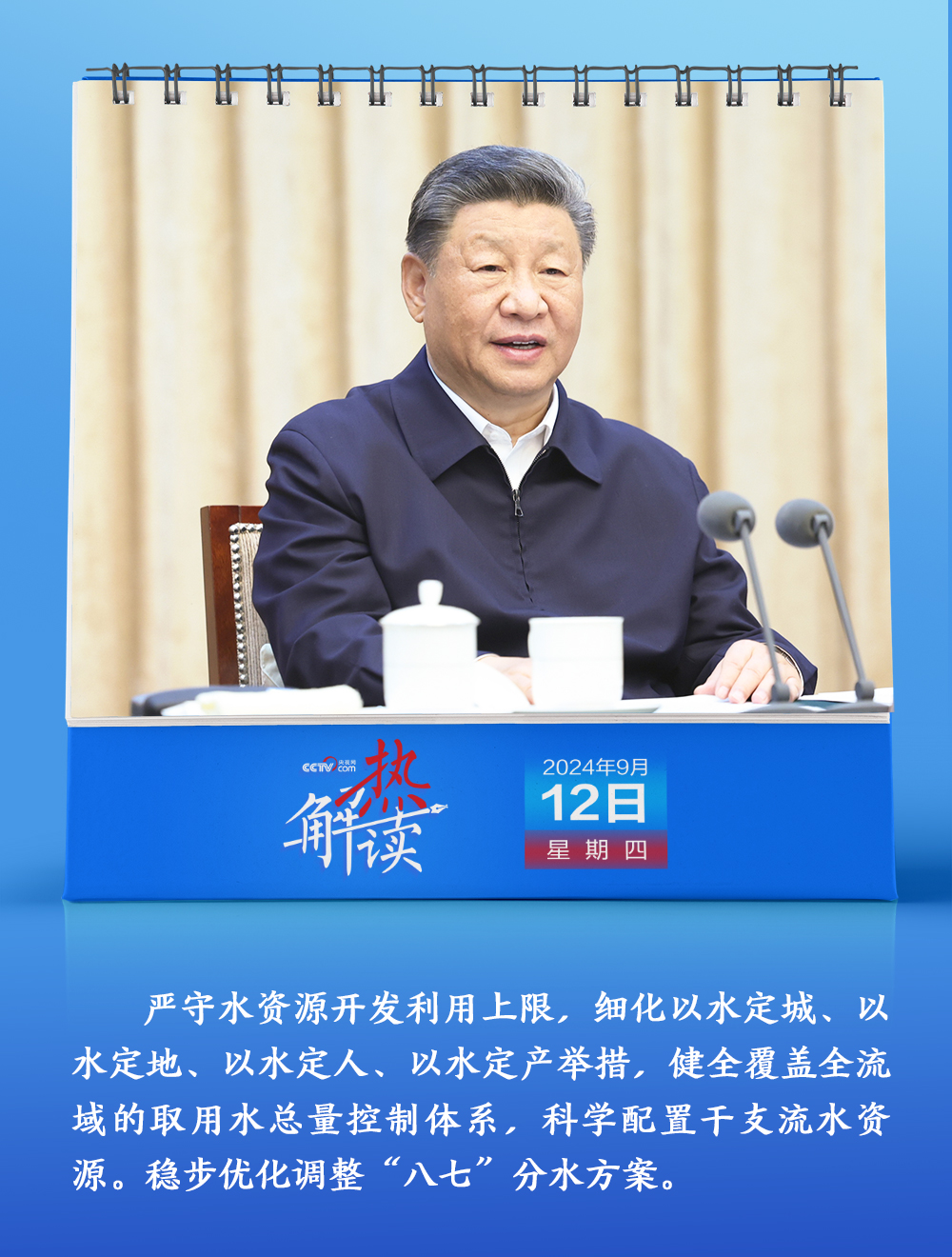
On September 12th, General Secretary of the Supreme Leader, who visited Lanzhou, Gansu Province, once again presided over the symposium on comprehensively promoting ecological protection and high-quality development of the Yellow River Basin, following the symposium on ecological protection and high-quality development of the Yellow River Basin in 2019 and the symposium on further promoting ecological protection and high-quality development of the Yellow River Basin in 2021.
At this symposium, the General Secretary explicitly requested "strictly observe the upper limit of water resources development and utilization, and refine the measures of determining cities, land, people and production by water" and "steadily optimize and adjust ‘ August 7th ’ Water diversion scheme ".
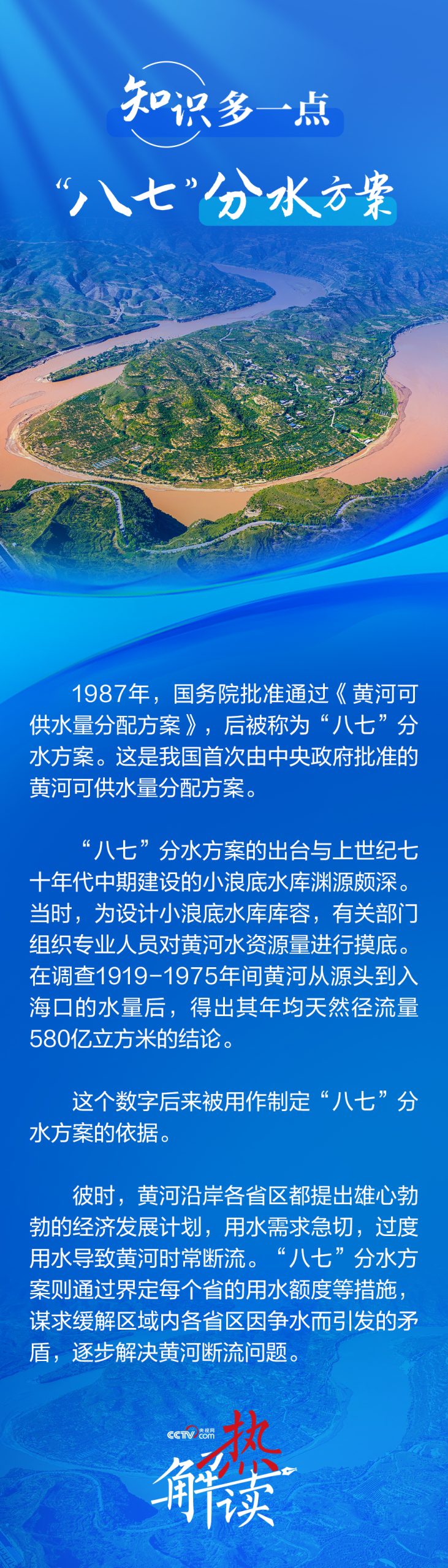
The "Eighth Seven-Year Plan" is a water allocation plan for the Yellow River approved by China in the 1980s. Based on the actual water consumption in 1980, the plan comprehensively considers the scale of irrigation development, the growth of industrial and urban water consumption and the construction of large and medium-sized water conservancy projects in the provinces along the Yellow River to allocate water rights for the Yellow River. The "August 7th" water diversion scheme has been used since it was approved by the State Council in 1987, and has not been readjusted.
Since the implementation of the "Eighth Seven-Year Plan", the trend of excessive growth of water consumption in various provinces along the Yellow River has been effectively curbed, in order to make rational use and save protectionDevelopment of Water Resources in the Yellow River BasinPlayed an important role.
However, with the development of economy and society, the shortage of water resources has increasingly become an important factor restricting the development of areas along the Yellow River, and some provinces and regions along the Yellow River have issued calls from time to time to adjust the "eighth seven-year plan".
From a historical point of view, when the water was divided in 1987, due to the underdeveloped economy at the source of the Yellow River and the upstream provinces such as Qinghai and Gansu, the water resources of the Yellow River were allocated very little.
From the economic point of view, compared with the water division in 1987, the proportion of industries along the Yellow River and Nine Provinces has been adjusted, and the proportion of primary industry has decreased. It is obvious that the distribution of water based on agricultural irrigation water is no longer suitable for the current development needs.
From a practical point of view, with the completion and operation of the East Middle Route of South-to-North Water Transfer Project and Xiaolangdi Project, the Yangtze River can be used to divert water from Shandong, Hebei, Henan and Tianjin in the lower reaches of the Yellow River.
Therefore, the water resources in the Yellow River Basin are ready for reallocation.
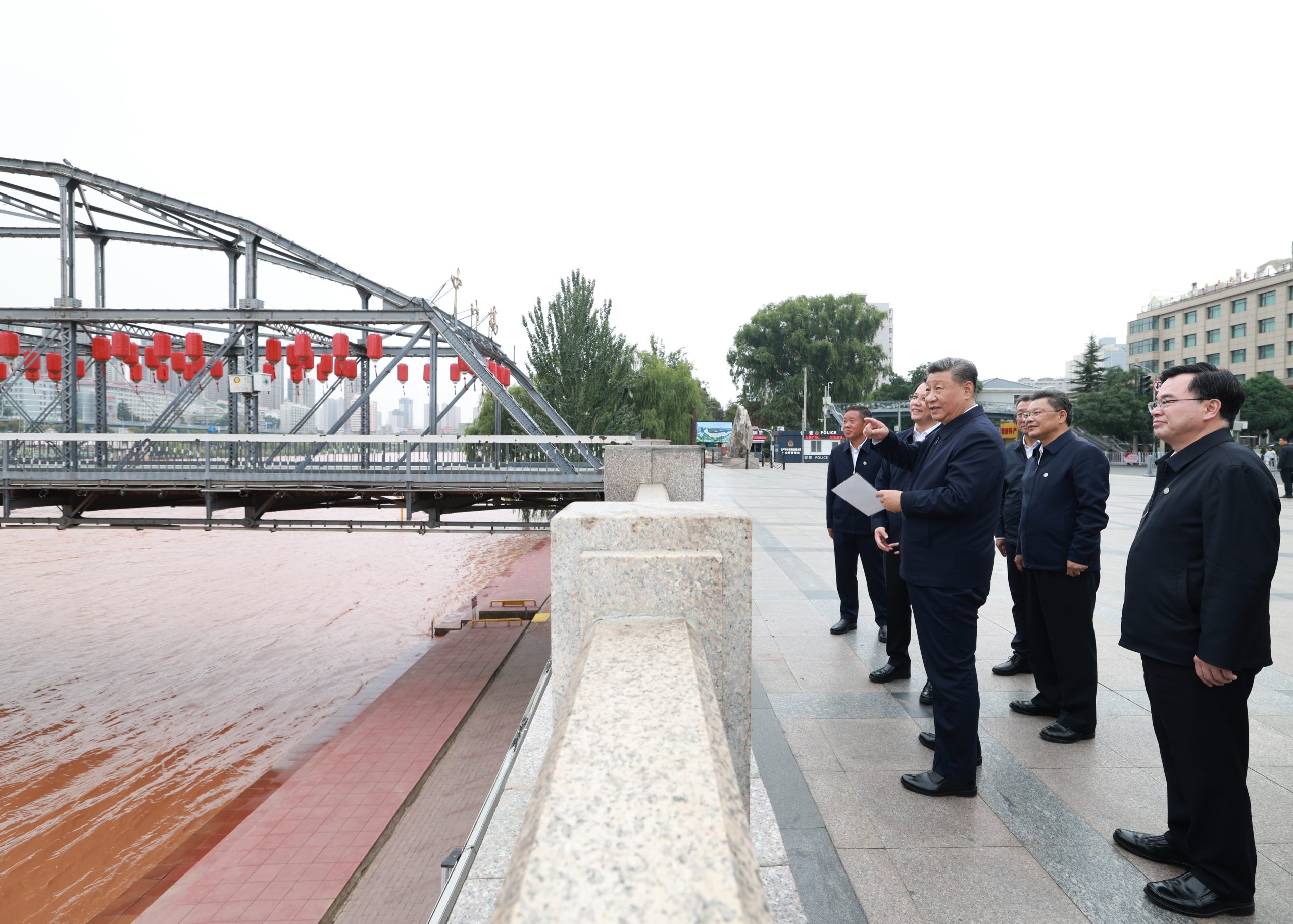
△ On September 11, 2024, General Secretary of the Supreme Leader came to the Zhongshan Bridge section of the Yellow River in Lanzhou City, Gansu Province to learn about the local promotion of ecological protection in the Yellow River Basin.
Water is the source of life and necessary for production. With limited water resources accounting for 2% of the country, the Yellow River Basin undertakes the task of supplying water to 12% of the country’s population, 17% of cultivated land and more than 50 large and medium-sized cities, and the contradiction between supply and demand is particularly prominent.
What’s the solution to the problem?
In recent years, from Fenhe River to Sanjiangyuan, from Wuliangsuhai to the mouth of the Yellow River, General Secretary of the Supreme Leader has traveled all over the nine provinces and regions in the upper, middle and lower reaches of the Yellow River, and conducted in-depth research and thinking on how to solve the problems faced by the ecology and development of the Yellow River basin under the new situation.
On September 18, 2019, at the symposium on ecological protection and high-quality development in the Yellow River Basin, the general secretary’s words were firm: we must adhere to the principle of water-based cities, land, people and production, and take water resources as the greatest rigid constraint, and rationally plan the development of population, cities and industries.
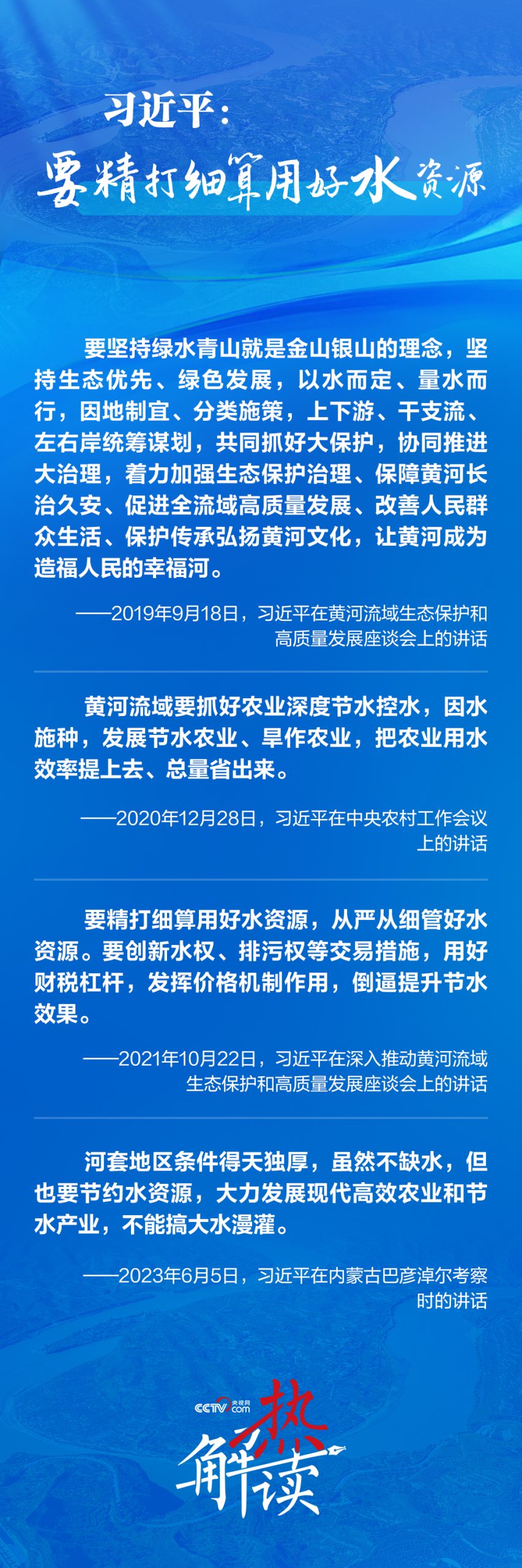
Since then, the whole Yellow River basin has taken action, and the simple truth of "how much soup is soaked" has been deeply rooted in the hearts of the people.
Ningxia issued the implementation plan of "four waters and four determinations"》, the Yellow River water, groundwater, unconventional water and other different water sources are allocated and dispatched in full caliber, and a water distribution system with indicators reaching county, district management and industry overall planning is constructed to explore a high-quality development path that promotes urban development, industrial layout, land use and water resources carrying capacity.
Inner Mongolia actively promotes the reform of water rights. By May 2024, Inner Mongolia had transferred 443 million cubic meters of Yellow River water by relying on the water rights trading platform, which solved the water shortage problem of more than 260 industrial projects.
Shanxi focused on steel, chemical industry, cement, non-ferrous metals, food and other high water-consuming industries, and created 14 provincial-level water-saving enterprises, effectively improving the level of water resources conservation, intensive and safe utilization.
… … … …
At this symposium, the general secretary further emphasized that "actively explore and standardize the promotion of water rights transactions" and "implement water-saving actions to accelerate the construction of a water-saving society" areRational useThe water resources of the Yellow River point the way.
Water makes everything flourish. "Steady optimization and adjustment ‘ August 7th ’ Water diversion scheme ",comprehensively implementing the principle of" four waters and four decisions "and carefully doing this big article on" the relationship between people and water "will definitely inject new vitality into the ecological protection and high-quality development of the Yellow River Basin.