
At the beginning of the founding of New China, the leaders attached great importance to the role of "outside brain". The opinions of the former Soviet Union were repeatedly consulted during the preparation of the First Five-Year Plan, and the method of combining "leaders, experts and the masses" was put forward during the Third Five-Year Plan. However, due to the need for confidentiality, the State Planning Commission was a state-level secrecy unit at that time, and experts played a very limited role as outsiders.
After the reform and opening up, experts have played an increasingly important role. According to Comrade Hu Qiaomu’s introduction in the article "How China’s leaders make decisions", experts played an important role in decision-making in the 1980s. First, they strengthened the role of consulting institutions, mainly internal research institutions in the State Council, China Academy of Social Sciences and major universities in Beijing. The second is to attract experts to participate in the demonstration work. After the Seventh Five-Year Plan, experts began to participate in policy consultation by participating in symposiums; after the Ninth Five-Year Plan, experts further participated in policy consultation by participating in preliminary research; during the Tenth Five-Year Plan, an expert deliberation committee was formally established; during the Eleventh Five-Year Plan, it was changed into an expert consultation committee, which became a specialized policy consultation and policy demonstration institution.
Who can participate in the core decision?
There is no doubt that research institutions have a great voice in the decision-making process, and they are widely involved in the decision-making process. From the core to the periphery of decision-making, we can see the ubiquitous influence of professional researchers.
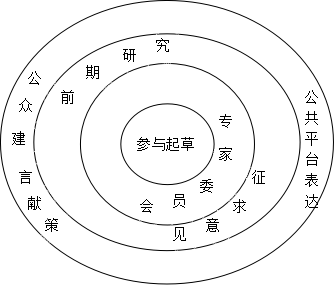
From the perspective of participation structure, direct participation in drafting has entered the core of decision-making. The core of decision-making is the national development planning expert Committee, which is not only a long-term advisory body for the preparation of the five-year plan, but also has the right to demonstrate the plan; At the decision-making consultation level, it is to participate in the preliminary research of decision-making and solicit opinions at different stages of opinion planning; At the periphery of decision-making consultation, various opinions and suggestions are actively put forward through public suggestions channels and public platforms to influence decision-making.
Scholars from some government-affiliated research institutions directly participated in the drafting of the plan. For example, the members of the party’s "Proposal" drafting group included Li Jingtian, executive vice president of the Central Party School, Bai Chunli and Huang Zhijian, executive vice presidents of China Academy of Sciences, Wang Weiguang, executive vice president of China Academy of Social Sciences, and Cai Fang, director of the Institute of Population and Labor Economics of China Academy of Social Sciences. Wang Yiming, executive director of the National Macroeconomic Research Institute, and others participated in the drafting of the Outline. In a drafting group dominated by government officials, scholars participated in the planning drafting, which provided a professional perspective for the planning work.
Expert argumentation is the legal procedure for major national decisions.
In October, 2005, the State Council explicitly stipulated that the expert argumentation system for planning should be implemented. After the State Planning Expert Committee was formally established, the number of members was 37 at first, and then increased to 56. During the preparation of the Twelfth Five-Year Plan, a total of four meetings of the National Development Planning Expert Committee were held at different stages. The first meeting was held at the stage of drafting the basic ideas (referring to mobilizing all parties to make suggestions and suggestions in the early stage of preparation) to discuss some major issues of the National Twelfth Five-Year Plan; The second meeting was held in the process of soliciting opinions on basic ideas to listen to the opinions of experts; The third and fourth meetings were held in the stage of soliciting opinions on the Outline to listen to the opinions of experts.
In general, the meeting form of the expert committee is to study materials first, and then discuss in groups to give opinions on the Outline (draft for comments). At the same time, experts will directly modify the staged planning text, and some experts will put forward written opinions in the form of articles, and the National Development and Reform Commission will summarize and study these opinions and consider whether to absorb them.
The State Council’s rules of procedure clearly stipulate that major issues submitted to the State Council for study and decision need to be "demonstrated by experts or research and consulting institutions for their necessity, feasibility and legality". This shows that expert argumentation has become a legal procedure for major decisions. The meeting of the National Development Planning Expert Committee held in February 2011 not only put forward opinions, but also drafted the expert argumentation report of the Twelfth Five-Year Plan. According to Professor Hu Angang, an expert member of the Twelfth Five-Year Plan, the drafting process was that Wang Yiming, executive vice president of the National Macroeconomic Research Institute, drafted the first draft of the demonstration report, which was repeatedly discussed by the expert committee, and revised by the National Development and Reform Commission according to the opinions of the expert committee. The final demonstration report was basically completely different from the first draft, and the expert demonstration report formed by the meeting was submitted for review together with the draft of the planning outline, providing strong support for enhancing science.
Ten thousand experts participated in the policy research of the 12th Five-Year Plan.
A large number of research institutions have participated in the policy research of the Twelfth Five-Year Plan, which is the largest policy research in the world. On November 6, 2008, the National Development and Reform Commission launched the preliminary research, and the same major topic included 39 topics in 8 fields.
There are two ways to entrust major issues in the early period of the Twelfth Five-Year Plan. One is to directly entrust research, with seven research institutions; Second, public bidding was conducted to the whole society, and a total of 60 research institutions were selected. The selected institutions are mainly government-affiliated research institutions and academic institutions, as well as two independent research institutions and one multinational enterprise. More than 10,000 experts from 67 domestic institutions in politics, economy, culture and society participated in the research, and fully listened to the opinions and suggestions from all walks of life, and finally formed a research report of 5 million words.
While the National Development and Reform Commission (NDRC) organized the preliminary research on major topics, the Office of the Central Leading Group for Finance and Economics also commissioned the research on major topics, including the National School of Administration and some foreign research institutions.
The research results of previous projects provided by research institutions provide a third-party and professional perspective for the major issues involved in planning drafting, which has become an important part of scientific planning.
Since the agenda of the 12th Five-Year Plan has been fixed, it is equivalent to opening a huge window for policy discussion. During this period, research institutions have held public policy discussions in the form of forums, symposiums and special studies, forming a policy public opinion atmosphere. For example, in 2010, the China Development Forum, the annual meeting of China Macroeconomics Society and other important policy discussions all focused on the preparation of the Twelfth Five-Year Plan, and a large number of articles on the Twelfth Five-Year Plan were formed during this period.
Judging from the participation link, the participation of experts is mainly in the "one-to-one" link of the "brainstorming" decision-making process, and the middle part is less involved. In the early stage of the strategy, the research results provided by the research institutions provided the drafters with inspiration and clarification of some issues; In the stage of soliciting opinions, scholars put forward suggestions for revision to evaluate and demonstrate the quality of the plan. These two links are also the active period for research institutions to put forward policy suggestions.