"Five-year plan you don’t know" (4): How to draw up five-year plan with the help of external brain.

  At the beginning of the founding of New China, the leaders attached great importance to the role of "outside brain". The opinions of the former Soviet Union were repeatedly consulted during the preparation of the First Five-Year Plan, and the method of combining "leaders, experts and the masses" was put forward during the Third Five-Year Plan. However, due to the need for confidentiality, the State Planning Commission was a state-level secrecy unit at that time, and experts played a very limited role as outsiders.

  After the reform and opening up, experts have played an increasingly important role. According to Comrade Hu Qiaomu’s introduction in the article "How China’s leaders make decisions", experts played an important role in decision-making in the 1980s. First, they strengthened the role of consulting institutions, mainly internal research institutions in the State Council, China Academy of Social Sciences and major universities in Beijing. The second is to attract experts to participate in the demonstration work. After the Seventh Five-Year Plan, experts began to participate in policy consultation by participating in symposiums; after the Ninth Five-Year Plan, experts further participated in policy consultation by participating in preliminary research; during the Tenth Five-Year Plan, an expert deliberation committee was formally established; during the Eleventh Five-Year Plan, it was changed into an expert consultation committee, which became a specialized policy consultation and policy demonstration institution.

  Who can participate in the core decision?

  There is no doubt that research institutions have a great voice in the decision-making process, and they are widely involved in the decision-making process. From the core to the periphery of decision-making, we can see the ubiquitous influence of professional researchers.

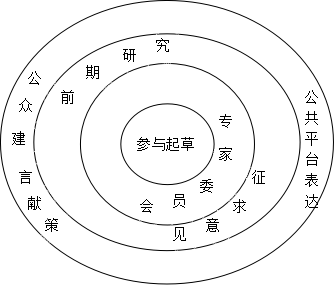
  From the perspective of participation structure, direct participation in drafting has entered the core of decision-making. The core of decision-making is the national development planning expert Committee, which is not only a long-term advisory body for the preparation of the five-year plan, but also has the right to demonstrate the plan; At the decision-making consultation level, it is to participate in the preliminary research of decision-making and solicit opinions at different stages of opinion planning; At the periphery of decision-making consultation, various opinions and suggestions are actively put forward through public suggestions channels and public platforms to influence decision-making.

  Scholars from some government-affiliated research institutions directly participated in the drafting of the plan. For example, the members of the party’s "Proposal" drafting group included Li Jingtian, executive vice president of the Central Party School, Bai Chunli and Huang Zhijian, executive vice presidents of China Academy of Sciences, Wang Weiguang, executive vice president of China Academy of Social Sciences, and Cai Fang, director of the Institute of Population and Labor Economics of China Academy of Social Sciences. Wang Yiming, executive director of the National Macroeconomic Research Institute, and others participated in the drafting of the Outline. In a drafting group dominated by government officials, scholars participated in the planning drafting, which provided a professional perspective for the planning work.

  Expert argumentation is the legal procedure for major national decisions.

  In October, 2005, the State Council explicitly stipulated that the expert argumentation system for planning should be implemented. After the State Planning Expert Committee was formally established, the number of members was 37 at first, and then increased to 56. During the preparation of the Twelfth Five-Year Plan, a total of four meetings of the National Development Planning Expert Committee were held at different stages. The first meeting was held at the stage of drafting the basic ideas (referring to mobilizing all parties to make suggestions and suggestions in the early stage of preparation) to discuss some major issues of the National Twelfth Five-Year Plan; The second meeting was held in the process of soliciting opinions on basic ideas to listen to the opinions of experts; The third and fourth meetings were held in the stage of soliciting opinions on the Outline to listen to the opinions of experts.

  In general, the meeting form of the expert committee is to study materials first, and then discuss in groups to give opinions on the Outline (draft for comments). At the same time, experts will directly modify the staged planning text, and some experts will put forward written opinions in the form of articles, and the National Development and Reform Commission will summarize and study these opinions and consider whether to absorb them.

  The State Council’s rules of procedure clearly stipulate that major issues submitted to the State Council for study and decision need to be "demonstrated by experts or research and consulting institutions for their necessity, feasibility and legality". This shows that expert argumentation has become a legal procedure for major decisions. The meeting of the National Development Planning Expert Committee held in February 2011 not only put forward opinions, but also drafted the expert argumentation report of the Twelfth Five-Year Plan. According to Professor Hu Angang, an expert member of the Twelfth Five-Year Plan, the drafting process was that Wang Yiming, executive vice president of the National Macroeconomic Research Institute, drafted the first draft of the demonstration report, which was repeatedly discussed by the expert committee, and revised by the National Development and Reform Commission according to the opinions of the expert committee. The final demonstration report was basically completely different from the first draft, and the expert demonstration report formed by the meeting was submitted for review together with the draft of the planning outline, providing strong support for enhancing science.

  Ten thousand experts participated in the policy research of the 12th Five-Year Plan.

  A large number of research institutions have participated in the policy research of the Twelfth Five-Year Plan, which is the largest policy research in the world. On November 6, 2008, the National Development and Reform Commission launched the preliminary research, and the same major topic included 39 topics in 8 fields.

  There are two ways to entrust major issues in the early period of the Twelfth Five-Year Plan. One is to directly entrust research, with seven research institutions; Second, public bidding was conducted to the whole society, and a total of 60 research institutions were selected. The selected institutions are mainly government-affiliated research institutions and academic institutions, as well as two independent research institutions and one multinational enterprise. More than 10,000 experts from 67 domestic institutions in politics, economy, culture and society participated in the research, and fully listened to the opinions and suggestions from all walks of life, and finally formed a research report of 5 million words.

  While the National Development and Reform Commission (NDRC) organized the preliminary research on major topics, the Office of the Central Leading Group for Finance and Economics also commissioned the research on major topics, including the National School of Administration and some foreign research institutions.

  The research results of previous projects provided by research institutions provide a third-party and professional perspective for the major issues involved in planning drafting, which has become an important part of scientific planning.

  Since the agenda of the 12th Five-Year Plan has been fixed, it is equivalent to opening a huge window for policy discussion. During this period, research institutions have held public policy discussions in the form of forums, symposiums and special studies, forming a policy public opinion atmosphere. For example, in 2010, the China Development Forum, the annual meeting of China Macroeconomics Society and other important policy discussions all focused on the preparation of the Twelfth Five-Year Plan, and a large number of articles on the Twelfth Five-Year Plan were formed during this period.

  Judging from the participation link, the participation of experts is mainly in the "one-to-one" link of the "brainstorming" decision-making process, and the middle part is less involved. In the early stage of the strategy, the research results provided by the research institutions provided the drafters with inspiration and clarification of some issues; In the stage of soliciting opinions, scholars put forward suggestions for revision to evaluate and demonstrate the quality of the plan. These two links are also the active period for research institutions to put forward policy suggestions.


Xi ‘an BMW i4 price reduction information, the highest discount of 90,000! If you miss it, you won’t

[car home Xi ‘an Preferential Promotion Channel] Recently, a wave of large-scale price reduction promotion was launched in Xi ‘an, with the highest preferential amount reaching 90,000 yuan, which reduced the minimum starting price of this luxury electric car to 339,900 yuan. If you are considering buying a BMW i4, you might as well seize this opportunity and click "Check the car price" in the quotation form to get a higher discount.

西安宝马i4降价信息,最高优惠9万!错过就没有

The BMW i4 adopts a modern and dynamic design, and its front face adopts the iconic kidney-shaped air intake grille, which is combined with a unique closed design to show its identity as an electric vehicle. The body lines are smooth, showing an overall style with both strength and elegance. The rear design is simple and full of science and technology, which is in harmony with the front face. On the whole, BMW i4 shows the unique charm of future electric vehicles with its unique design language.

西安宝马i4降价信息,最高优惠9万!错过就没有

The length, width and height of BMW i4 are 4785 * 1852 * 1455mm, and the wheelbase is 2856mm. The body lines are smooth and dynamic. The front tread is 1601 mm and the rear tread is 1630 mm, which ensures excellent handling and stability. In terms of tires, the front tyre size is 245/45 R18, and the rear tyre size is 255/45 R18. With the unique style of wheels, the visual effect and driving performance of the whole vehicle are improved.

西安宝马i4降价信息,最高优惠9万!错过就没有

The interior design of BMW i4 is full of sense of technology and luxury. The center console adopts a large touch screen with a size of 14.9 inches, which supports a variety of voice recognition control systems, including multimedia systems, navigation, telephone and air conditioning. The steering wheel is made of leather, which supports manual adjustment up and down and back and forth, providing a good grip and convenient operation. The car is also equipped with a variety of interfaces, including USB and Type-C interfaces, which are convenient for passengers to connect various devices. In addition, the front seats also have heating function, and the main driver’s seat is also equipped with electric seat memory function. Seat materials provide a variety of choices, including imitation leather, genuine leather and leather /Alcantara mix and match to meet the needs of different consumers. The rear seats support proportional tilting, which increases the flexibility of storage space.

西安宝马i4降价信息,最高优惠9万!错过就没有

The BMW i4 is equipped with a powerful motor with a maximum power of 210 kW and a maximum torque of 400 Nm, which provides excellent power performance and driving experience for the vehicle.

The owner of car home said that the configuration parameters of Series I’s 3, 5 and X3 are almost the same, only the shell has been changed, and I want to buy the I4 for the sake of personality. Of course, it is still imported, so there is no need to do such a thing as buying it home and deducting the label. The big nostrils are not mediocre at first glance. When I drive out, everyone guesses at 600,000. I’m sorry.

The United States asked for revision of prescription drug instructions for opioid cold and cough

  The website of the Food and Drug Administration (FDA) of the United States released a message, announcing that according to the results of a comprehensive evaluation and external expert consultation, the instructions of opioid cold and cough prescription drugs should be revised. Both this assessment and the expert meeting confirmed that in patients under the age of 18, the risk of respiratory retardation or difficulty, misuse, abuse, addiction, overdose and death caused by such drugs outweighed its benefits.

  Prescription drugs containing codeine and hydrocodone can be used in combination with other drugs such as antihistamines and nasal decongestants to treat cough and symptoms related to allergies or the common cold. Other non-opioid prescription drugs and OTC drugs can also treat the above symptoms.

  The FDA requires that the safety information of prescription drugs for opioid cold and cough containing codeine or hydrocodone be revised to limit the use of these products only to adults aged 18 and over. At the same time, FDA requires that the safety information about misuse, abuse, addiction, overdose, death and respiratory retardation or difficulty of such drugs be added to the black box warning of the instructions in the most eye-catching way. For the list of cold and cough prescription drugs containing codeine or hydrocodone, please refer to the drug safety newsletter issued by FDA. Some cough drugs containing codeine are OTC drugs in some States of the United States, and FDA is considering taking regulatory measures for these products.


  Suggestions for medical staff:

  It should be known that the FDA is revising the age range of people who are suitable for opioid cold and cough prescription drugs. These products will not be used in children and are no longer recommended for people under the age of 18. Medical staff should inform parents that cough caused by cold or upper respiratory tract infection is self-limited and usually does not need treatment. For children who must be treated with antitussive therapy, alternative drugs can be used. These drugs include OTC products such as dextromethorphan, and benzoxazole ester prescription drugs.


  Suggestions for parents and caregivers of children:

  It should be known that children should not be given cold and cough prescription drugs containing codeine or hydrocodone. Codeine or hydrocodone are opioid narcotic drugs, which will bring serious risks to children. It should be understood that cough caused by cold or upper respiratory tract infection usually does not need medical treatment. If cough medicine is a prescription medicine, you should ask the child’s competent medical staff or pharmacist whether the medicine contains opioids such as codeine or hydrocodone. Always read the label on the medicine bottle. If the drugs prescribed for children contain opioid drugs, they should discuss with the competent medical staff of children to replace them with another non-opioid drug; If you have any questions or concerns, you should also ask the competent medical staff.

Zhengzhou, Henan Province: A total of 718 people were isolated and 989,800 people were sampled for nucleic acid detection in key populations.

CCTV News:The reporter learned from the COVID-19 epidemic prevention and control press conference held in Zhengzhou that as of 18: 00 on January 5, there were 6 new positive cases and 10 asymptomatic infected people in Zhengzhou.

Li Huifang, Deputy Secretary General of Zhengzhou Municipal Government:Up to now, 989,800 people have been sampled from key areas and key populations in Guancheng, Erqi, Zhongyuan and Jinshui districts, all of which have been tested, and 6 positive cases have been detected.

At present, Zhengzhou has 10 closed control zones, 4 control zones and 3 prevention zones. Among them, the management measures of "closed area, staying indoors and serving at home" are implemented in the sealed control area, and the management measures of "people are not allowed to leave the area and gathering is strictly prohibited" are implemented in the control area, and the prevention area is not allowed to go out unless necessary. If it is really necessary to go out, it is necessary to hold a negative nucleic acid test certificate within 48 hours.

Li Huifang, Deputy Secretary General of Zhengzhou Municipal Government:Judging from the current epidemic situation, the epidemic spread in Zhengzhou has the characteristics of multi-point distribution and aggregation, and the communication chain is relatively clear, mainly involving the aggregation spread of card friends, funeral banquets and families. At present, there are 718 people in centralized isolation and 4899 people in home isolation.

Hangzhou strives to improve the effectiveness of grassroots governance.

  Since the beginning of this year, Hangzhou City, Zhejiang Province has focused on the key issues that restrict the improvement of the efficiency of grassroots governance, adhered to the clear orientation of "grasping the grassroots and focusing on party building", focused on improving the organizational strength of village community party organizations, and explored the action of "striving for star promotion and strengthening the whole region" to continuously improve the level of grassroots governance.

  Carefully touch, find the right cause and set a prescription.

  "This time, it took a lot of effort. The village sent a steering group to sift one by one with the village control index system, and formulated the ‘ One village, one policy ’ The rectification plan, our village was rated as ‘ Four stars ’ 。” Luo Changmu, secretary of the Party branch of Hujiaping Village, Fu Wang Township, Chun ‘an County, said, "Contrast ‘ Five stars ’ Indicator system, the shortcoming of Hujiaping Village lies in the collective economic income of the village. Therefore, we introduce professional managers and develop advantageous industrial projects, and strive to rush to ‘ Five stars ’ 。”

  Hangzhou has set up 47 specific indicators for star rating in five aspects, such as good pilot-driven team, good demonstration and development of common prosperity, good security management, good service with one heart and one mind, and good civilized and harmonious atmosphere, and over 80% of the indicators have achieved quantitative assessment. Full coverage to carry out a round of big ups and downs, the implementation of "two-level hall, portrait one by one", by the town street by village by community comparison index system analysis, portrait evaluation, county-level organizations by town street to listen to reports, unified filing, the city’s 3179 village communities have formulated a "one village, one policy" star competition program.

  "If we find out the base and find out the cause, we can prescribe the right medicine and the work is more targeted." Li Jun, member of the Standing Committee of Shangcheng District Committee and Minister of Organization Department, said, "When summarizing and analyzing the problems, we found that the lack of party-mass service positions in old communities is a prominent common problem in the whole region, which greatly limits the community’s service to residents. So we integrated and revitalized 49,000 square meters of idle houses in district-level organs, all of which were used for the construction of party-mass service positions in old communities. Now this short board has been filled, and residents’ sense of acquisition and happiness is getting stronger and stronger."

  Strengthen the assessment, create the first competition performance.

  "Doing a good job in party building and leading grid management is the key to consolidating the foundation of grassroots governance. Due to the strong mobility of community personnel and the large number of people under management, the original grid is relatively large." Zhang Jiancheng, secretary of the Party Committee of Tangjia Community in Linping District, said that after the city started the exam, Tangjia Community followed the 300— The standard division of 500 households into small grids, fully equipped with strong grid leaders and full-time and part-time grid members, makes the existing grid not only have the function of safe and comprehensive management, but also add seven functions such as party building leading and public service. "The grid is strong, and the community governance is really different."

  Hangzhou has carried out in-depth examination contest, focusing on the breakthrough of key indicators in the action of "Striving for the Star’s Promotion and Building a Strong Whole Region", and carried out six special tackling actions, such as party building leading grid management, joint construction and upgrading of community properties, and strengthening street excellent cooperatives under the unified leadership. At the municipal level, the "four ones" promotion mechanism of "one city leader in charge, one lead department in charge, one special plan implementation and one on-site meeting promotion" has been established. At the district level, a horse racing mechanism of "competing for stars" in real time and "one race in one season" will be formed, which will promote the village community party organizations to form a strong atmosphere of striving for Excellence.

  Make concerted efforts and make concerted efforts to support it.

  "This time ‘ Striving for the promotion of stars ’ The biggest difference from the past is that the responsibility of towns, streets and departments is tied to the village community for assessment. Now we work together with the community to complete the goal of competing for stars. " Yu Chengguo, deputy director of Fuyang District Civil Affairs Bureau, said, "During the epidemic prevention and control period, we personally felt the disadvantages caused by the lack of grassroots work. Therefore, according to the star competition standard of not less than 18 community workers per 10,000 urban residents, 350 social workers were recruited, and they played an important role in the refined governance of the community. After the community work force has been enriched, we are more calm in dealing with various challenges. "

  "In order to make the responsibility more real, the town has set up 74 joint village working groups, which are integrated with the contact villages and the assessment results are linked to the evaluation at the end of the year. In addition, we follow the ‘ Striving for the promotion of stars ’ Action requirements, strengthen the ‘ Five stars ’ ‘ Four stars ’ With the encouragement of the village community, the atmosphere of the whole town rushing up and down is even stronger. " Li Guoping, Party Secretary of Guali Town, Xiaoshan District, said.

  Hangzhou has established a responsibility mechanism of "evaluating village communities, grasping towns and streets, and promoting departments". When counties, towns and streets recommend provincial-level advanced collectives, priority should be given to the evaluation results of "five-star" village communities in their respective jurisdictions; When the functional departments carry out the annual assessment, they should give priority to the importance attached to the construction of grass-roots organizations, and implement "whether the party building is excellent or not" if the support and guarantee are weak and the village community problems are not solved for a long time. Driven by this mechanism, various departments in Hangzhou have formed a working pattern of concerted efforts and sinking resources, constantly amplifying the overall effect of "five stars" and improving the level of grassroots governance led by party building.

The patient will die in a day or two. How did the doctor know? The doctor told you the truth.

Earlier, Xiao Jiu saw a topic related to death on the Internet: "What are the signs before the old man died? Is there a scientific explanation? 」

Image from the network

Netizens have been discussing this constantly, and many netizens have also described the process of their loved ones’ death:

@ 临临: Grandfather left at 4 o’clock in the morning. Suddenly, he got up, full of energy, and shouted to get dressed quickly. He had to go, while wearing a shroud, he talked to my father, uncle and uncle, and finally shook his skirts.

@ Brilliant: Grandpa stayed in bed. Before he left, he always asked his mother for clothes, crutches, and said that he was leaving. Don’t stop him and let him get up. As a result, he died the next day. Mom said that he might really help him get up and leave that night.

@ Morning Star: My mother went to the toilet three times before she died. I couldn’t pull it out for a long time before. I thought my mother’s constipation was almost over, but she died the next day.

It is said that everything is fate, but most people still can’t accept the death of their loved ones. I am extremely sad, but I still can’t change the fact that my loved ones have passed away. Are there any signs before people die?

01

The patient will die in a day or two,

How did the doctor know?

"Just for a day or two, be prepared."

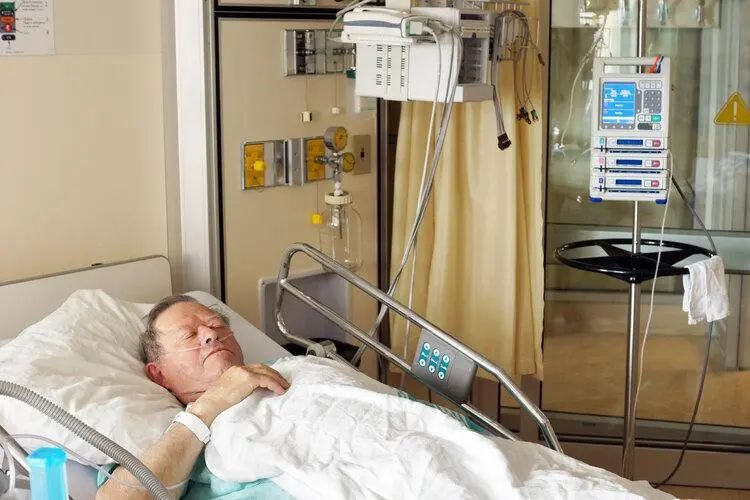
In the ward, doctors sometimes tell patients’ families that they should prepare for the funeral as soon as possible, or try to accompany patients to comfort their dying days, so as not to leave regrets. But some people are puzzled. How did the doctor judge?

In fact, people will have some special signs before dying, and doctors can make comprehensive judgments according to the symptoms of patients and the performance of various physical data.

Observation of vital signs: Doctors will pay close attention to patients’ vital signs, such as heart rate, respiration, blood pressure and body temperature. If these indicators continue to deteriorate and cannot be improved by treatment, then this may be a dangerous signal.

Symptom evaluation: If the patient has severe dyspnea, disturbance of consciousness, inability to eat or persistent pain, these may be signs of the deterioration of the disease.

Examination index: The doctor will combine the results of laboratory examination and imaging examination to evaluate the patient’s condition. For example, the deterioration of key indicators such as heart failure, severe malignant arrhythmia, acute renal failure and liver failure may indicate that the patient is in critical condition.

In addition, the more cases experienced doctors may come into contact with dying patients, the more theoretical or practical experience they have, and the more accurate their judgments are.
02

What will people experience before they die?

Is there really a "bounce back"?

The experience before death is a mystery to most people. In fact, many people who have been dying or experienced the death of their families have something in common, although the contents expressed are not the same, for example, the following four are the most common.

1. Death growl

Before people die, their body functions decline rapidly, and the secretions collected in the throat or lungs cannot be metabolized, which will affect the airflow when the patient breathes and make a gurgling sound, which is often called "death roar".

2. Body temperature drops

This is because the circulatory system in the body gradually slows down, and the blood flow rate and blood supply will also decrease. In addition, patients at this time are often in a state of dehydration, so they will show a sudden drop in body temperature and cold and wet skin.
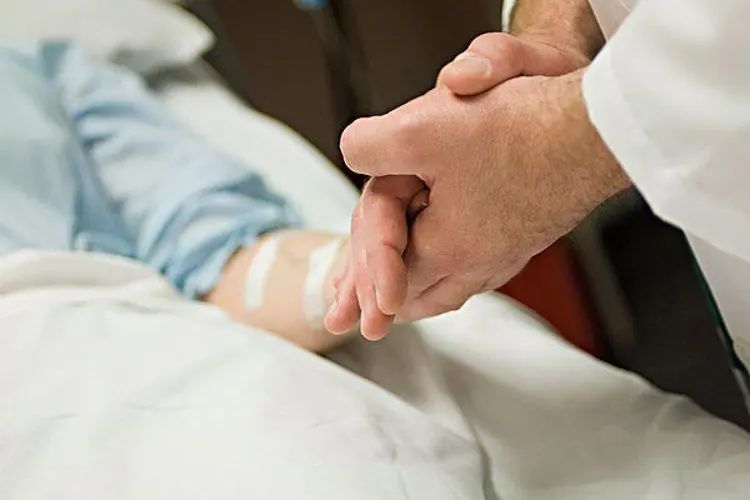
3. The pain is unbearable

At this time, the dying person’s brain function gradually declines, and his will will gradually lose. He can’t adapt to the physical pain perception and will feel more intense pain. There are also some patients who suffer from pain caused by illness, which will constantly stimulate the pain nerves of the human body, so that patients are suffering from physiological pain even before they die, which is more common in patients who died of illness.

4, incontinence

Before dying, all parts of the brain are gradually inactivated, which leads to the deterioration of body control and the inability to complete normal excretion function, so some people will have incontinence.

In addition, there will be some "dead-end" actions, which are medically explained as a self-help mechanism of the human body before death.

Because the body senses an unfavorable signal, it will actively send a "rescue" signal to the brain, and the brain responds by starting an "energy emergency supply plan" to release the energy stored in the whole body to meet the needs of the human body. Once the energy is released, the body will return to its original state, and life will end here.

Therefore, generally, this "light-to-light" process will not take too long, at most it will take 1-2 days, and the short one may take a few minutes.

03

What can we do when our loved ones are dying?

Before the death of their loved ones, many people may choose overtreatment to save the lives of patients, but this will often aggravate the pain of patients and cause irreparable regret when patients die. In fact, it is more meaningful to do these things before the death of a loved one.

When relatives have difficulty breathing before leaving, it is often because of the difficulty of breathing caused by organ failure. At this time, family members can open the window for ventilation and do not gather too much.
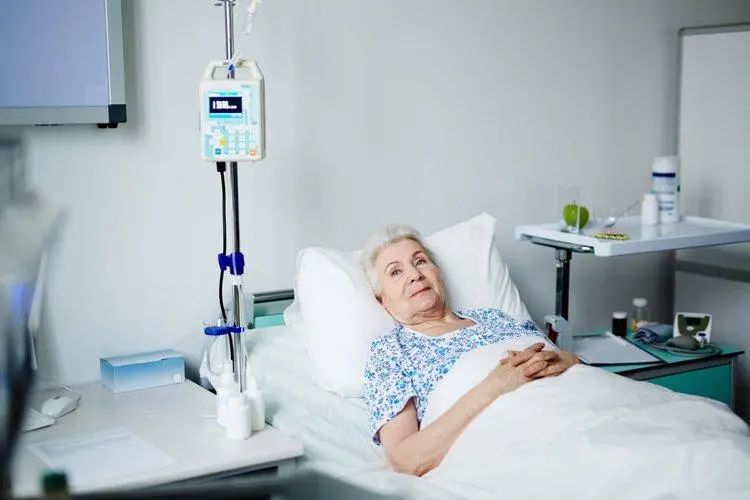
If the patient feels cold, it is because of the sudden drop of body temperature caused by the deterioration of blood circulation. No amount of quilt covers can alleviate it, but it will increase the body weight. In fact, the correct way is to add and subtract quilts appropriately, which can help them rub their hands and feet or wipe their bodies to improve their blood circulation.

People who are dying will have difficulty eating in the last stage, so even if patients don’t want to eat at this time, don’t force them to eat, respect their wishes, and if necessary, you can dip a cotton swab in water and apply it to your lips to solve the problem of dry lips.

Let the dying people walk more comfortably, which may be the last thing they can do as family members. In addition, they can talk more when the patients are dying. Although they can’t respond physically, they can still hear the outside world. Don’t leave empty regrets if there is anything they can’t say at ordinary times.

References:

[1] "What strange reactions will happen to your body before you die? Will there really be a blip? It makes people cry after reading it. Popular Science China. 2022-06-05.

[2] "What changes will the body experience in the last few minutes? Health Times. 2021-11-29.

[3] "What is the process of dying? How to walk through the last journey of life with dignity? Fortunately, I read it in my lifetime. Healthy Chengdu Guanwei. 2019-11-10.

Original title: "The patient will die in a day or two. How did the doctor know? The doctor told you the truth.

Read the original text

The Beijing police informed the typical epidemic-related cases: illegal lifting of the health treasure pop-up window, deliberate evasion of normal inspection at the checkpoint, etc.

Cctv newsOn August 15th, Beijing held the 386th press conference on the prevention and control of novel coronavirus epidemic. Pan Xuhong, deputy director of the Municipal Public Security Bureau and spokesperson, introduced at the conference that recently, the city has quickly disposed of a number of confirmed cases of sporadic overseas and Beijing-related input, warning us that foreign defense input is still the top priority of epidemic prevention and control, and there is no room for any carelessness. In the work, the general public knows the general situation, takes care of the overall situation, and consciously cooperates with the implementation of the epidemic prevention and control policy, making contributions to achieving the "four early" and effectively controlling risks. However, there are also some people who are lucky, covet temporary convenience, violate relevant policies and regulations, and interfere with the overall situation of epidemic prevention and control. Several typical cases are now reported.

1. Concealing personal itinerary information and returning to Beijing after illegally lifting the Health Treasure pop-up window.

On August 15th, the disease control department reported the infection of Liu Moumou, the asymptomatic infected person in Case No.3. The police cooperated with the disease control department and found that Liu Moumou was suspected of concealing the travel information he had traveled to middle and high risk areas when he complained about lifting the health treasure pop-up window in order to return to Beijing as soon as possible. At present, Liu’s behavior has led to 260 people being judged as risk personnel, which has caused major risks in the spread of the epidemic. Fengtai police have filed an investigation against Liu according to law. The police reminded that at present, the epidemic situation in some key tourist provinces and cities in China is grim. Please ask people who are traveling abroad to return to Beijing to strictly abide by the local and municipal epidemic prevention and control policies and regulations, arrange their trips reasonably as required, report to the community in advance, and return to Beijing safely and orderly. After returning to Beijing, measures such as nucleic acid detection and home health monitoring will be strictly implemented to minimize the risk of epidemic spread.

2. Deliberately evading the normal inspection at the checkpoint and attempting to enter and return to Beijing illegally.

Recently, when the police went to Beijing for investigation and control, some people, knowing that they did not meet the requirements of the policy of entering and returning to Beijing, evaded the normal inspection of the checkpoint by fraudulently using other people’s health code information, bypassing rural roads, hiding truck compartments, and climbing over isolation barriers.

On August 13th, during a routine inspection at the Yaoshang checkpoint in Fangshan District, it was found that Guo Moumou (male, 29 years old) fraudulently used other people’s health code information in an attempt to get into Beijing.

On the same day, when Zhao Moumou (male, 35 years old) and Li Moumou (female, 33 years old) passed through the Gangbei checkpoint in Tongzhou District, knowing that Li Moumou did not meet the conditions for entering Beijing, they contacted Yang Moumou (male, 43 years old) to help bypass the checkpoint and escape the epidemic prevention inspection.

Du Moumou (male, 47 years old) knew that Ruan Moumou (male, 46 years old) did not meet the policy of entering Beijing. When he passed the Xiaodiantun checkpoint in Tongzhou District, he helped Ruan Moumou hide in the truck compartment in an attempt to avoid inspection and enter Beijing. All the above-mentioned personnel were administratively detained by the Beijing police according to law.

In addition, the police, together with the departments of cultural tourism and market supervision, continue to carry out large-scale social epidemic risk investigation and law enforcement inspection, and investigate and deal with those who fail to implement the "four-party responsibility" and have great epidemic risk according to law. Since June, 23 related cases have been handled and 26 people have been given administrative punishment.

Pan Xuhong said that at present, the overseas epidemic continues to spread, and the domestic epidemic is distributed in many places. In addition, it is in the summer, and people are highly mobile. The string of epidemic prevention and control cannot be relaxed for a moment. It is everyone’s responsibility to prevent and control the epidemic situation. I hope that the general public will continue to strictly abide by the epidemic prevention management policy of returning to Beijing, carry out nucleic acid testing according to regulations, conscientiously implement epidemic prevention measures such as scanning code and temperature measurement, and jointly protect the hard-won epidemic prevention and control achievements.

Race against time! She fought hand-to-hand with the virus on the front line against the epidemic.

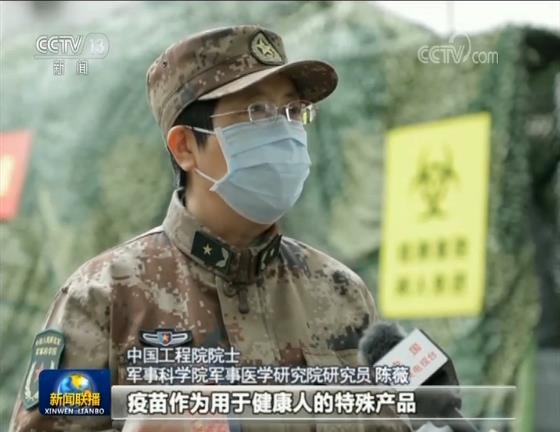
CCTV News:"Strive to push the recombinant COVID-19 vaccine we are developing into clinical practice and application in the shortest time, and provide strong scientific and technological support for winning this epidemic prevention and control war."

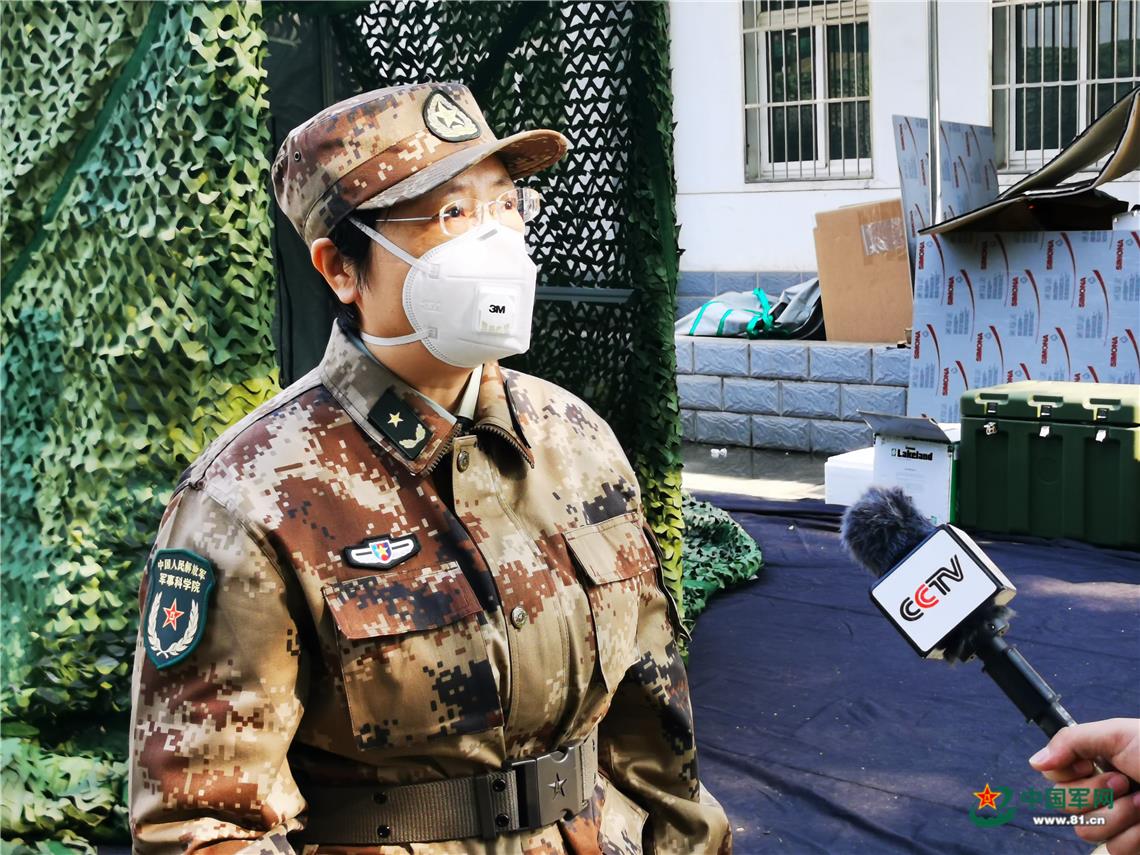
In the recent "News Network" lens, a familiar figure appeared — — Chen Wei, academician of China Academy of Engineering, researcher of Academy of Military Medicine, winner of the 8th China Young Female Scientist Award.

Chen Wei likes to wear neat short hair and a straight suit, giving people a tough military image; But if time goes backwards, no one will think that the careless Tsinghua Student Union is her now. At that time, she worked as the first waitress in Tsinghua coffee shop, set up stalls and held dances. She was even considered by her classmates as the most unsuitable person to engage in scientific research. But it was she who devoted her time and energy to medical scientific research for twenty-nine years, linked her work with collective interests and national interests, and did what she liked.

race against time

On January 26th, 2020, on the second day of the Lunar New Year, 54-year-old Chen Wei led a team of experts dispatched by the army to Wuhan, and quickly put themselves into the work of pathogen transmission variation, rapid detection technology and vaccine antibody development in novel coronavirus.

A few days later, in the tent-type mobile detection laboratory of the Academy of Military Sciences, she and other experts applied the self-developed detection kit and cooperated with the automatic nucleic acid extraction technology, which greatly shortened the detection time of nucleic acid and improved the diagnosis speed. This is one of the achievements of Chen Wei’s team’s scientific research in the epidemic area.

In an interview, Chen Wei said: "With the test of dealing with Ebola and other epidemics, we are better prepared than ever before in terms of talent team, scientific research conditions and technical reserves. I firmly believe that we will win this epidemic prevention and control war."

What impressed Chen Wei when she settled in Wuhan was that she met Zhang Dingyu, the president of Jinyintan Hospital.

In the face of this colleague who is suffering from gradual freezing and his wife is infected with novel coronavirus, but still fighting in the front line, Chen Wei said: "Your deeds have touched me very much."

She can’t forget Zhang Dingyu’s concise reply: "Same to you."

It’s not the first time to face the epidemic.

Chen Wei’s acquaintance with the military medical college looks more like destiny takes a hand. In 1991, when Chen Wei’s teacher asked her to go to the Academy of Military Medical Sciences to buy an experimental reagent, her life track began to really change. That brief contact with the Academy of Military Medical Sciences made Chen Wei deeply impressed by the complete research environment and excellent researchers there.

It has been 29 years since I joined the army. Looking back now, Chen Wei’s eyes are still full of firmness: "From the first day I came to the army, I decided to stay here for a lifetime, because my old-timers are like this. I met many good teachers here and I learned a lot from them. This is the biggest reason why I stayed. I like to concentrate on doing this. "

The female major general who was specially recruited into the army in 1991 has made important contributions to many hard battles such as blocking SARS and fighting Ebola. In 2015, she led the team to develop the recombinant Ebola vaccine, which made the Ebola vaccine independently developed by China obtain the overseas clinical trial license for the first time.

"I am particularly proud that in the days when China and Africa jointly fought against Ebola, we contributed our talents to make China’s vaccine go out and achieve a zero breakthrough in overseas clinical practice." Speaking of such an unforgettable moment, Chen Wei’s eyes were filled with tears. From her eyes, we saw the image and responsibility of a great country behind the scientists.

Anthrax, plague, Ebola … … In the biological field, all kinds of pathogenic microorganisms may become weapons in the hands of the enemy in war, while peacetime may be the chief culprit leading to large-scale epidemic.

Chen Wei’s daily job is to study these "devil" topics. As soon as she thinks that these things may be used in wars and terrorist attacks, which will bring disastrous consequences to the country and the nation, she has a sense of mission and urgency in casting "biological shields".

Many people ask her, aren’t you afraid of being face to face with these deadly viruses every day? Chen Wei said: "I can’t think of any other reason except love." Wearing this military uniform means that all this is what you should do. "

Have a solid backing behind you.

In fact, Chen Wei not only has a shining military medal, but also has a harmonious and happy family.

Chen Wei’s husband gave up the generous treatment in Qingdao for her and came to Beijing alone. From the initial material shortage to the present happiness, Chen Wei and her husband have resisted all kinds of pressures together. Now, there is always a happy smile on Chen Wei’s face, just as she said, "Try to forget your gender at work, highlight your gender in life and do what you like, so as to be a happy woman. This state of life is what everyone should pursue." Happy Chen Wei, she did it.

In the eyes of his father, Chen Wei is serious and rigorous. "My daughter is engaged in a noble and great career, so I want to support her!" When Chen Wei’s father named her, it was because his father liked flowers and plants. Second, in his eyes, although rosa multiflora was ordinary, it had a long flowering period of half a year and had a faint fragrance. Roses, low-key and unobtrusive, can always be in full bloom regardless of wind and rain.

Although it was too late for father and daughter to say goodbye to each other during this expedition, he knew that since his daughter set off, she would race against time to the other side of victory. (Text/Di Chenchen)

President of Stanford University resigned due to academic misconduct.

  Xinhua News Agency, San Francisco, July 19 (Reporter Wu Xiaoling) Mark teissier-lavigne, president of Stanford University in the United States, announced on August 31 that he would resign from his post as president after the results of a special committee’s review of his academic misconduct were released.

  In December last year, the Board of Directors of Stanford University set up a special committee to initiate an investigation into teissier-lavigne’s allegations of academic misconduct. After months of comprehensive verification, the Special Committee released a detailed report on the 19th.

  According to the report, the investigators mainly reviewed 12 papers signed by teissier-lavigne, and in five of them, as the main author, they found conclusive evidence that some members of the laboratory he was in charge of improperly manipulated scientific research data or had problems in experimental operation, which led to major defects in the papers, while teissier-lavigne failed to take necessary measures to correct related errors.

  Teissier-lavigne accepted the conclusion of the report, corrected and withdrew the relevant papers, and decided to resign.

  Yang Zhiyuan, Chairman of the Board of Directors of Stanford University, posted on the website of the university that he accepted teissier lavigne’s resignation and confirmed that he would continue to be a tenured professor of biology. The Board of Directors also set up a committee to start the selection of the next president, and appointed Richard Salle as interim president from September 1st.

Looking back on Bauhaus in the past century: Modernism is still flourishing in Berlin and Germany.

Bauhaus, a design school integrating architecture, design, handicrafts, painting and sculpture, was established in Germany in 1919. It was a gathering place for many pioneers with revolutionary ideas at that time. Bauhaus’s thoughts and aesthetic tastes have influenced a generation.

In 2019, as Germany celebrates the centenary of Bauhaus, the German government will open new museums in Weimar and Dessau, where the Bauhaus school was once located. Strolling around Germany, Bauhaus is still thriving.

In April 1919, Weimar, a small town in the hinterland of Germany, welcomed an experimental school of architecture and art education. The founder and first president Walter Gropius named the school after the German word Bauhaus, and Bauhaus College, the birthplace of modernist architecture, was born.

At the beginning of the year, Bauhaus released the official commemorative logo of the 100th anniversary. Two new Bauhaus museums will be opened this year in Dessau and Weimar, the former school sites of Bauhaus. The other is the Bauhaus Archives, which is being rebuilt in Berlin. In line with the centenary activities of cities throughout the year, the German Tourism Bureau calls itself the "birthplace of modernism", which is very attractive to cultural tourism lovers.

Bauhaus centenary logo

Various posters for Bauhaus’s centenary activities.

Bauhaus is an ideal school of architecture and art. The most famous thing about Bauhaus is its functional design concept, which is completely different from its image in the first few years, but it also makes Bauhaus a brand-not just a school. The brand advocates industrialization and mass production, which is part of the modernist movement.

Of course, Bauhaus is also the epitome of an era.

Weimar Bauhaus

Under the heavy sky, the low-rise residential areas in Lufthansa, Berlin can’t be called beautiful. They were built in the late 1950s to revive areas that were razed to the ground during the Second World War. They are square. Here, the garden is exposed and the skeletons of trees can be clearly seen. But when we look up, we see maintenance and pride. Intelligent furniture can be seen from the big window. Our eyes wandered on the smooth white building designed by Finnish architect Alvar Aalto, and then went down to the ground, where we saw some single-story atrium houses designed by Danish designer Arne Jacobsen. The large column-supported building designed by Oscar Niemeyer is full of sunshine and space.

Walter Gropius, the first president of Bauhaus.

There is a concave "flat" residential area named after Walter Gropius. Gropius is an architect of Bauhaus in the world, and Bauhaus is one of the most influential schools of art and design in the 20th century.

In the Bauhaus Declaration in 1919, he declared: "Let’s look forward to, conceive and create new buildings in the future together, and use them to combine everything-architecture, sculpture and painting-into a single form. One day, he will ascend from Ran Ran to heaven from the hands of millions of workers, which symbolizes the new belief in the future as crystal clear as a crystal."

Bauhaus Declaration, Gropius (text), 1919.

Without Bauhaus, Lufthansa-style social housing and modernism as we know it would not have happened.

This year, many German regions and towns are celebrating the centenary of Bauhaus. The commemorative activities include exhibitions, lectures, performances, workshops and even "blind dating" of artistic dialogue. Although Berlin will become the center, there are Bauhaus buildings all over Germany, and the legacy of the movement extends to Chicago, Tel Aviv, S? o Paulo and Melbourne.

From 1919 to 1933, although Bauhaus only lasted for 14 years. But in these 14 years, Bauhaus initiated a truly modern way of thinking about art and crafts, public sphere, urbanism and the combination of form and function.

Bettina Güldner, an art historian and curator who studies Bauhaus, points out that Gropius’s ideas have influenced shopping malls, churches, office buildings, Berlin Air Transport Memorial Hall and even hotels in Berlin. Berlin has six modernist manors listed as World Heritage by UNESCO. The ADGB trade union school in Bernau, 10 kilometers northeast of the city, is listed on the UNESCO list because of its dual importance to Bauhaus and "classical modernism". They are simple, neat and elegant, and have pride and open belief in the use of modern materials.

"They don’t need embellishment or overcrowding," says Gulner. Buildings can be newer and better, instead of copying anything that already exists. The birth of beauty lies in finding a solution to the problem: that is,’ what is useful?’ .。 "

Poster of Weimar Bauhaus exhibition in 1923.

Weimar is located 280 kilometers southwest of Berlin. The founders of Weimar Republic met there (also in 1919). In Germany after World War I, the city was politically neutral. They hope to get the spiritual guidance of Weimar intellectuals, including Goethe, Schiller, Nietzsche and Liszt.

In 1919, Bauhaus was at least as revolutionary as republicanism. But this is not an imaginative leap. The old city is solemn and serious, with 12 main buildings in Baroque style, which are listed as "classical Weimar" by UNESCO. Not far away is Haus am Horn, a groundbreaking "white cube". The first Bauhaus exhibition was held in this building in 1923. This modern "test building" is low and flat, with flat walls and monotonous colors. Now it has been listed as a world heritage.

Haojiaowu

Weimar’s Bauhaus trip needs to return from Gropius to Belgian architect Henry van de Velde. He is the core figure and leader of early Belgian design movement and an important pioneer of modernism. With his innovative design, he added the Arts and Crafts School (which has now become a university) and the private residence Hauhohe Pappeln to Weimar.

You can visit the website of Bauhaus, but students of Weimar University also offer guided hiking several times a week (starting from 4 euros). On April 6th, the new Weimar Bauhaus Museum opened next to the exaggerated Nazi-era building Gauforum.

In the century after Weimar founded Bauhaus, the success of Bauhaus furniture lies in that it has become so ubiquitous and invisibly integrated into our life background. Ludwig mies van der rohe’s Barcelona chairs decorate every corporate hall, as do the spherical lights designed by Max Bill. Bauhaus continues to influence every aspect of our lives in ways that we don’t even notice, from bookshelves, kitchen utensils, road signs, tableware and so on.

Bauhaus school building in Dessau

With the advent of the 1920s, Weimar became more and more conservative. In 1925, Gropius moved Bauhaus to Dessau, 130 kilometers northeast. As the location of Junker aircraft factory, the city has a long tradition of industrial design. The Bauhaus movement also reached its peak here. The headquarters of the movement can be reached within walking distance from the main station in Dessau. The whole building is made of glass, steel and concrete, which is the Bauhaus school building. Entrusted by the city, this building was designed by Gropius and built in 1925-1926 to accommodate all departments of a school, teaching courses ranging from furniture design to architectural design to typesetting, covering all aspects.

Gropius and the masters of Bauhaus are on the roof of Dessau school building.

Kandinsky’s course

Today, the exhibition space of this building is small, but it is very brilliant, with carefully edited silent films telling the story of Bauhaus. At the same time, the exhibition runs through the main innovative designs of Bauhaus. The names of Paul Klee and Wassily Kandinsky are familiar to everyone, but Hannes Meyer and Laszlo Moholy-Nagy are highly respected in the design field. (Note: In 1928, Gropes resigned as principal of Bauhaus, and was succeeded by Hannerz Meyer, head of the Department of Architecture, and Laszlo Mohori-Naji was a teacher of Bauhaus. ) Pioneering lamp and furniture designs were displayed in the adjacent exhibition hall, and the cardboard model of the building also presented an abstract form. Some photos of theaters and music parties show that the Bauhaus era was full of avant-garde and commitment to craftsmanship.

Hannerz Meyer, the second president of Bauhaus.

A group of ordinary white concrete buildings nearby are made of glass and gray steel. These seven "Masters’ Houses", once the address and studio of Bauhaus teachers, are now exhibition spaces and studios for artists. Outside the city are five deck-access houses designed by Hannerz Meyer, which are important early examples of community housing and public space. Of course, there is also the Bauhaus-style restaurant Kornhaus, which serves non-minimalist bar food.

"Masters’ Houses"

"Masters’ Houses"

Bauhaus store is undoubtedly a happy place, where you can easily spend 100 euros on derivatives such as cups and luxury pencils. Dessau will open a new museum later this year: the Bauhaus Museum in Dessau will open in September, with enough space to display more than 49,000 pieces of its collection. Today, Bauhaus will continue to open, and the hotel area has been re-paved, and fanatical fans can rest in a cellular double-decker room. Anni Albers, a famous German textile artist, once lived here.

During the Dessau period, Bauhaus’s teaching method adopted the viewpoint of paying more attention to the industry, giving up the workshops of wood, stained glass, binding and pottery, and supporting the state of "work and study" instead. Students will be engaged in productive products and sales. For example, geometric chess designs like Josef Hartwig are so popular. Students have also become craftsmen who fulfill orders. As time goes on, schools become more and more proficient in business.

In 1929, Ludwig·The Barcelona chair designed by Mies Van Derro and Lily Reich.

Chess designed by Joseph Hartvig.

The last frame of this silent film in the Bauhaus school building was named "The Last Party". In September 1932, Bauhaus, led by Meyer, expanded from artistic radicalism to political radicalism, which made Bauhaus face more and more political pressure. Finally, Meyer himself had to resign in 1930 and be succeeded by Mies van de Rohe (1886-1969). Meese, who took over, faced the pressure from Nazi forces and finally moved the whole Utopia project to Berlin. But in the end, Bauhaus only lasted seven months in Berlin.

When the school moved to Berlin, Bauhaus shifted his focus to architecture and interior design. Bauhaus has had a great influence on our view of home. Together with his partner Lilly Reich Zu Ki, Mies Van Derro put forward the idea of an open home space, in which the areas in the home are separated by hanging fabric curtains and movable partitions. In 1930s, with the promotion of exhibitions and publications, the open idea was imitated by countless architects in the rest of this century, and it is still the way of life today.

Ludwig Mies van der Rohe

Paradoxically, 14 years after its founding, the closure of Bauhaus ensured its lasting success. After the closure, the myth of Bauhaus only increased, because its tutors and students were scattered all over the world, spreading their ideas. Everyone claimed that they were the original legal heirs. In the past 100 years, its influence has been more obvious all over the world than ever before, and the Bauhaus brand has also won the ultimate victory.

New Bauhaus Museum in Dessau, Oscar Schlemm’s Dancing in the Glass.

In Berlin, the main collection of Bauhaus is the Bauhaus-Archiv designed by Gropius in Tiergarten. At present, this archive is being closed for renovation, which will last for four years. The official reply is: "In order to celebrate the centenary of the establishment of Bauhaus in 2019, the Bauhaus Archives/Museum is undergoing renovation." In this regard, many foreign tourists expressed dissatisfaction with this. The "temporary exhibition" turned out to be a small shop near the zoo station.

This year’s Germany is undoubtedly suitable for Bauhaus-themed travel. There are related architectural landmarks in Thuringia, erfurt, Guerra and Jena. Cities such as Bremen, Frankfurt, Hamburg and Mü nster also have houses, factories, dams, foundries and garages built by modernists influenced by Bauhaus.

In contrast, Bauhaus is not just a movement of the past; It is a force today, providing nuanced insights into German life and art. In art books, modernism is usually considered rootless, but what we now think of as "new" mostly comes from Dessau and Weimar.

"I think Bauhaus is a very German phenomenon," Bettina said. "Our industrialization time is very late. Bauhaus responded to the need to re-educate craftsmen and catch up with Britain and France. The first world war destroyed the nationalism of the empire. 1919 is a new dawn. "

In 1926, a woman wearing an Oscar Schlemmer drama mask sat in Marcel Brewer’s B3 chair.

"Bauhaus: Centennial Exhibition" will be held at the Museum of Modern Art in Berlin from September 6, 2019 to January 27, 2020.

"The Migrating Bauhaus: Berlin Is Still Not Dead" will be held at the World Cultural Palace in Berlin from March 15th to June 10th, 2019.

"Henry Van Derfeld: Pioneer of Modernism Crossroads" will be held from March 15th, 2019 to January 15th, 2020 at the Gra Museum in Germany.

"Oscar Schirmer: Bauhaus and the Road to Modernity" will be held from April 28, 2019 to July 29, 2019 at the Gotha Museum in Germany.

Attached:

Bauhaus: A Classic of German Modernism

flughafen berlin tempelhof

The Nazis condemned the cool contemporary architecture as "depravity", but the architect Ernst Sagebiel, a party member, did not hesitate to integrate modernist features with monument details when designing this iconic airport terminal. Since 1936, due to the war, it has never been completed, but its natural stone appearance is still shining, and its interior is full of lyricism. The airport was used during air transport in Berlin and closed in 2008. Some parts are used as refugee camps.

Fagus factory on the Rhine

In 1911, Walter Gropius and Adolf Meyer jointly designed the Fagus factory. Fagus Factory, located in Alfeld-on-Lena, Lower Saxony, is one of the earliest modern architectural works and the first major project in Gropius. This world heritage has inspired thousands of British factories, towers and public schools.

Dresden, German Health Museum

In February 1945, nearly 4,000 tons of bombs were dropped on Dresden in just three days. This is a rare modern survivor. The German Health Museum was designed by the architect Wilhelm Kreis from 1927 to 1930. Its most important style is new objectivity, which tries to emphasize its functionality, weaken its characteristics and oppose over-expressionism.

Leipzig, Guerra Museum

Leipzig is famous for its Renaissance and Baroque core. At the same time, Leipzig also has important modernist buildings, including suburban houses and churches in the 1920s, striking museum buildings and enlightened urban planning. No visitor will miss the complex of Guerra Museum. They combine new objectivity with artistic decoration.

Turbine Workshop of General Electric Company, Berlin

The turbine workshop of General Electric Company was built in 1908 and designed by architect Baehrens and engineer Karl Bernhard. It is considered as the first successful application of modernist style elements in industrial buildings. Glass and steel are used to replace stones and chisels, and their functions or forms are clearly seen by the public. Contemporary people call it "machine cathedral".

(This article is synthesized and compiled from "100 years of Bauhaus: Berlin and Beyond" and "Bauhaus: 100 years old but still in our homes today" in The Guardian.)