Original petroleum Link petroleum Link
Over the years, the continuous exploration of drilling technology and geological problems in Tarim Oilfield is gradually unveiling the "cornucopia" of Tarim.
Exploration of Tarim Oilfield
2809 words in total | Suggested reading time is 5 minutes.
Text | wood
Recently, a news of the discovery of a 100-million-ton oil and gas field in Tarim Basin has frequently been screened in the oil circle, which has become one of the few exciting good news since the beginning of 2020.
From November 17, 1988, Lunnan 2 well spewed out a high-yield oil gas stream, and now a large oil and gas field with an output of nearly 30 million tons has been built. The development of Tarim Oilfield for more than 30 years is a history of hard work, and it is also a history of tackling countless unknowns, problems and technologies.
As oil and gas are buried deeper and deeper, it is more and more difficult to explore and develop. Today, Tarim Oilfield has entered an era of deep oil and gas attack.
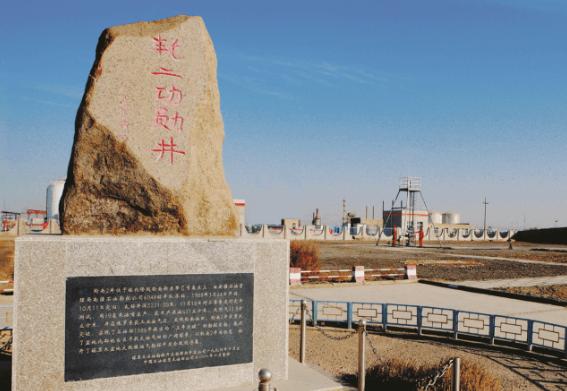
The picture of Lunnan 2 well comes from Guanwei of Tarim Oilfield.
01
Exploring deep oil and gas
Many years ago, a group of world-class oil and gas experts came to Tarim with confidence.
But they all shook their heads in the face of the complicated geological structure in Tarim Basin. They have never seen such a world problem, and there is no way to solve it.
How difficult is it to exploit oil and gas from the largest inland basin in the northwest of China?
Geologically, the Tarim Basin has experienced eight stages of structural deformation, including "overall extrusion, layered deformation, vertical superposition and linkage progression". This kind of geology is like "being broken by people and stepping on several feet", and all kinds of underground strata are completely disrupted, so a complete geological zone can not be found at all.
For petroleum geology, only when the theoretical support of oil and gas is discovered in geology can oil and gas fields be played out, so the difficulty can be imagined.
In addition, the buried depth of oil and gas reservoirs in Tarim basin is generally between 6000 meters and 10 thousand meters, and conventional drilling technology can’t "drill wells" at all.
At the same time, there are three sets of complex and difficult-to-drill strata, namely, high-steep and extremely thick gravel layer, compound salt-gypsum layer and strongly abrasive fractured reservoir, which leads to the very slow drilling speed of conventional drilling technology.
In addition, ultra-deep wells are bound to encounter complex conditions such as high temperature and high pressure, and poor control will bring a series of problems and even great losses.
There is a difficult road ahead of Tarim oil and gas development, but the most dangerous places often have the most beautiful scenery, and the distribution of oil and gas resources is no exception.
The data show that there are 10.15 billion tons of oil and gas resources in the Tarim Basin at a depth of 6,000-10,000 meters, and the reserves are extremely amazing.
After more than 30 years of development, the shallow geological conditions of Tarim Oilfield have been found out, and the deep geological conditions over 6000 meters are basically understood, but what is the geology of the ultra-deep, that is, the rich oil and gas fields buried below 8000 meters?
As described by the technical researchers in Tarim Oilfield, "The bride is sitting there, waiting for them to unveil the veil. "
02
Overcome world-class problems
In order to overcome many extreme problems such as ultra-deep, ultra-high pressure and high temperature, Tarim Oilfield has carried out a number of technical breakthroughs, innovated the safe isolation technology of ultra-deep complex pressure system, invented three sets of rapid drilling technologies for complex and difficult-to-drill formations, and created downhole integrity technology in extreme environments.
Among them, the innovative safe isolation technology of ultra-deep complex pressure system in the oil field has constructed a series of non-standard wellbore structures that meet the buried depth, number of layers and creep strength of different salt layers, and solved the major problem of safe isolation of multiple sets of ultra-deep composite salt layers.
With the help of this technology, Tarim Oilfield has drilled the deepest well on land in Asia-Luntan 1 well, and achieved a major exploration discovery.
On January 19, 2020, the risk exploration well located in Kuqa City, Xinjiang was rotated to explore Well 1. After acid fracturing test, the daily output of crude oil was 133.46 cubic meters and natural gas was 48,700 cubic meters.
The drilling depth of this well is 8882 meters, which is equivalent to a "Everest" in the ground, creating seven records, including the deepest well and the deepest oil-producing gas well on land in Asia.
This not only marks a major breakthrough in ultra-deep exploration under CAMBRIAN salt in Tarim Basin, but also confirms that primary reservoirs and high-quality reservoir-cap assemblages are still developed in the 8200m deep strata in Tarim Basin, and also represents that Tarim’s drilling technology level has successfully ranked among the international leaders.
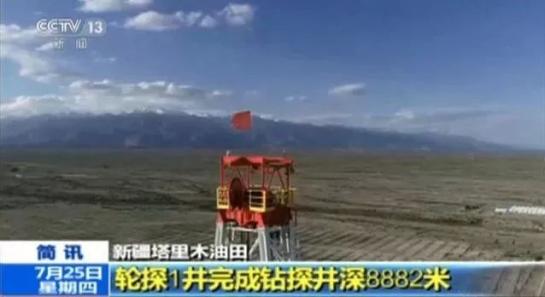
On July 19th, 2019, Well Luntan 1 took 361 days to drill to 8882 meters, becoming the new "king of deep wells" on land in Asia, indicating that Tarim’s drilling technology has been at the international leading level.
In recent years, Tarim Oilfield has made a great breakthrough in the field of ultra-deep well drilling, represented by Luntan 1 well. At present, it has a drilling capacity of 10,000 meters, with over 110 deep and ultra-deep wells drilling 6,000 meters every year, accounting for more than half of ultra-deep wells drilling in China.
"Tarim drilling technology has been at the forefront of the world, and high-density oil-based drilling fluid and fine pressure control are in the leading position in the world, which can be applied to the exploration and development of onshore oil and gas reservoirs such as Willis Basin and Texas." Even Halliburton, the top international oil service company, expressed its approval.
03
Deep technological breakthrough, helping oil and gas discovery
At the same time, the breakthrough in key technologies of "deep" drilling and completion has also promoted the rapid discovery of multiple oil and gas reservoirs.
In recent years, more than ten large oil and gas reservoirs, such as Keshen 9, Zhongqiu 1 and Bozi 9, have been discovered in Tarim Oilfield at a depth of more than 6000 meters, which has brought the oilfield into a harvest explosion period.
Among them, in December 2018, well Mid-Autumn 1, located in the middle of Qiu Li Tage structural belt in Kuqa depression, Xinjiang, was successfully well tested, and high-yield industrial gas flow was obtained, which indicates that there will be hundreds of billions of condensate gas reservoirs in this area.
In October, 2019, Bozi 9 well located at the foot of South Tianshan Mountain harvested high-yield oil and gas flow, which indicates that Tarim Oilfield has harvested Bozi 9 gas field.
The natural gas reserves in this gas field exceed 100 billion cubic meters, further consolidating the reserve scale of Bozi-Dabei trillion cubic meters atmospheric area.
In April, 2020, Well Manshen-1, whose buried depth is close to 8000m, made a major breakthrough. This well confirmed that the whole northern Tarim-Tazhong oilfield is contiguous with oil, adding 228 million tons of oil resources, which laid a foundation for accelerating the construction of a large oil and gas area of 10 million tons.
Up to now, three trillion cubic meters of oil and gas areas have been discovered in the Kuqa depression in Tarim Oilfield, among which the large oil and gas areas from Keshen to Kela trillion cubic meters have been implemented; Bozi to Dabei oil and gas area-the second trillion cubic meters oil and gas area, is being consolidated; Qiu Li Tage, the third trillion cubic meters oil and gas area, is being cultivated.
With the continuous breakthrough of technology, at present, Tarim Oilfield has gradually formed an increasingly clear exploration and development plan:
Among them, in the exploration, we mainly focus on three major areas: Kuqa New Area, piedmont of southwest Tarim and deep carbonate rocks in platform basin, and speed up the search for strategic replacement areas.
In terms of development, we will focus on the construction of two base areas, Kuqa natural gas and Tabei-Tazhong crude oil, and build a 30 billion cubic meter atmospheric area in Kuqa and a 10 million ton large oil and gas area in Taipan.
All these have undoubtedly laid a solid reserve resource foundation for the west-to-east gas transmission and national energy security.
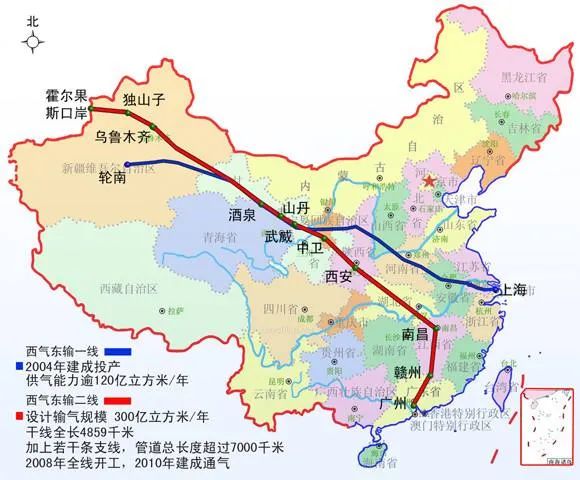
On September 17th, 1998, Kela 2 well spewed out high-yield oil gas flow, and Kela 2 gas field was born, which contributed to the start of the symbolic project of western development in China-West-East gas transmission.
As one of the main gas sources of West-to-East gas transmission, Tarim Oilfield undertakes the task of supplying gas to 15 provinces and cities, more than 120 large and medium-sized cities with a population of about 400 million and more than 3,000 enterprises in East China and North China. This is a great energy project and a great legacy for future generations.
04
Climb! yield
According to the latest round of resource evaluation, the total amount of proven oil and gas resources in Tarim Basin exceeds 17.8 billion tons, of which oil exceeds 9 billion tons and natural gas exceeds 9 trillion cubic meters, accounting for about 1/6 and 1/4 of the national oil and gas reserves respectively.
Correspondingly, as of 2019, the proven rate of oil and gas in the basin is only 14.6%, and the exploration prospect is very broad.
Massive resources have been prepared, and the next step is to unveil the basin.
In fact, with the breakthrough of ultra-deep well drilling technology, the output of Tarim Oilfield has been rising since its construction.
From the production of 33,900 tons of oil and gas equivalent in 1989 to the breakthrough of 5.48 million tons in 2001, it took Tarim Oilfield 12 years to reach the stage of 5 million tons.
Subsequently, the oil field output increased significantly, reaching 10 million tons, 15 million tons and 20 million tons in four years, one year and two years respectively.
Since the oil and gas production reached 25 million tons in 2017, after three years, Tarim Oilfield is expected to climb to a new peak of 30 million tons in 2020.
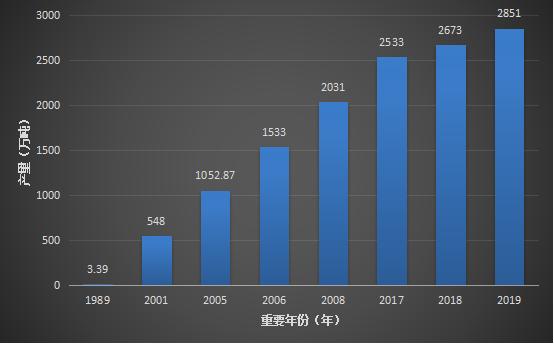
Output in Important Years in Tarim Oilfield
In 2019, Tarim Oilfield made the strategic goal of "winning 30 million, breaking through 35 million and aiming at 40 million", that is, 30 million tons of large oil and gas fields will be built as scheduled in 2020, and the oil and gas production will exceed 35 million tons ahead of schedule during the "Tenth Five-Year Plan" period, and reach more than 40 million tons before 2030.
A thriving development prospect is becoming clearer and clearer.
In fact, only from the recent production situation of the oilfield, the upward trend is also extremely obvious.
It is reported that in the first quarter of this year, Tarim Oilfield completed a cumulative oil and gas output of 7.91 million tons, an increase of 568,000 tons over the same period of last year. According to this development speed, it is just around the corner to achieve the goal of 30 million tons.
Although the Tarim Basin has always been regarded as one of the most difficult areas for oil and gas exploration and development in the world, with the tenacity and exploration of generations of oil people, the veil of this "cornucopia" will finally be unveiled.
Note: Some contents are from Tarim Oilfield.
Original title: "Challenge the deep oil and gas forbidden zone! This oilfield has solved a world-class problem.