Chinanews. com client March 21 ST (Wu Heqin) The footsteps of spring come unexpectedly, which is a good time to go out to play, but whether you are traveling overseas or staying in the local area, you must ask the customs when entering the country. In some countries, tangible and intangible regulations need to be mastered, and taboos between races should be noted to avoid embarrassing stepping on "minefields". Imagine focusing your actions in Britain, Bali, the United States and other places on one day: on a sunny morning, you go out for a walk chewing gum and ask a group of African-American young people where there are watermelons. My god, every move you make inadvertently may cause big trouble!
Don’t go out.
— — There are four bans during the "quiet day" in Bali.
"Don’t go out? How can I do that? I have spent a lot of money and time traveling overseas, isn’t it just to go out and play? " That’s true, but choose the right place at the right time. For example, March 17th, which just passed, was Hari Raya Nyepi in Bali. On the same day, Bali Wulalai International Airport was temporarily closed for 24 hours. If you plan to go to Bali on this day, it is obviously inappropriate, even if you were there, you can’t go out.
"Quiet Day" is the Hindu New Year in Bali. Different from the lively celebrations of ordinary festivals, there is no celebration on the day of "quiet residence". People sit quietly at home and meditate, and must follow the following four prohibitions: no fire (turning on the light), no work, no going out and no entertainment activities. During the period, except for hospitals, fire departments, police stations and other necessary public service institutions, all shops or units on the island are temporarily closed, and pedestrians and vehicles are not allowed to engage in outdoor activities.

Don’t open
— — Poland introduced the Law of Closed on Sundays in March.
In China, the weekend is the golden business period of many shopping malls and markets, and people who are busy for a week will also use their holidays to "go shopping". However, this is absolutely impossible in Poland. Poland recently promulgated the "Sunday Closed Law", which was officially implemented on March 1, 2018. Of course, restaurants, bakeries, gas stations, flower shops, post offices, pharmacies, and shops in railway stations and airports are not subject to this law.
According to the law, from March to December, 2018, on the first and last Sunday of each month, as well as two Sundays before Christmas and one Sunday before Easter, shops can open, and the rest sundays are closed. If Sunday, which was originally open for business, falls on a public holiday, shops are not allowed to open. By 2019, the closed hours will also include the first Sunday of each month.
There are many restrictions, so can you manage my secret business? Of course I do. Maybe I’ll go to jail. The law clearly stipulates that stores shall not arrange employees to undertake any work on Sundays when they are closed. Individual stores can and can only be opened by the owner himself on the relevant Sunday. Once you violate the law, you will face a fine of up to about 186,000 yuan, and you may be sentenced to imprisonment for repeated violations.
Don’t throw up
— — Britain plans to levy chewing gum tax to combat "road psoriasis"
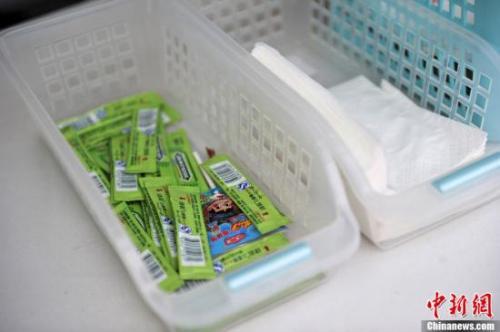
According to statistics, people on earth spend about 14 billion pounds (about 123.026 billion yuan) on chewing gum every year, but most of these chewing gum "endings" are stuck on the road or on the soles of shoes. Only the local government in Britain spends 50 million pounds a year to clean up the chewing gum stuck on the road. The country has also used various methods to recycle chewing gum, but with little effect.
Recently, philip hammond, the British Chancellor of the Exchequer, said that the government is considering introducing a tax policy for chewing gum, aiming at combating this "road psoriasis" which is difficult to clean up. From March 13th, the British Treasury will solicit opinions from the public to discuss whether a "chewing gum tax" should be imposed on chewing gum products.
The industry said that "chewing gum is a problem everywhere, and the only long-term sustainable solution is to change people’s behavior." Then, let’s start with you and me. We shouldn’t spit gum anywhere, not just in Britain, should we?

Don’t look back.
— — Dutch "red light district" issued a new regulation: back to the window girl.
The city government of Amsterdam, the Netherlands, will implement the new regulations from April. If tour guides lead groups of more than 5 people to the "red light district", they must first obtain permission, while group guests of more than 20 people are prohibited from entering.
In addition, even if the group is allowed to enter the "red light district", it must abide by a series of regulations, including not staying on the main roads such as bridges, not using loudspeakers and making noise, not taking pictures when passing through a specific window, and the tour guide must also ask the members to turn their backs on the window girl when they stop walking. If a tour group violates the regulations, the tour guide may be fined 190 euros if caught, and the tour company may be fined 950 euros.
A local tour guide explained that the purpose of turning your back to the window is to hope that tourists will refrain from spitting, cursing and other indecent behaviors when standing in front of the window girl. As for walking, you can of course browse around. Little friends, the rules are between raising one’s hand and casting one’s foot, so you should be sure of your discretion.

Don’t eat melons
— — Throwing watermelons at African-Americans involves racial discrimination.
Watermelon also involves racial discrimination? But also in court. At the end of last year, five students were suspended for throwing watermelons at African-Americans, and one of them was accused of racial discrimination. I would like to remind my compatriots that in the United States, they must enter the country to ask the customs, and at the same time, they should pay attention to the taboos between races.
So, why not mention watermelon in front of African-Americans?
Watermelon is a delicious and cheap fruit. During the American Civil War and the African-Americans’ struggle for freedom, the slave owners would give this fruit as a reward to the black slaves working in the cotton fields as a good summer product. Therefore, African-Americans have been labeled as a stereotype that they love watermelon.
An extreme example is that a newly hired white firefighter brought watermelons to his colleagues as a meeting gift, but he didn’t expect to immediately arouse other people’s dissatisfaction, resulting in his dismissal after only one day’s work. Because 90% of the firefighters in this consumer station are African-American.
In addition, Gabrielle Union, the wife of Dwyane Wade, a famous basketball player, went to work in China one year, during which she was invited to go to KTV, and there were a lot of watermelons in KTV boxes and fruit bowls in China. The group was dumbfounded immediately after entering the box, and the misunderstanding was eliminated after explanation.
Friends who are ready to travel, have you mastered these taboos? (End)