New ambassadors of friendship on the Belt and Road Initiative—— Well-known scholars and entrepreneurs at home and abroad discuss the "going out" of China robots.
Wang Tianmiao, Dean of Intelligent Manufacturing Research Institute of Beihang University:
China robots should consider population and cultural differences when they go global.
Guangming Daily reporter Liu Jiangwei
"In the context of the" Belt and Road ",there are two important issues to consider in promoting China robot enterprises to" go global ". Wang Tianmiao, dean of the Intelligent Manufacturing Research Institute of Beihang University, told reporters, "The first is the population difference. I found that there are few convenience stores in the United States, but in Japan, China and South Korea, you can’t live without them. This is related to the social structure, which determines the direction of technological research under the background of "Belt and Road". Secondly, cultural differences. I have been to a community in the United States once before. After coming out on a weekend night, I found that many Asian grandfathers and grandmothers are taking care of their grandchildren, but there is no such situation in the West. Parents are taking care of themselves. This is a difference between culture and ethics. "
Wang Tianmiao believes that unmanned factories will be a development trend under the background of demographic and cultural differences in countries along the Belt and Road. "For countries with high population density, it is necessary to achieve unmanned operation because it is necessary to improve work efficiency, but the workers who work are more difficult to recruit." He thinks another development trend is robots that serve the elderly. "Because of the development of the Internet and technology, people don’t want to be alone more and more, which leads to robot dialogue, robot companion and robot chat. Customized services and personal assistants, including doctors’ assistants, work assistants, and life assistants, will all derive a new class of intelligent robots. "
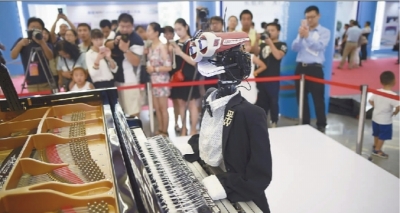
The robot "TEO" is playing piano music. Bright pictures/vision china
Sun Lining, Dean of School of Mechanical and Electrical Engineering, Soochow University:
Technology output should be driven by the "Belt and Road"
Guangming Daily reporter Zhan Yuan
"In the countries along the Belt and Road Initiative, China should establish a leading scientific research industry in the region in the future, which is conducive to maintaining our innovation capability in these areas. With the increase of China’s industrialization strength, there will be a demand for equipment automation and artificial intelligence along the’ Belt and Road’. If we can grasp the entry point well, there is a good chance to drive the transfer of industry and the export of technology. " Sun Lining, dean of the School of Mechanical and Electrical Engineering of Soochow University, is very optimistic about the future development of China’s robot and artificial intelligence industry in countries along the Belt and Road Initiative. He said that international cooperation is a very important way in the development of science and technology in China in recent years.
Now, on the platform of the Belt and Road Initiative, he suggested that project of science and technology should be carried out at the national level, and bilateral science and technology funds should be established with these countries, and at the same time, mutual talent training mechanisms should be established, so as to absorb the innovative resources of relevant countries and export China’s technology in this field.

The bionic dragonfly flying in the exhibition hall of the robot conference attracted the attention of the audience. Liu Guanguan took a bright picture/vision china
Catherine Simon, Chairman of the French Robot Industry Development and Consulting Company:
The Belt and Road Initiative provides a collaborative platform for robot development.
Guangming Daily reporter Liu Jiangwei
"In the past, China was a huge market for European manufacturing enterprises, and there were many market opportunities to tap. Now Europe suddenly realizes that in addition to its relatively rapid development, China has also become a prominent advantage in innovation. " Catherine Simon, the president of the French robot industry development and consulting company, believes that this is an important change in European countries’ understanding of China’s development.
Regarding the development of robots in the context of the Belt and Road Initiative, she suggested that the specific situation of each country should be considered, including education and research and development, so that each country can feel what they can bring to China and what China can bring to them. "Now many people think that robots will steal their jobs in the future, and many countries are facing this problem. We need to think about how people can better cooperate with robots, instead of all the work being directly replaced by robots, and the factory should be upgraded. " Catherine Simon believes that this requires multidisciplinary cooperation and global collaboration so that every country can participate, and the "Belt and Road Initiative" provides a collaborative platform for robot development.
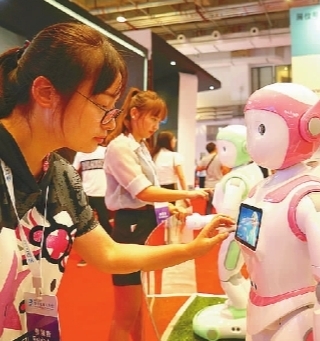
Visitors to the robot conference interact with educational robots. Bright pictures/vision china
Qu Daokui, President of Xinsong Robot Company and Deputy Director of National Engineering Research Center of Robotics Technology:
Help countries along the Belt and Road to move towards a smart society
Guangming Daily reporter Zhan Yuan
"There are 16 or 7 countries that export Xinsong products along the Belt and Road Initiative in more than 30 countries, and they regard Xinsong as a demonstration enterprise. This shows that robots, as high-tech products in China, have moved towards the’ Belt and Road’. " On August 22nd, after speaking at the sub-forum of the World Robotics Congress, Qu Daokui, the leader of China robotics industry who is both an entrepreneur and a scientist, the president of Xinsong Robot Automation Co., Ltd. and the deputy director of the National Engineering Research Center for Robotics, said in an interview that China robots will become new friendly messengers on the Belt and Road Initiative, helping countries along the route to realize the leap from an information society to an intelligent society.
In Qu Daokui’s eyes, China’s advantage lies in its innovative ecosystem, including talents, R&D, technology commercialization and venture capital. This advantage enables many production capacities and industries in China, including robots, to find broad cooperation space with other countries along the Belt and Road Initiative. Qu Daokui said: "Now, robots made in China have gone to different countries along the Belt and Road, showing good productivity and opportunities for industrial cooperation, because we have a good height and potential, but the challenges we face are also enormous. Therefore, we need to do a lot of integration of various top-level designs and resources, rather than each enterprise simply going out. In the future, we will form a whole to go out and jointly open up the international market. "
Li Hongyi, CEO of Shenyang General Robot Technology Co., Ltd.:
Robotic therapy needs to establish common regulatory standards.
Guangming Daily reporter Liu Jiangwei
"We have done many functional robotic arms, from design and manufacturing to product factory verification. It is a challenge for startups to meet the standards of international organizations." Li Hongyi, CEO of Shenyang General Robot Technology Co., Ltd. believes that when startups cooperate with relevant countries through the "Belt and Road", the government level should give strong support. For example, he said that there are differences in standards and supervision at home and abroad in the project of robot treatment bed. When China’s products are exported to the European Union, more attention is paid to post-supervision, that is, once there are problems in the use of medical equipment, it must be managed through strict measures such as restricting use and even requiring withdrawal from the market. The medical supervision in our country is different, that is, it is difficult to get started in the early stage. It may take five years to register the same equipment in China, but it may be completed in one year in the EU.
"Robotic therapy is an emerging industry, and it is very important to establish mutually recognized and universal regulatory standards with international countries. From the perspective of marketing and user feedback, we also feel this need. " Li Hongyi said.
Professor Zhang Mingjun, Ohio State University, USA:
The key artificial intelligence technology for human beings should focus on development.
Guangming Daily reporter Zhan Yuan
"Can you make some key and strategic investments in technologies that are critical to human society?" For the development of China’s artificial intelligence technology and robot products in countries along the Belt and Road Initiative, Zhang Mingjun, a professor at Ohio State University in the United States, has high expectations. "The key must be good things, and no one does not like excellent technologies and products."
Zhang Mingjun, for example, said that different cultural and geographical environments in different countries have led to poor cooperation and communication, and the development of intelligent translation robots closer to people is a scientific research achievement that affects society. For another example, in the face of the aging population, people are developing health robots and medical robots from the perspective of service, but in fact, they need to solve this problem from the perspective of brain science. "If we can develop a brain-strengthening device suitable for the elderly, then robots will play a very unique role here, even children can’t replace it."
He suggested that we should proceed from the key technology, innovative and forward-looking discipline research direction for the development of robotics itself. "All countries and regions are talking about robots, innovation and artificial intelligence, and it is very meaningful to find a technology with the most meaningful investment and independent property rights that can derive great social influence from the field of scientific research."
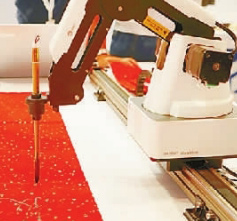
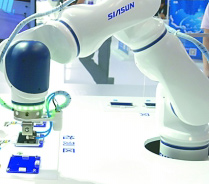
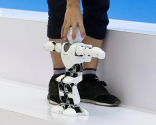
Robots on display at the robot conference. Bright pictures/vision china
Share the beautiful picture of robot cooperation—— Representatives of countries along the "Belt and Road" imagine international cooperation in robotics.
Guangming Daily reporter Ye Lefeng Zhang Jinghua
With the implementation of the "Belt and Road Initiative", a magnificent picture drawn by China and other countries in the world is slowly unfolding, and the cooperation between robots has also added a lot of color to the picture.
At the World Robotics Congress being held in Beijing, delegates from countries along the Belt and Road shared with the world the beautiful prospect of their robot cooperation with China.
"The Russian Robotics Association is very young. It has been less than two years since we were founded. Our goal is to better promote the development of the Russian robot market, and one of the most important tasks is international cooperation. " Vitaly Nedelschi, president of the Russian Robotics Association, told reporters.
Vitaly Nedelschi revealed that Shanghai has an industrial robot production project in Siberia, Russia. The products are mainly six-axis and four-axis industrial robots, which are used for loading and unloading goods and are mainly sold to Russian state-owned enterprises. "At this robot conference, there is a Russian robot company named ROBBO. This company has developed, produced and sold robots in the field of education, and has been authorized in many countries. I hope to find partners in China through this conference." Vitaly Nedelschi said.
"I am very happy to talk about the cooperation between Finland and China in the field of robotics." Heikki Koivo, a professor at Aalto University in Finland, said excitedly that the market demand in China is huge, which is a great opportunity for Finland. "There is an institution called Finnish Innovation Fund Support Agency, which has been promoting innovation cooperation between the two countries for more than 20 years. It has offices in Beijing, Shanghai and Hong Kong, and hopes that R&D and innovation cooperation between universities, research institutions and companies between the two countries can go further."
"Israel is a very small country. Why should China cooperate with Israel?" Zvi Schiller, president of the Israel Robotics Association, told reporters that he was often asked this way. In his view, Israel has very advanced key robot equipment, as well as strong vision companies, sensor companies and controller companies, and robot companies in China can complement each other by cooperating with them.
Zvi Schiller believes that sharing intellectual property rights is very important in cooperation. "Many inventors want to keep these intellectual property rights themselves, and investors want them to keep their shares, which needs to be balanced." He said that the whole robot industry should put investors in a suitable and reasonable position, and investors should not only invest in those fast-food projects, nor should everyone pick those ripe fruits. It is not enough to invest only in the existing robot industry. I hope investors will invest in early start-ups before there are more fruits for everyone to enjoy.
The latest achievements of robots are eye-opening.——2017 World Robotics Congress
Guangming Daily reporter Liu Kun Zhang Yun
Leonardo da Vinci surgical robot, intelligent cooperative robot, bionic jellyfish that can fly in the air … On August 23rd, at the 2017 World Robotics Congress, more than 150 robot companies and research institutes from more than 10 countries and regions, such as China, the United States, Germany and Japan, made a concentrated appearance, which opened people’s eyes.
"We are the champion…… …" In the exhibition hall, TEO, a robot in a black suit, sits in front of the piano, plays and sings, and sometimes makes playful expressions to the audience. This robot named "TEO" was designed and manufactured by an Italian company, and has publicly performed such works as Gorgeous Polish Dance and Mozart Piano Concerto.
ZhangChang, the Chinese representative of the company, said that TEO has 53 "fingers", and a music database can be established by computer programming, which can play an unlimited number of piano music. "We are developing a new generation of piano robot, which will be able to improvise piano music of different styles".
Matteo Suzzi, the designer of "TEO", told reporters that this piano robot is mainly used for music education. Combining the robot with music, it can play some music that is difficult for human beings to play, which can better cooperate with people in music teaching.
At the booth of Xinsong Robot Automation Co., Ltd., the reporter saw a bed and chair integrated robot that would "deform". "This robot is aimed at the elderly or patients with mobility difficulties. It can be used as both a high-end nursing bed and an electric wheelchair. As long as this button is pressed, the conversion between wheelchair and bed can be automatically completed." Haenjing, director of the brand department of Xinsong Robot Automation Co., Ltd. said.
Ha Enjing introduced that in the nursing bed mode, the bed-chair integrated robot can help users to lift their backs, turn over and bend their legs through angle changes, thus reducing the nursing pressure; In wheelchair mode, it allows users to manipulate with the handle and move to the designated position, thus improving their autonomous mobility.
Along the corridor of the exhibition hall, all kinds of new products, technologies and applications are dizzying. In addition to life service robots, there are also industrial robots for welding, handling and other production operations.
"This is an intelligent mechanical arm, which is used to weld and polish parts such as high-speed rail bogies and aircraft cockpits." Zhang Zhixiang, director of the factory of Shenyang Yuanda Intelligent Hi-Tech Robot Co., Ltd., said that it can carry out 3D visual scanning, just like eyes, and can tell the robot where the welding gap is and how much deviation has occurred, so as to achieve accurate positioning and precise control without too much manual participation.
At the booth of festo (China) Co., Ltd., the reporter saw a bionic robot with eight tentacles and resembling a jellyfish flying gracefully in the air, just like a jellyfish swimming freely in the water. "It simulates the movements of jellyfish and realizes the propulsion and flight in the air by doing’ peristalsis’." Yan Yu, sales director of North District of festo (China) Co., Ltd. said.
"The purpose of bionics is to make the movement of robots more efficient, provide continuous inspiration for automation, and then apply it to industrial production, improve production technology, and improve the flexibility, flexibility and safety of industrial production." Yan Yu said that at the Expo, they also exhibited the latest bionic dragonflies and bionic arms this year. Among them, the bionic arms have started testing projects for industrial applications, which will open up broad prospects for safe man-machine cooperation in the future.
Xin Guobin, Vice Minister of the Ministry of Industry and Information Technology, pointed out that since Joseph engelberg made the first real robot in 1959, the global robot has been developing for nearly 60 years. After several changes in the industrial age, it has always stood at the forefront of scientific and technological innovation and shone as the "pearl at the top of the manufacturing crown". Nowadays, with the accelerated integration of the next-generation information and communication technologies such as the Internet of Things, cloud computing and artificial intelligence with the manufacturing industry, the development of digitalization, networking and intelligence has brought a new spring to the robot industry, and robots are increasingly inseparable from human production and life.
Guangming Daily (August 24, 2017, 08 edition)