Interview with Cao Jinling, Director of Days and Nights in Wuhan: Moving in the twilight.
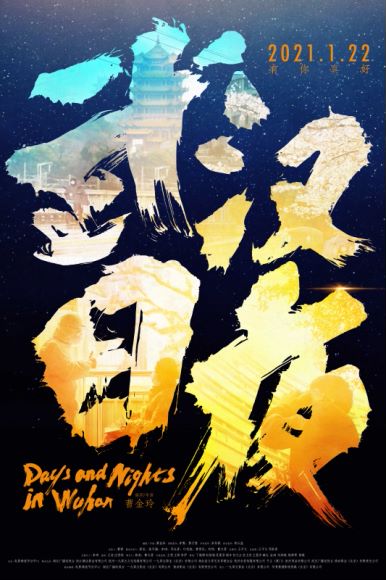
Days and Nights in Wuhan poster
On January 22nd, 2021, Days and Nights in Wuhan, the first domestic documentary film on war and epidemic, was released nationwide. Generally speaking, documentaries are telling "other people’s stories" and even presenting some wonders. Days and Nights in Wuhan is different. In a sense, to the Wuhan people in the film, the film’s creator, and even the audience who are about to enter the cinema and all the Chinese people, each of us is the "screenwriter" of this story, and our story is still extending at this moment … The shock and fear brought by the epidemic in collective memory, as well as those moving and praying, will accompany the film’s release and become a realistic footnote for the public’s perception.
It is worth mentioning that Wuhan Yangtze River Bridge, as a landmark of Wuhan, appears at the beginning and end of Days and Nights in Wuhan. In particular, the "Wuhan Yangtze River Bridge Completion Monument" on the side is also presented in a close-up form. The inscription is a poem written by Mao Zedong when the Yangtze River Bridge was completed. "A bridge flies north and south, and the natural moat becomes a thoroughfare." The historical metaphor and realistic observation of the inscription, people share the same heart and the same reason. It is not only the collective wish of this heroic city during the closure of the city, but also our common vision in the new year.
"The film is 95 minutes long and is basically extracted from more than 1,000 hours of video material." Chief producer Wei Li told the The Paper reporter. Days and Nights in Wuhan was produced by Film Channel and 1905 Film Industry, and Wei Li was the chairman and general manager of 1905 Film Network. She recalled that after January 23 last year, the film channel reached a cooperation with local news counterparts in Hubei. "Not only the Hubei TV main station, but also the materials shot by 17 cities in Hubei will be sent back to us in real time. These materials have been made into many TV feature films during the period of the national anti-epidemic. Finally, we set the tone for telling emotional stories and decided to make a documentary film. "
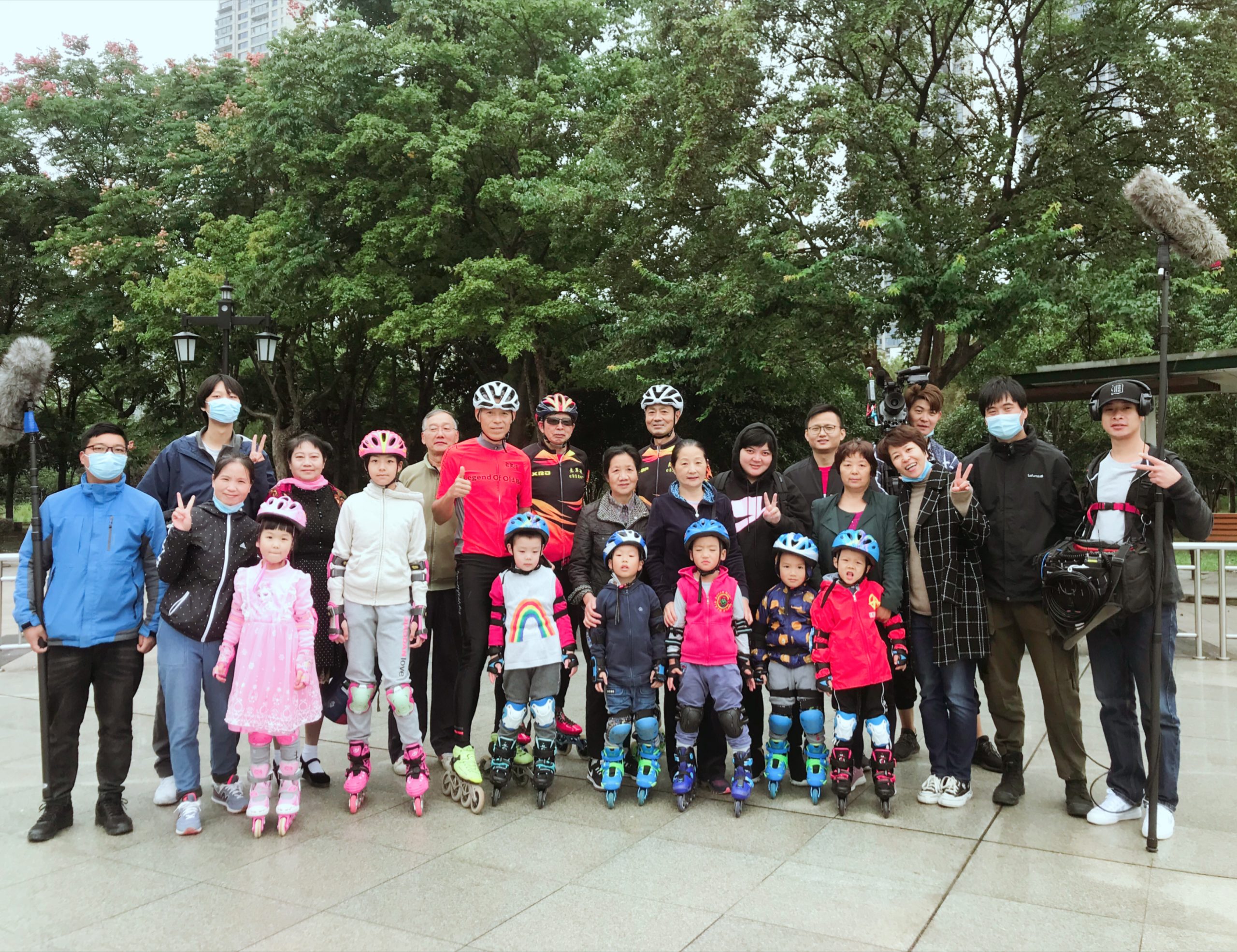
The master took a group photo with Wuhan citizens who spontaneously came to participate in the filming.
"Controlling the epidemic requires isolation. But what we need is’ companionship’. In this documentary, the company of doctors to patients, the company between doctors and nurses, the company between patients and relatives, and the company between volunteers and ordinary citizens are presented. " Wei Li said, there is a plot in the film where the doctor calls the family members of the deceased patients, "According to the regulations, except the mobile phone, the relics of the deceased should be centralized. However, the doctor still took off the bracelet of the deceased, wiped it with disinfectant repeatedly, and returned it to the daughter of the deceased … We will also see that these families received the relics of their loved ones, while they were sad and did not forget to salute the doctor. "
The news material itself is calm and rational, which continues to the image style of Days and Nights in Wuhan. "When the producer found me, he agreed that this is a big movie to go to the cinema. At the same time, what we want to present is not a grand narrative, but a little micro." Recently, Cao Jinling, the screenwriter and director of the film, accepted an exclusive interview with a reporter from The Paper.

Cao Jinling
[Dialogue]
"ICU is the arena of life and death"
The Paper:Can you tell us the reason why you took over Days and Nights in Wuhan?
Cao Jinling:I was invited to participate in the creative team in mid-April 2020. At that time, all the videos of Days and Nights in Wuhan’s main material had been finished, and these materials were originally made for anti-epidemic programs. There are more and more materials, and everyone thinks it is possible to co-ordinate and cut a documentary. The leader of the film channel 1905 Film Network saw my last film, which was also my debut "Mo ‘erdaoga", and found me as a screenwriter and director.
The Paper:Faced with these news materials, I heard that there are thousands of hours. How do you sort out the story framework from them?
Cao Jinling:First of all, I want to pay tribute to the photographers. Without them to take these videos, I would be a clever woman. But the difficulty is precisely that there are too many materials, and they are very fragmented. When they shoot, they are news cameras, not for film creation. From a purely technical point of view, it is not available. The emotional tension contained in those shots is particularly real and moving. (The epidemic) is not "staged". Those where will you go, who persisted day and night, and bravely went there are unforgettable. I think there is always a way to sort out a film.
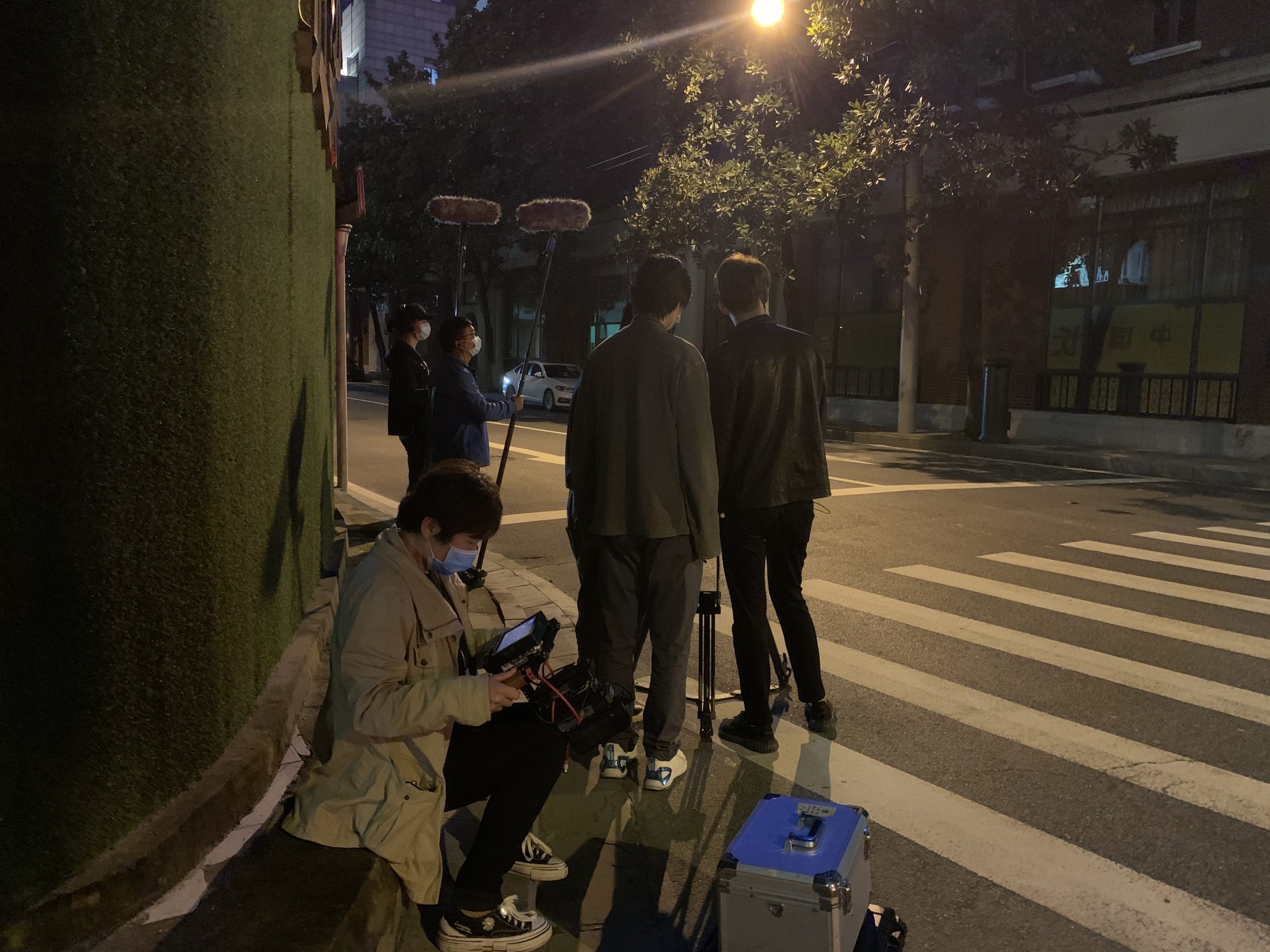
Shoot empty streets in the middle of the night.
The Paper:Before listening to your idea, I’d like you to recall the stories or characters that touched you in those news materials. Did they end up in the film?
Cao Jinling:Too many. The first thing that touched me was the scene of Li Chao eating noodles there after recovery. He was a taxi driver, and he was infected with COVID-19 while pulling work, which in turn infected his family. His parents and grandparents died of COVID-19 infection. During the treatment, he kept an optimistic attitude. In addition to cheering up his relatives, he also helped the neighbors in the community to order living materials. You will see that he is still actively helping others and doing his part in the face of such great misfortune. When he knows that all his relatives have passed away, eating noodles there alone can be said to be mixed … You can feel a kind of wordless sadness and see a kind of silent power.
There is also the old man Shi Changjiang, whose recovery is a medical miracle. At that time, he had lost his spontaneous breathing, and the tape recorder with the voices of his grandchildren was with him day and night by the bed. It’s remarkable that the old man woke up 71 days after he lost his spontaneous breathing. In Days and Nights in Wuhan’s eggs, we also mentioned the old man. I went to Wuhan in October (2020) to make a chase. He told us that he was in a daze and really heard the songs sung by his granddaughter and grandson. Shi Changjiang used to be an educator. These songs were taught to his grandchildren in the past and helped him tide over the difficulties during his coma.
In the first round of combing, I first picked out all the materials that touched me the most, instead of subjectively presupposing who to write or what to express. Through combing, the place that touched me most is the most important part of the whole story, that is, the ICU of the hospital, which is a life-and-death arena and a front-line arena for life and death. Those patients are struggling with death, and doctors and nurses are their helpers. At every critical moment, the shining side of human nature is so shining, so I chose this line first.
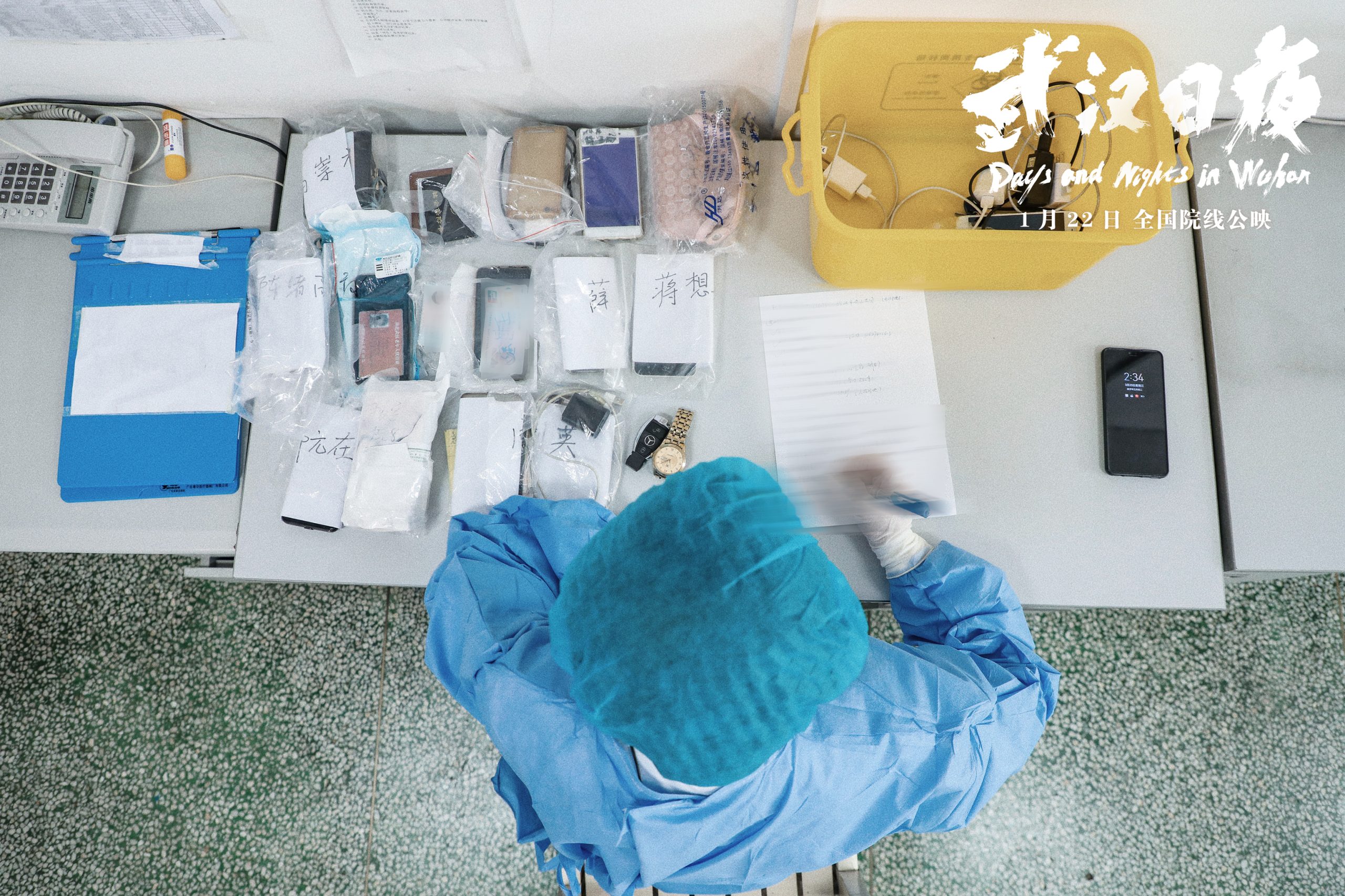
Head nurse’s office
"Sequential Screenplay Method" and "Beat Screenplay Method"
The Paper:Talk about your methodology in the stage of scriptwriting.
Cao Jinling:I came from a background of drama theory, and I have little experience in directing. I have never made a documentary before. This is my second film since I became a director. When the producer asked me to create and shoot Days and Nights in Wuhan, I also asked, Are you sure you want to find me? I have no experience in this field before, and they are very sure. I can only use all the knowledge I have learned, cooperate with the team and try my best to make this film well.
The first thing in my writing is the story structure, which depends to a great extent on the three methods of drama I have learned: the "Situational Theory" taught by Tan Peisheng, a doctoral tutor of Chinese opera, and then the "Sequential Screenplay Method" and "Beat Screenplay Method" I learned in the scriptwriting class when I was studying at the University of Southern California. Faced with a huge amount of material, our director group looked at the material in groups while sorting out Transcripts (the lines of characters in all the material). On this basis, according to the requirements of the film theme and the basic requirements of the scriptwriting method, we first worked out three acts, eight sequences and fifteen beat points, and each character line ran through them.
When we first created ideas with the producers, we took a big title board, which was covered with pieces of paper, and every plot was written on these pieces of paper. First, we made a "Paper cut". If there was any deviation in any plot, we immediately removed it and changed it to another batch, or changed the combination method. This process improves efficiency and saves a lot of time.
The Paper:Using news video material, but presenting the story texture, how did you do it?
Cao Jinling:There may be two factors. On the one hand, we can tell the story by choosing the picture itself as much as possible. On the other hand, we also tell the story according to the law of film creation. The audience will see the so-called "story" in the process of watching, because in the process of selecting materials in the early stage, which plot and which shot will be placed at which beat point of the plot are carefully considered and arranged.
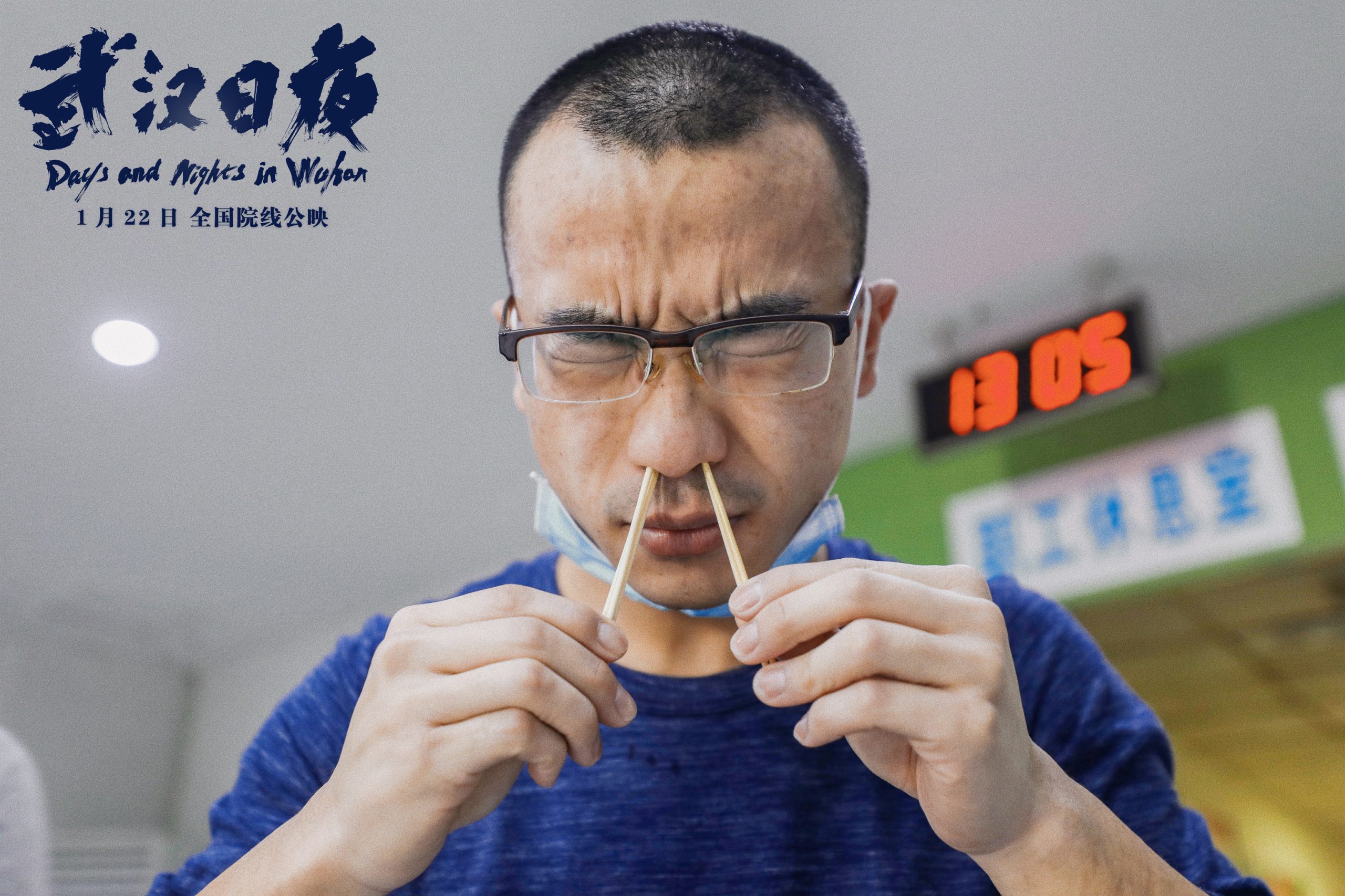
Tian Dingyuan
In ICU, the characters we choose are relatively representative. For example, only Tian Dingyuan, a male nurse from Shanghai, was selected as the aid medical staff, and his materials were very special. We only selected a few important scenes, one was that he took care of the old colonel, the other was that he took care of the old lady (in the film, the old patient was holding the nurse’s hand tightly and didn’t want him to leave), and before he left Hubei and returned to Shanghai, he had a video chat with his grandparents in his hometown in Gansu.
Everyone can see a lot from this Chinese, his professionalism, his bravery and kindness, the traditional virtues of being old and being old, and even a game of chess in the whole country. Everyone is sharing the same breath and destiny. At the same time, we also selected his two runs in the ward corridor. The first time, a patient passed away, and the second time, he sent the patient out of the hospital.
This is just an example in the film. The original materials are all real records. When we go back to shoot later, we also don’t set the shooting content, just record their original ecology. I think this is the spirit of the documentary.
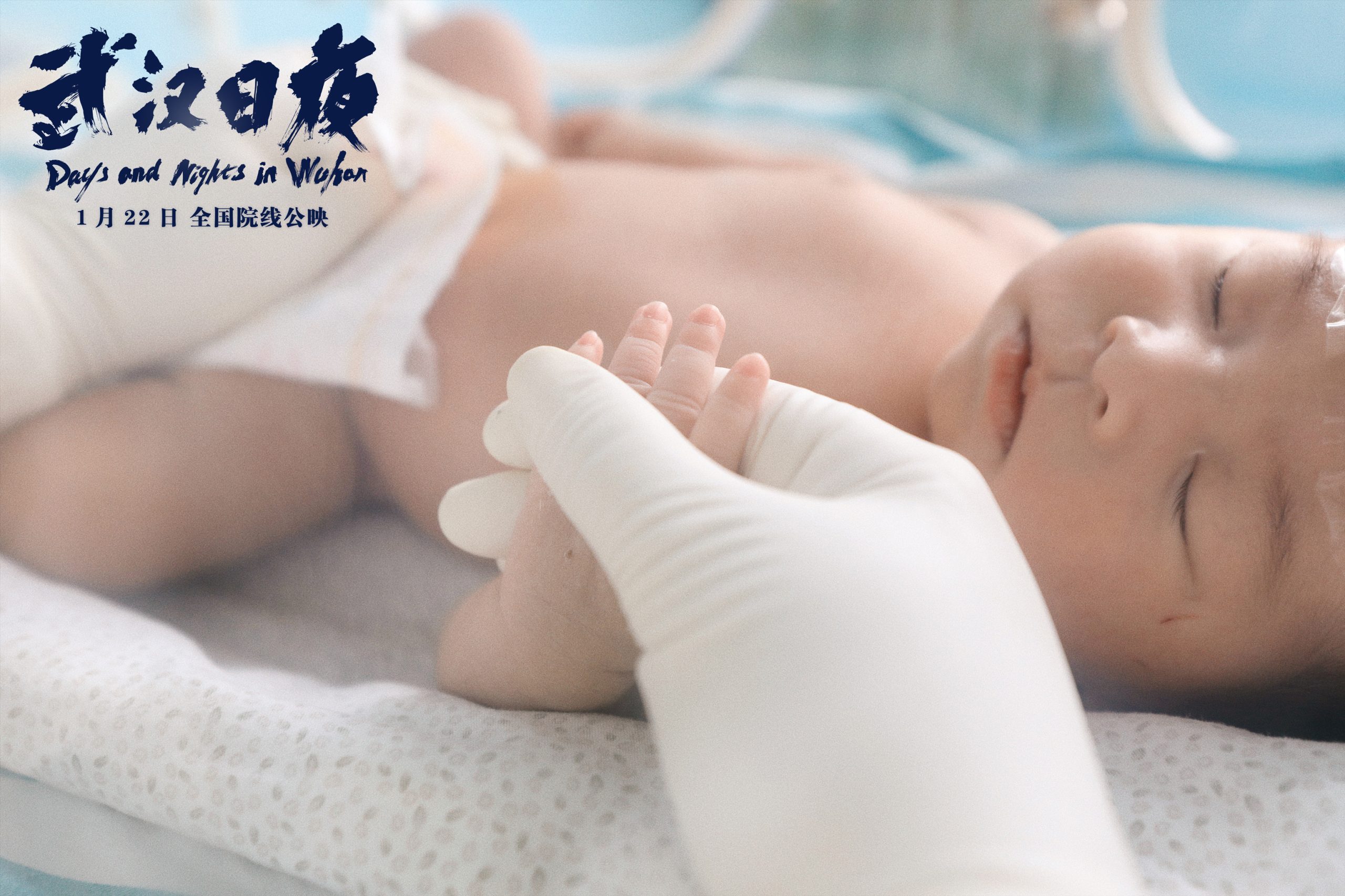
Baby penguin
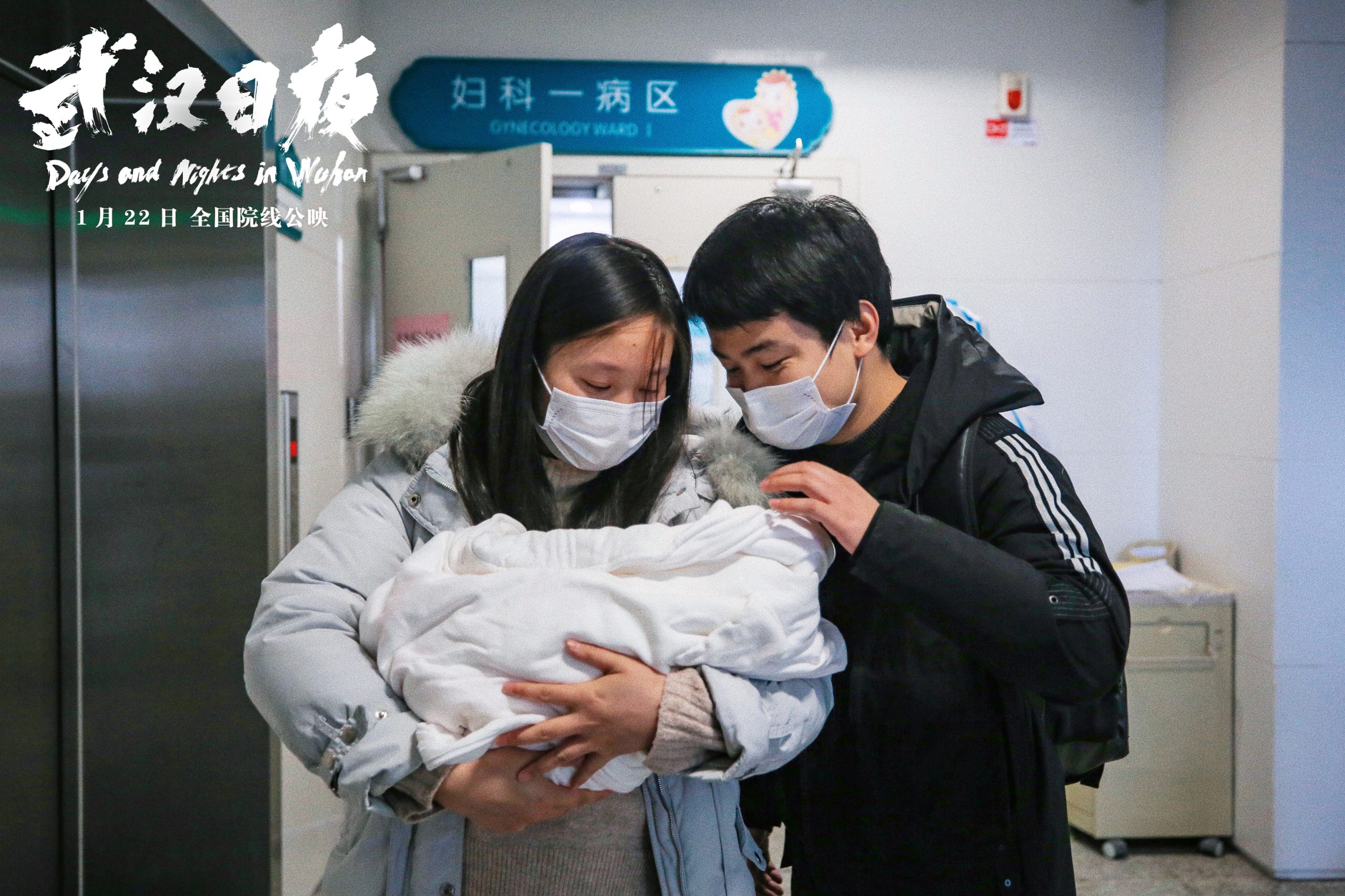
Mr. and Mrs. Li Qinger got the chick.
The Paper:How does the "beat scriptwriting method" as a scriptwriting paradigm of feature films graft into documentaries? Can you talk about it in detail?
Cao Jinling:Almost all feature films can be divided into 3 acts, 8 sequences and 15 beats. Three acts come from ancient drama, which was mentioned in Aristotle’s Poetics. Because films were silent films at first, and then the era of sound films began, Broadway playwrights were asked to write lines, and they naturally followed the three-act style established in Aristotle’s time. At the same time, a box of film was shown for about 10 to 15 minutes at that time. At this time, it is necessary to close the fade-in and fade-out, and the content is relatively independent in order to connect the film boxes. Each part is called a sequence.
The "beat" refers to the script-writing method of saving the cat’s beat. The 15 important beat points in the whole film, such as the opening picture and the ending picture, are two corresponding important beat points, just as you have observed that Days and Nights in Wuhan’s opening and ending all fall on the Wuhan Yangtze River Bridge, and the sound is the sound of the river-in fact, the same is true of Parasite, in which the opening scene is shaken from the ground to the underground semi-basement, and the ending picture is also the same. The beat scriptwriting method is tried and tested in genre films. Even films that won Cannes and Oscar awards like Parasite follow these creative laws, but I was not sure whether it is effective in documentaries. Because the material in the early stage is too scattered, we must have a good structural design of the play when we arrange it in the later stage.
"These technical indicators are its guarantee as a cinema film."
The Paper:According to the introduction, there are 12 pieces of music in Days and Nights in Wuhan’s whole film, but I only seem to notice "You are so kind" sung by Zhou Xun at the end of the film.
Cao Jinling:The audience didn’t notice the soundtrack, which shows that our soundtrack is very successful. The soundtrack of this film is not intended to set off sensationalism, but to care for and accompany. Including the ending, it is also lightly given to quietly relieve the movie-watching emotions accumulated in the whole film.
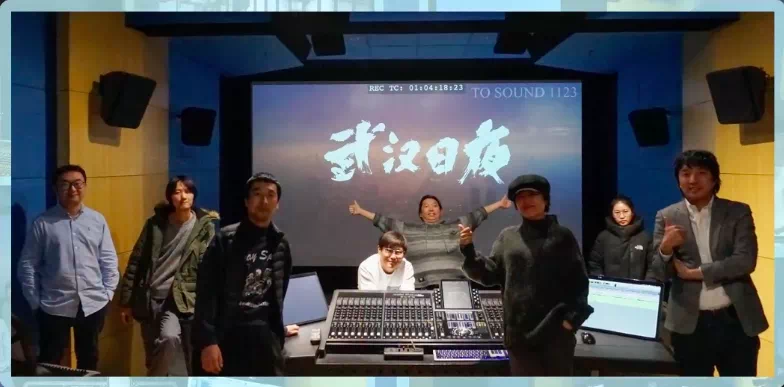
Editing director, sound director, producer and director jointly review the film.
The Paper:Did you encounter any "bottlenecks" in the creative stage?
Cao Jinling:At the end of July, we entered a bottleneck. In the material for several months in a row, there is a certain accumulation of emotions, and everyone in the team needs to decompress, release and separate. We took a little vacation and came back to continue editing.
The Paper:I heard that there are special effects in the film? Well, it’s a documentary, and there are no wonders.
Cao Jinling:This shooting material is limited by special working conditions, and many materials will have problems such as wearing, out of focus and unstable mirror transport. I was anxious when I started to contact the material. Later, after communicating with photographers, I learned that they had to wear goggles and so many clothes when shooting on the spot. All the goggles were covered with small drops of water and they couldn’t see anything. The machines are all wrapped in plastic wrap, and the focus depends entirely on the feeling. We all understand. In post-production, we still give priority to the emotion in the picture, and then try our best to solve technical problems, including using some special effects to ensure the image texture that the film should have.

Sakura viewing in Wuhan after the epidemic
The Paper:At the beginning of Days and Nights in Wuhan’s project, it was a big movie to enter the cinema. In terms of technical indicators, besides images, can you introduce the sound again?
Cao Jinling:In the hospital, the live sound of many materials is not available, because there is no microphone, and the head microphone is also wrapped in plastic wrap. The sound of clothes rubbing and the sound of the camera are mixed together. At first, I thought it was impossible to put such material on the cinema. Even after noise reduction, I barely reached the standard of TV broadcasting. It was really urgent. Later, the voice guided Li Danfeng to enter the creative team, and we settled down. The team went to the hospital and re-collected the sounds of various medical devices in the ward. Now the film that the audience sees is completely in line with the standard of 5.1 movie channel.
The Paper:In addition to the original news material, I noticed that you went to Wuhan to make up some of the content later.
Cao Jinling:In October, 2020, we went back to Wuhan to shoot some daily things, mainly the characters in the material. We filmed the old man picking grapefruit in the hospital. After he recovered, he and his wife played on a swing in the park, photographed the scenery of Jinyintang, and photographed the old man Shi Changjiang’s family for a day. Have a barbecue with the volunteers who took pictures of sending pregnant women to the hospital during the epidemic-they had an agreement before, saying that when the epidemic was over, the brothers would sit down together for a drink and a barbecue. This shooting is very meaningful, showing the current situation of many characters in the film. In terms of plays, there is a good "pay off".
The Paper:I noticed that there was no voiceover in Days and Nights in Wuhan’s whole film?
Cao Jinling:From the editing point of view, voiceover is a convenient means, and it is easier to arrange the materials organically. However, we want to present it as objectively as possible. The voice-over itself will have the positioning of the voice role, which is subjective and will also affect the audience’s sense of participation when watching movies. In a word, it is to strive to present quietly and record faithfully with the picture itself.